 MyGlob Editorial
About Ubud
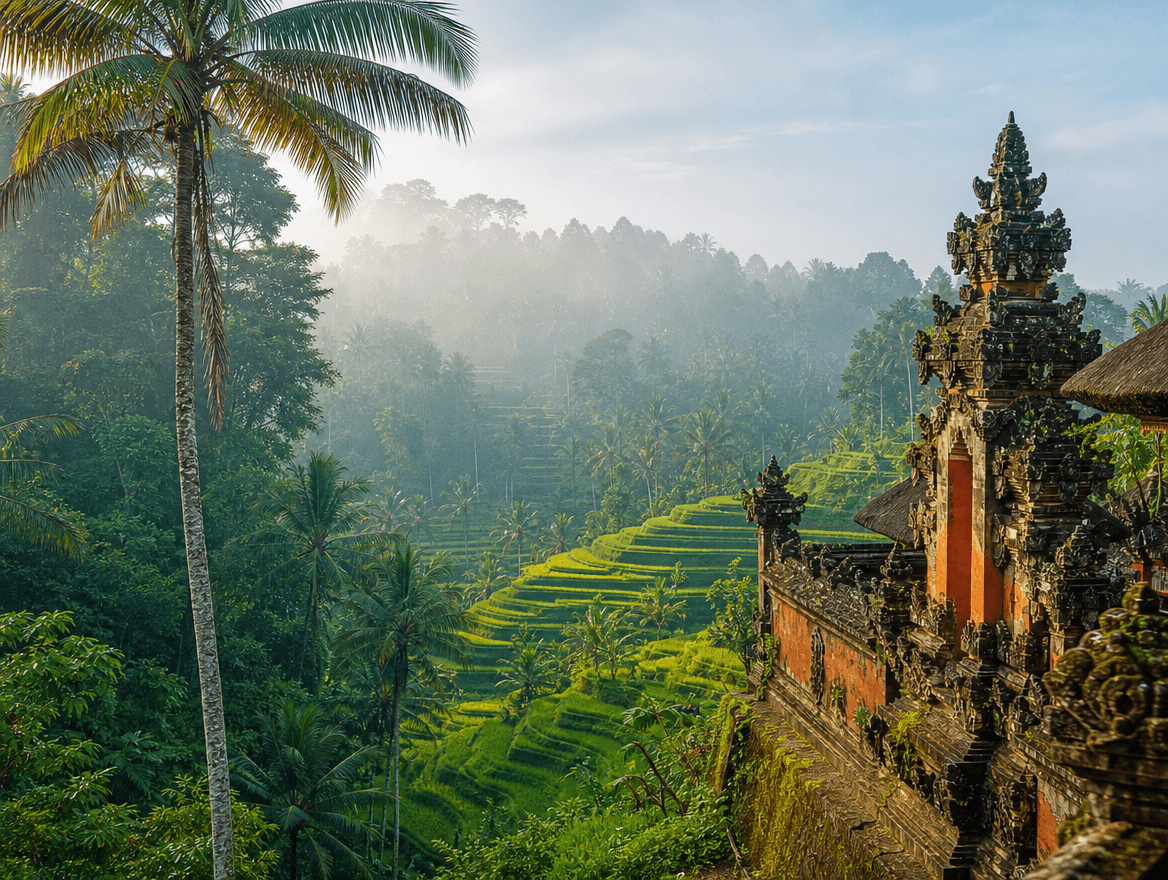



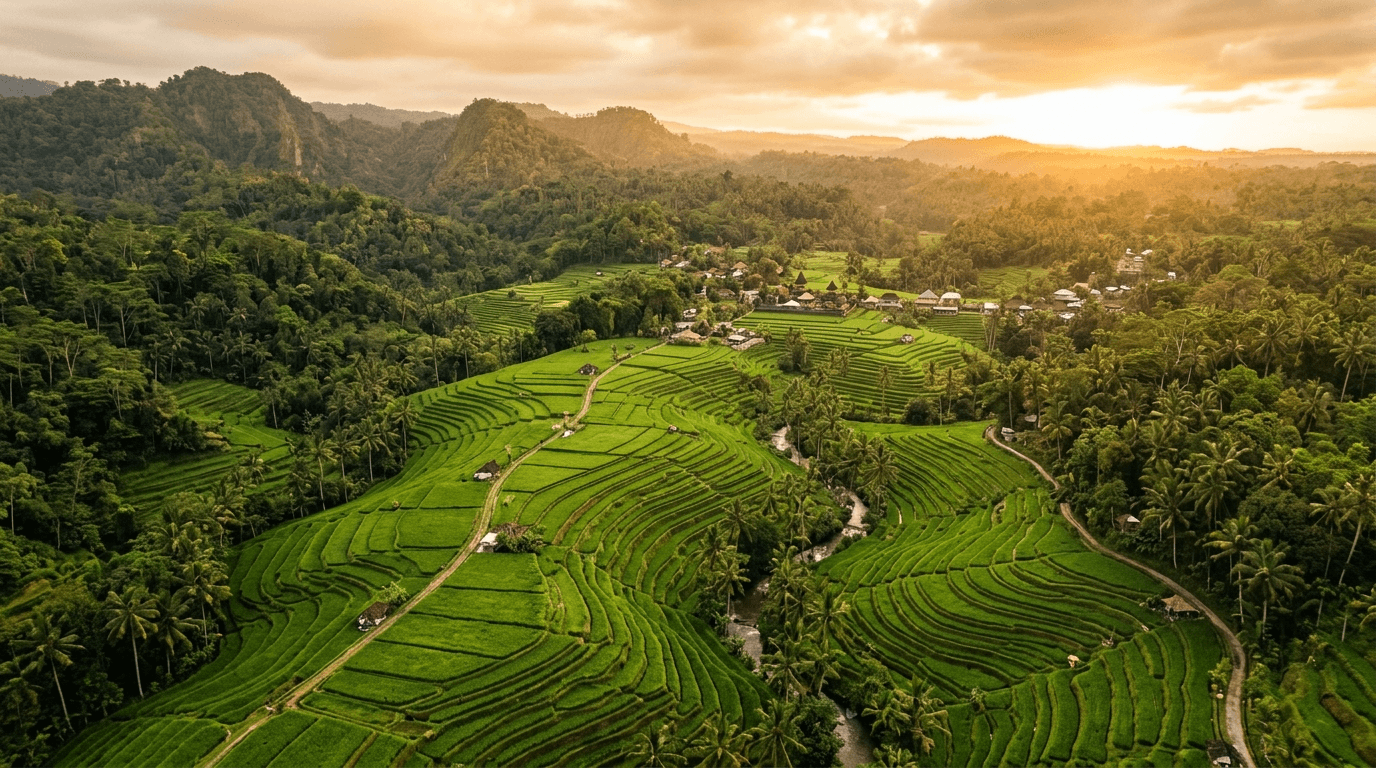
Ubud is the cultural and spiritual centre of Bali, set in the cool, green foothills of the island's interior. Surrounded by rice terraces, river gorges and jungle, it has drawn artists, healers and travellers for generations, and it remains the place to come for temples, traditional dance, art, wellness and nature. This guide covers where to stay, where to eat, the best things to do and how to get around, so you can settle into the slower, greener rhythm of Bali's heartland.
Getting Your Bearings
Ubud sits roughly in the centre of southern Bali, about an hour and a half from the airport depending on traffic. The town itself is compact and walkable around its core, centred on the market, the royal palace and the main streets, but the wider Ubud area sprawls into surrounding villages, rice fields and river valleys where many of the best stays and sights are found.
Because the attractions spread out, it helps to decide whether you want to be in the lively centre, close to restaurants and shops, or out among the rice fields for peace and views. Both have their merits, and the two are easily connected by a short ride.
Where to Stay
Ubud has one of the best ranges of accommodation on Bali, from backpacker homestays to some of the most celebrated luxury resorts in Asia, many perched dramatically over jungle gorges. Your choice of location shapes your whole experience.
- Central Ubud — convenient for the market, restaurants, galleries and nightlife, ideal if you want to be in the middle of things.
- The rice-field fringe (areas like Penestanan and Nyuh Kuning) — quiet, scenic and still within walking or short-ride distance of town.
- The river valleys and outlying villages — luxury resorts and private villas with jungle and gorge views, best if you have your own transport.
Traditional family homestays remain a wonderful and affordable option in Ubud, offering a warm, personal window into Balinese daily life.
Where to Eat
Ubud takes its food seriously, and the dining scene runs from simple warungs serving Balinese classics to inventive health-focused cafes and refined restaurants. This is the spiritual home of Bali's plant-based and wellness food movement, so vegetarians and vegans are exceptionally well catered for.
Do not miss the chance to try local specialities such as babi guling (suckling pig) and bebek betutu (slow-cooked duck) at a traditional warung, as well as a proper Balinese coffee. The town also has a strong cafe culture, with stylish spaces overlooking rice fields making the perfect spot for a long, slow breakfast.
Best Things to Do
Ubud is rich in things to see and do, blending nature, culture and wellness. Many visitors come simply to slow down, but the area rewards the curious with temples, terraces, walks and performances.
- Walk the Tegallalang rice terraces in the soft early morning light.
- Hike the free Campuhan Ridge Walk between two river gorges at sunrise.
- Visit the Sacred Monkey Forest Sanctuary and its jungle temple ruins.
- Watch a traditional Balinese dance performance at the palace in the evening.
- Take a yoga, cooking or art class — Ubud is a global hub for all three.
- Chase the waterfalls and water temples in the surrounding villages.
Day Trips from Ubud
Ubud's central location makes it an excellent base for exploring the island's interior and north. The sacred spring temple of Tirta Empul, the dramatic Tegenungan and Tibumana waterfalls, and the volcanic landscapes around Mount Batur are all within reach for a day out.
Many travellers combine a sunrise trek up Mount Batur, the famous coffee plantations of the highlands, and a stop at one of the lake temples into a single full-day excursion. A car with a driver is the most comfortable way to cover these longer trips.
Getting Around
The centre of Ubud is best explored on foot, though the narrow pavements and traffic mean you should walk with care. To reach the terraces, temples and villages beyond the centre, you will want a scooter, a bicycle or a hired driver. Renting a scooter offers freedom but the surrounding roads are hilly and winding, so ride only if you are experienced.
Ride-hailing apps operate in Ubud, though there have historically been local restrictions in some areas, so a pre-arranged driver is often the simplest option for longer journeys and day trips.
Practical Tips
Ubud is cooler and wetter than coastal Bali, especially in the rainy season, so pack a light layer and a rain jacket. Mornings are reliably the most pleasant and photogenic time of day, while afternoons can cloud over. Wear sturdy shoes for the ridge walks and waterfalls, and bring a sarong and sash for temple visits.
Entry and parking fees apply at the terraces, temples, waterfalls and the monkey forest, and these change over time, so check current rates locally or with official sources. Above all, give Ubud time — it is a place to linger over, not to rush through, and its greatest rewards come to those who slow down and let the green heart of Bali work on them.