Bali Culture Decoded: Temples, Dance, Music & Living Traditions (2026)
A culture lover's field guide to the island of the gods, from clifftop temples and trance dance to gamelan, offerings and the museums that hold it all together.
 MyGlob Editorial June 10, 2026 1 min read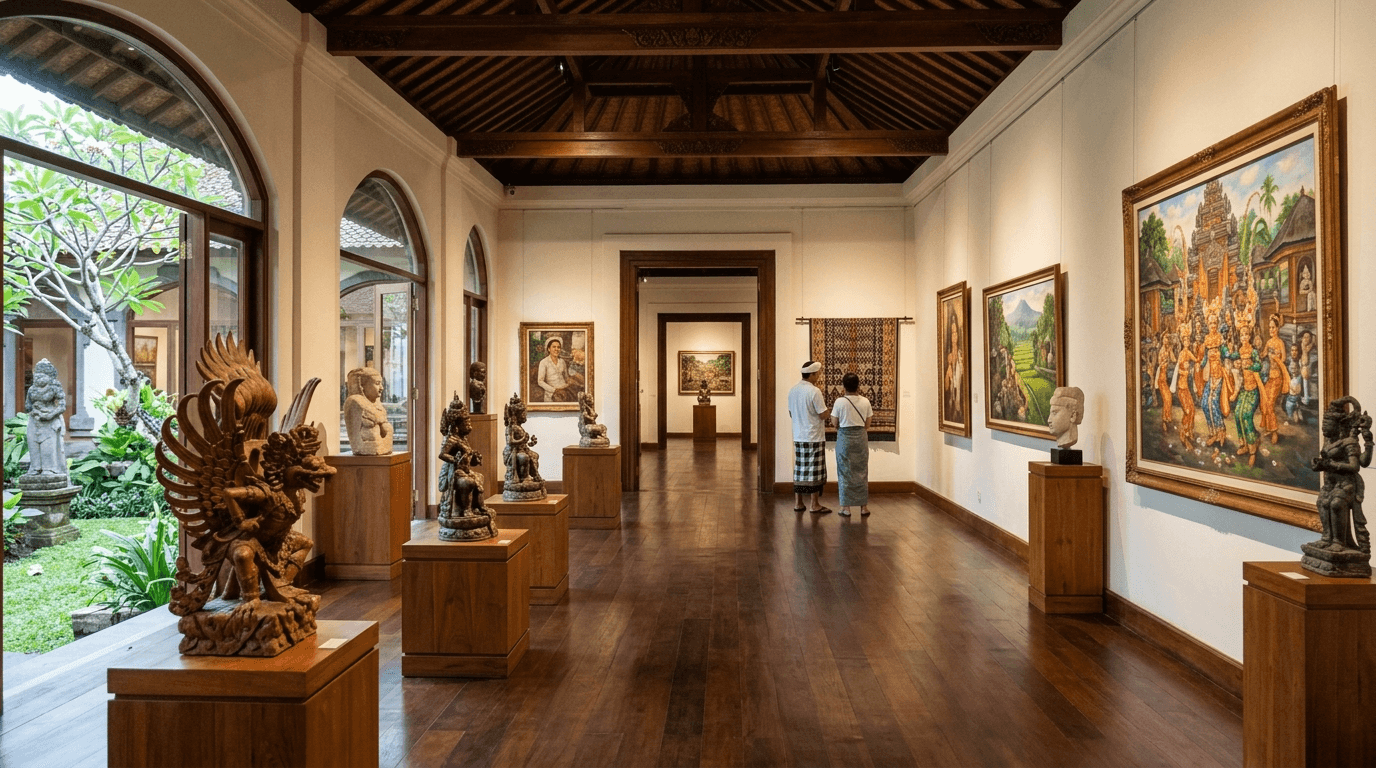
Bali's culture is not a museum exhibit you visit once and tick off. It is a living, daily current that runs through every village lane, every rice terrace and every doorstep where a tiny palm-leaf offering sits smouldering at sunrise. The island practises its own form of Hinduism, woven through with animist beliefs and ancestor worship, and that fusion shapes the calendar, the art and the rhythm of ordinary life. This guide walks you through the cultural touchstones that reward a curious traveller, with practical etiquette so you experience them respectfully.
 01Pick #1
Pura Besakih — the mother temple
Perched high on the slopes of sacred Mount Agung, Besakih is the largest and holiest temple complex on the island, a sprawling network of more than twenty separate sanctuaries built on ascending terraces. It has survived eruptions that destroyed everything around it, which only deepened its spiritual status. Arrive early, hire a temple-affiliated guide if you want context, and dress in a sarong and sash, which are usually available to rent at the entrance.
 02Pick #2
Tanah Lot — the sea temple at sunset
Few images say Bali like Tanah Lot, a small pagoda-roofed shrine stranded on a rock that the tide cuts off twice a day. It is one of a chain of sea temples meant to honour the guardian spirits of the ocean. It is busy and commercial, so go for the silhouette at dusk rather than solitude, and check tide times if you want to walk out to the base.
 03Pick #3
Uluwatu and the Kecak fire dance
On the southern Bukit clifftops, Uluwatu temple clings to a 70-metre precipice over the Indian Ocean. The real draw at sundown is the Kecak, a hypnotic dance performed by dozens of bare-chested men chanting 'cak-cak-cak' in interlocking rhythm, retelling an episode of the Ramayana with a real fire finale. Keep an eye on your belongings; the resident monkeys are notorious opportunists.
 04Pick #4
Legong — the dance of celestial maidens
Legong is the most refined of Balinese classical dances, performed by young girls in gilded costumes whose every flicker of the eyes and fingers carries meaning. The training starts in childhood and the control is astonishing. Ubud's palace courtyard stages reliable evening performances accompanied by a full gamelan.
- 05Pick #5
Barong and Rangda — the dance of good and evil
The Barong is a benevolent lion-like creature; Rangda is the demon queen. Their eternal struggle, danced to clashing gamelan, ends not with a winner but with a reminder that good and evil are forever in balance, a core Balinese idea. Performances often include entranced dancers, a glimpse of the trance traditions still very much alive.
- 06Pick #6
Gamelan — the orchestra of bronze
The shimmering, cascading sound behind every dance is gamelan, an ensemble of bronze metallophones, gongs, drums and bamboo flutes tuned to scales that sound otherworldly to Western ears. Each village owns its set communally, and the music is learned by ear and by feel. Seek out a rehearsal in a village banjar to hear it raw and unstaged.
- 07Pick #7
Galungan and Kuningan — the great festival
Every 210 days the Balinese calendar brings Galungan, when ancestral spirits return to earth and tall, arching bamboo poles called penjor line every street, dripping with offerings. Ten days later Kuningan sees the spirits off again. If your trip coincides, the whole island becomes theatre; just be patient with temple-bound traffic.
- 08Pick #8
Nyepi — the day of silence
Bali's most extraordinary observance is Nyepi, the Saka new year, a full day of total silence when no one leaves home, no lights show, the airport closes and even tourists must stay indoors. The night before explodes with ogoh-ogoh, giant monster effigies paraded and burned to drive away evil. It is unique on earth; plan around it.
- 09Pick #9
The art villages of Ubud and beyond
Bali's craft heritage is geographically organised: Mas for woodcarving, Celuk for silver and goldsmithing, Batuan for intricate painting, and Ubud itself as the painting and creative hub since foreign artists settled here in the 1930s. Visiting a working studio is far more rewarding than a souvenir shop.
- 10Pick #10
Museums worth your time
For context, the Agung Rai Museum of Art (ARMA) and the Neka Art Museum in Ubud trace how Balinese and visiting Western painters reshaped one another's work. In Denpasar, the Bali Museum holds archaeology, textiles and ceremonial objects under traditional architecture. Each makes the dances and temples you have seen click into place.
- 11Pick #11
Temple etiquette in one minute
Always wear a sarong and sash, cover your shoulders, and never climb on shrines or stand higher than a priest. Menstruating women are traditionally asked not to enter temples, and you should never point your feet at an altar or person. Photographing ceremonies is usually fine from a respectful distance, but ask before photographing people at prayer.
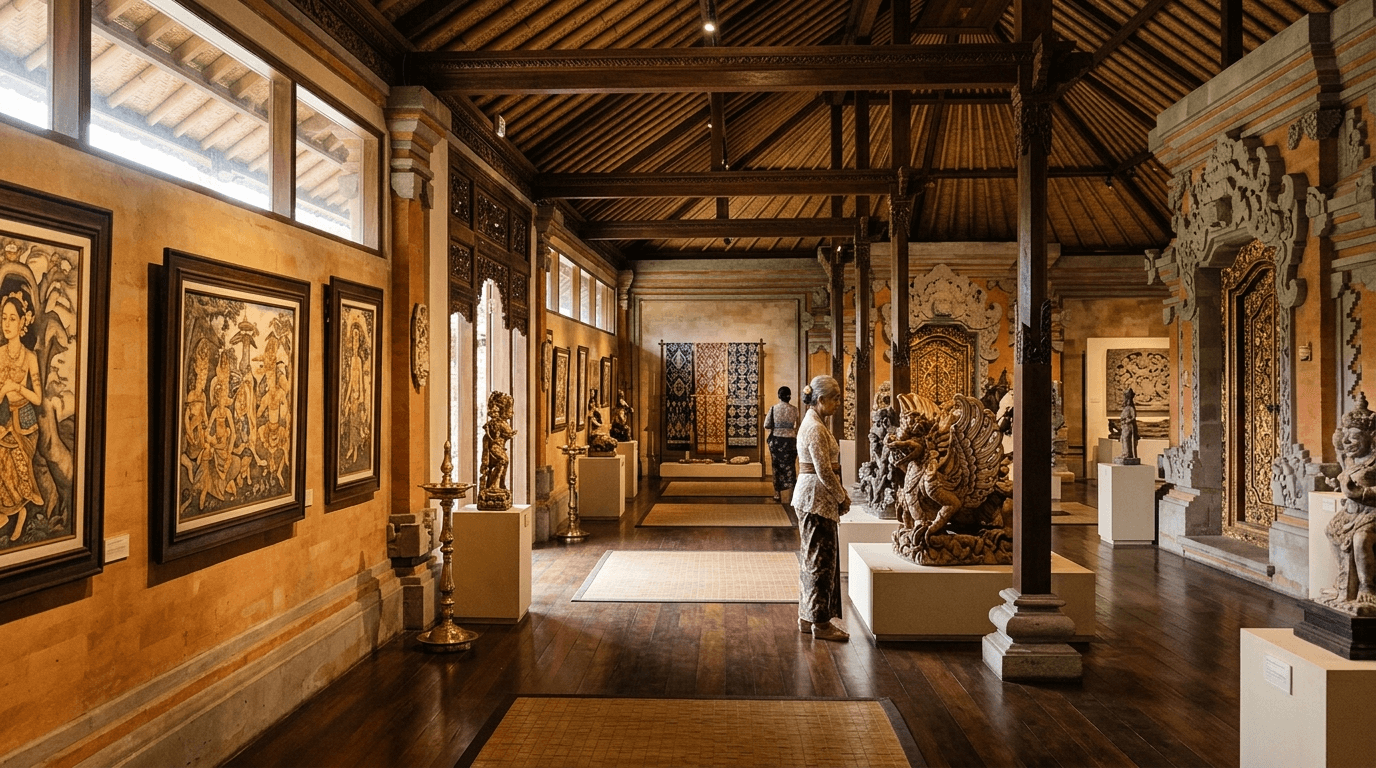
Balinese culture is rooted in Hinduism and expressed through temples, daily offerings, dance, gamelan music and community rituals. These traditions remain a living part of everyday life, not just performances for tourists. Visitors should dress modestly at temples and observe ceremonies respectfully.
- Main religion
- Balinese Hinduism
- Art forms
- Dance, gamelan music, crafts
- Daily ritual
- Canang sari offerings
- Visitor tip
- Dress modestly at temples
- Balinese culture is shaped by Hinduism and community ritual.
- Temples and daily offerings are central to island life.
- Dance and gamelan music carry deep spiritual meaning.
- Traditions are living, not just tourist performances.
- Modest dress and respectful behaviour are expected at ceremonies.