 MyGlob Editorial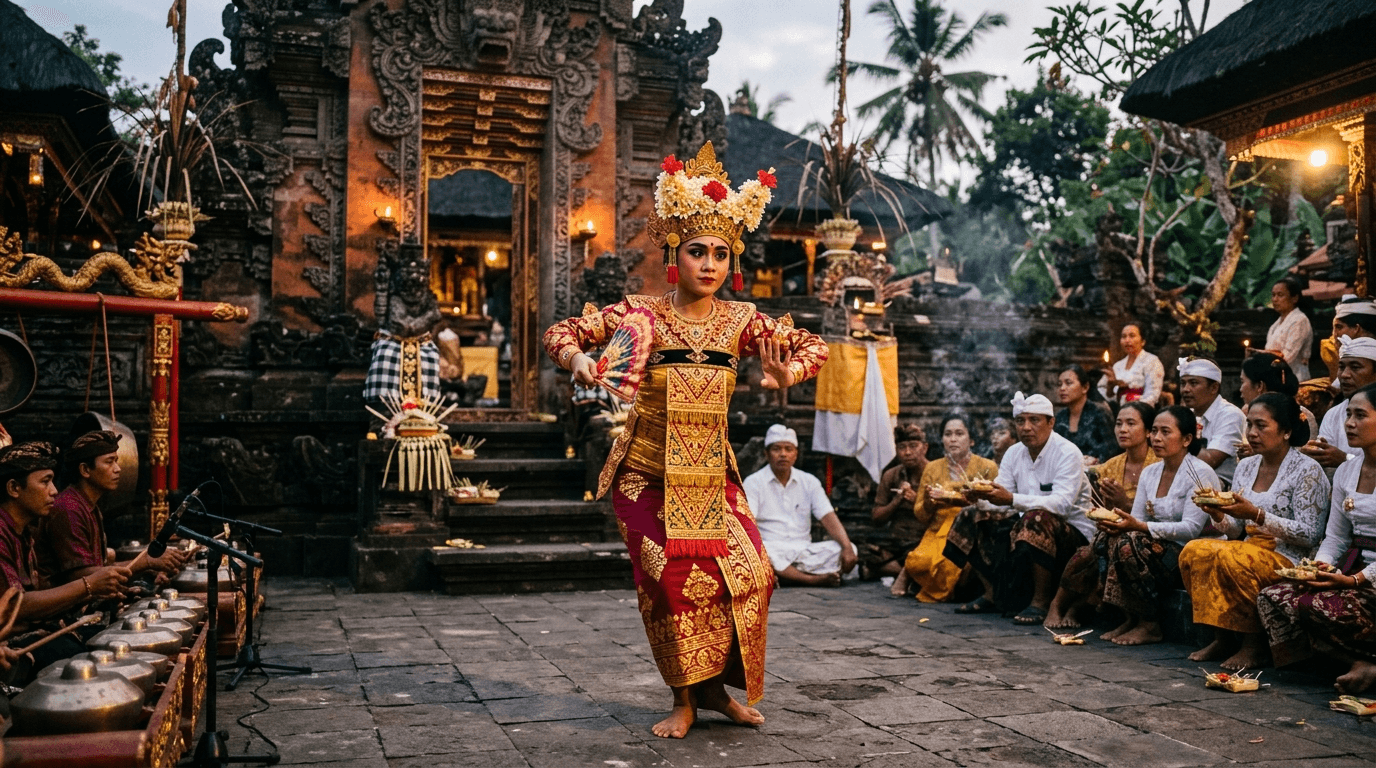
Visitors often sense something distinctive in Bali, a feeling that the island runs on a deeper logic than tourism alone. Much of that feeling traces back to a single guiding philosophy known as Tri Hita Karana. Translated roughly as the three causes of wellbeing, it teaches that a good life and a flourishing world depend on keeping three relationships in balance. Understanding it unlocks much of what makes Bali, Bali.
What Tri Hita Karana Means
The phrase comes from Sanskrit roots and breaks down into three ideas: harmony between people and the divine, harmony among people themselves, and harmony between people and the natural world. The Balinese believe that happiness and prosperity flow only when all three are tended together. Neglect one, and the whole system falls out of balance. It is less a set of rules than a way of seeing existence as a web of relationships.
Harmony with the Divine
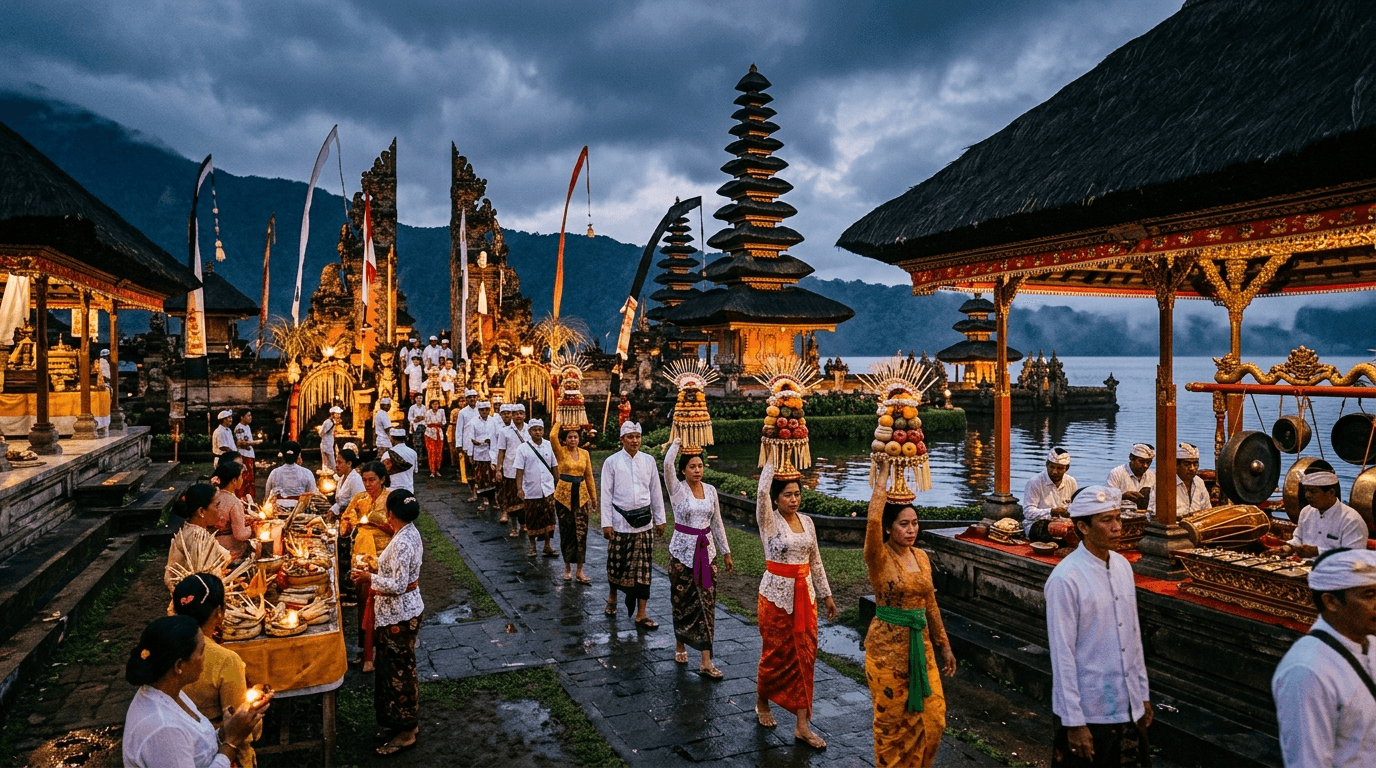
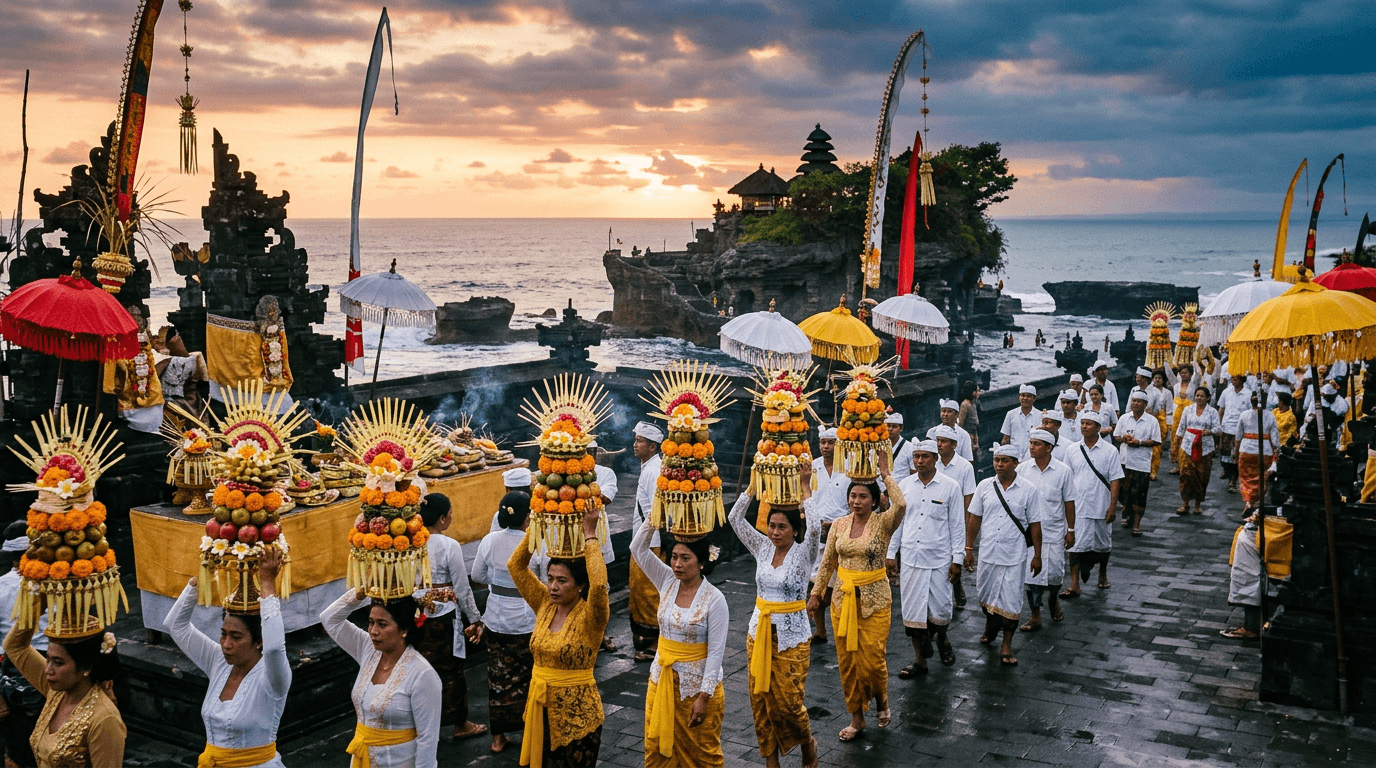
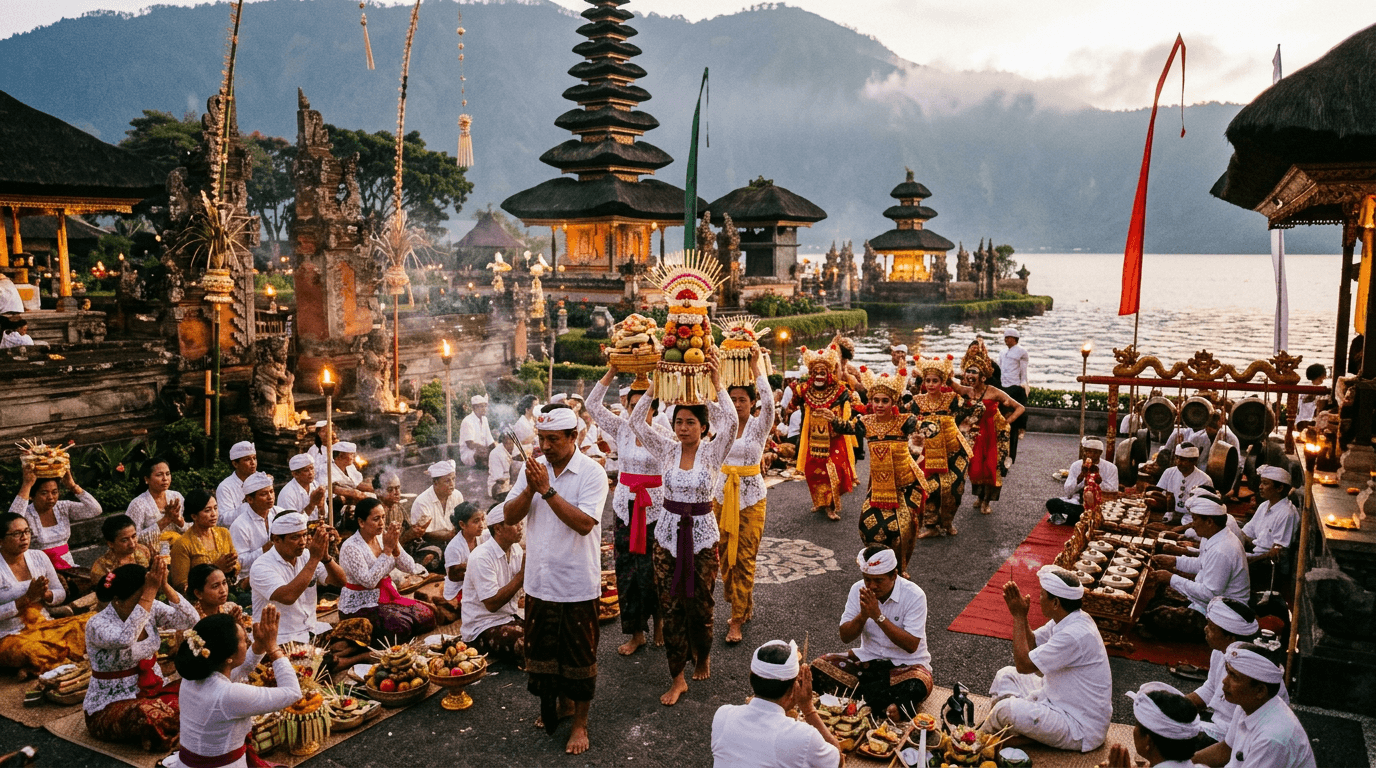
The first relationship, often called parahyangan, concerns humanity's bond with the gods and the spiritual realm. In daily life this shows up everywhere, from the tiny palm-leaf offerings placed on doorsteps and dashboards each morning to the grand temple festivals that punctuate the calendar. Every home, village and rice field has its shrines, and the rhythm of ceremony keeps the connection alive.
For the Balinese, acknowledging the divine is not occasional worship but a continuous, woven-through-everything practice of gratitude and respect.
Harmony Among People
The second relationship, pawongan, governs how people treat one another. Balinese society is built on tight community structures, most notably the banjar, a neighborhood association that organizes everything from ceremonies and weddings to mutual aid and local decision-making. Cooperation, shared labor and looking after one another are not abstract ideals but daily obligations.
This emphasis on community helps explain the warmth and generosity travelers so often encounter, as well as the remarkable way villages mobilize collectively for major events.
Harmony with Nature
The third relationship, palemahan, addresses the bond between people and their environment. Land, water, plants and animals are seen as partners in life rather than mere resources. The famous subak irrigation system, which shares mountain water fairly among rice farmers through a network of canals and temples, is a living expression of this principle, blending ecology, cooperation and spirituality into one system.
This worldview encourages stewardship: caring for the land is understood as caring for oneself and one's descendants.
How It Shapes the Island You See
Tri Hita Karana is not hidden in temples; it is visible in the very layout of Bali. Traditional compounds, villages and even the orientation of buildings follow a sacred geography that places the mountains and the divine at the top and the sea below. The principle has also been embraced in modern contexts, informing approaches to sustainable tourism, architecture and community development across the island.
Why It Matters for Visitors
Travelers do not need to adopt Balinese beliefs to appreciate the philosophy, but understanding it deepens any visit. It explains why you should step around offerings, dress respectfully at temples, and treat both people and the environment with care. Choosing responsible operators, reducing waste and engaging with communities respectfully are, in a sense, small acts of harmony in line with the island's own values.
A Philosophy for the World
In an age of environmental strain and social disconnection, Tri Hita Karana feels strikingly relevant beyond Bali's shores. Its simple insistence that wellbeing depends on balance, with the sacred, with each other and with nature, offers a quiet lesson to anyone who visits. Carry a little of it home, and the island will have given you more than memories.