 MyGlob Editorial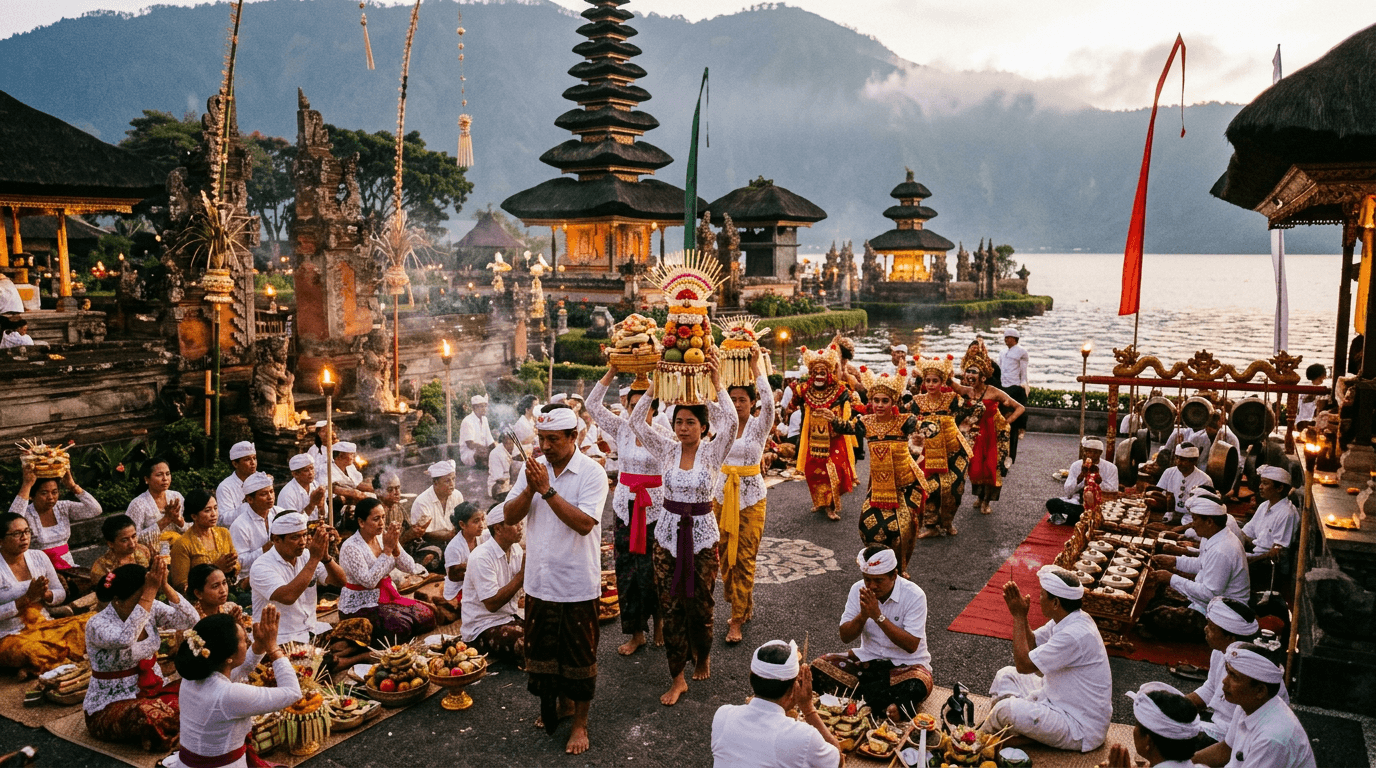
Bali is often called the island of a thousand temples, and the true number runs far higher. Yet within this vast spiritual landscape a small group stands above the rest. Known as the directional temples, or in Balinese the Sad Kahyangan, these great sanctuaries are believed to anchor the island and protect it from every direction. Visiting them is to trace a sacred map of Bali drawn across mountains, cliffs, lakes and forests.
What Are the Directional Temples?
The directional temples are a set of especially holy temples positioned around Bali to guard the island and maintain its spiritual equilibrium. They are tied to the points of the compass and to the gods associated with each direction. The concept is rooted in the Balinese understanding of nawa sanga, the nine-fold division of space with a deity presiding over each direction and the centre. Together these temples form a protective spiritual perimeter.
There is some variation in the traditional lists of which temples make up the group, and counts can differ between the Sad Kahyangan, the six great temples, and the wider Kahyangan Jagat, the temples of the universe. What unites them is their status as the most revered sanctuaries on the island.
Besakih: The Mother Temple
Towering on the slopes of Mount Agung, Bali's highest and holiest volcano, Pura Besakih is the greatest temple complex on the island and is often called the Mother Temple. It is a sprawling network of more than twenty temples rising up the mountainside in dramatic terraces. As the spiritual heart of Balinese Hinduism and the temple most closely associated with the sacred mountain, Besakih is the centrepiece of the island's temple hierarchy and a focus of major ceremonies.
Temples of the Sea: Uluwatu and Tanah Lot
Among the most photographed of the directional and great temples are those perched dramatically above the ocean. Pura Luhur Uluwatu clings to a sheer cliff on the southern Bukit Peninsula, with waves crashing far below and famous troops of monkeys patrolling its grounds, especially at sunset when fire-lit Kecak dance performances are staged nearby.
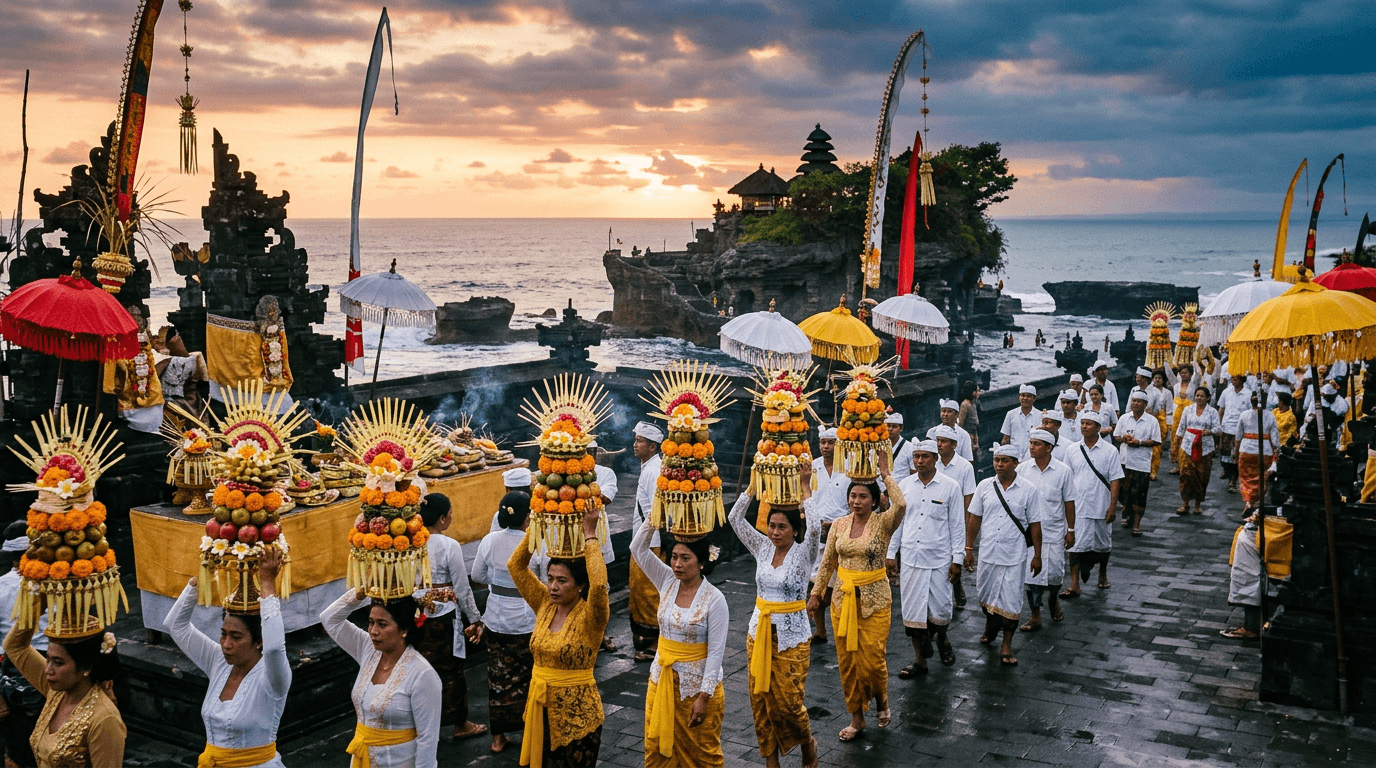
Pura Tanah Lot, though counted among Bali's great sea temples, sits on a rocky outcrop just offshore, accessible on foot only at low tide. Both temples honour the powerful spirits of the sea and form part of the chain of sanctuaries believed to guard Bali against threats arriving from the ocean.
Mountain and Lake Sanctuaries
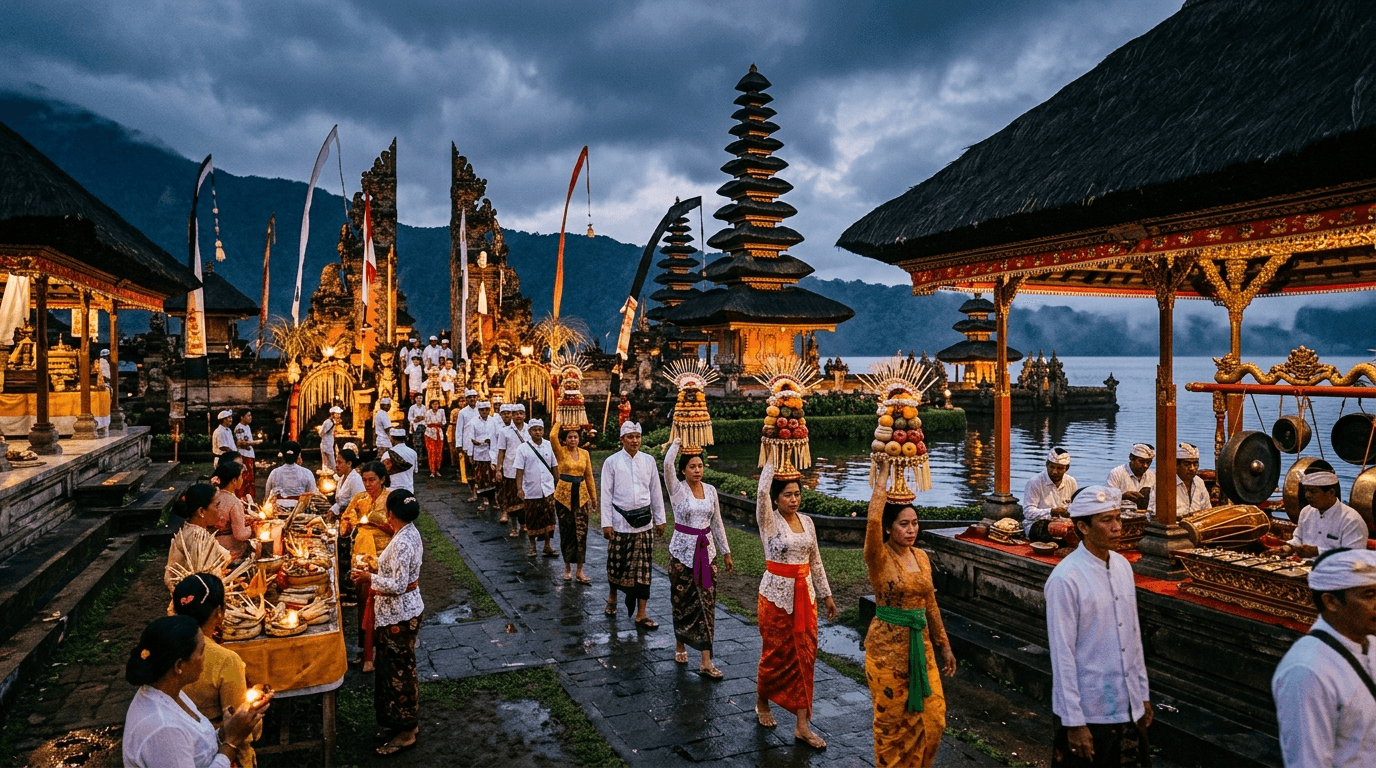
Other great temples reach toward the highlands and the sacred lakes. Pura Ulun Danu Bratan, mirrored in the still waters of its crater lake in the cool central mountains, honours the goddess of the waters that feed Bali's rice terraces, making it one of the island's most serene and iconic sights. Temples set among forests and on volcanic slopes complete the picture, reflecting the Balinese reverence for mountains as the dwelling place of the gods and the ultimate source of life-giving water.
Why the Directions Matter
The placement of these temples is no accident. In the Balinese cosmos, the mountains, kaja, are sacred and pure, while the sea, kelod, is associated with powerful and potentially dangerous forces. By ringing the island with temples at the key directional points and on its holiest peaks, the Balinese maintain a spiritual balance that keeps disorder at bay. Each temple is a node in a vast invisible architecture of protection that overlays the physical geography of Bali.
Visiting With Respect
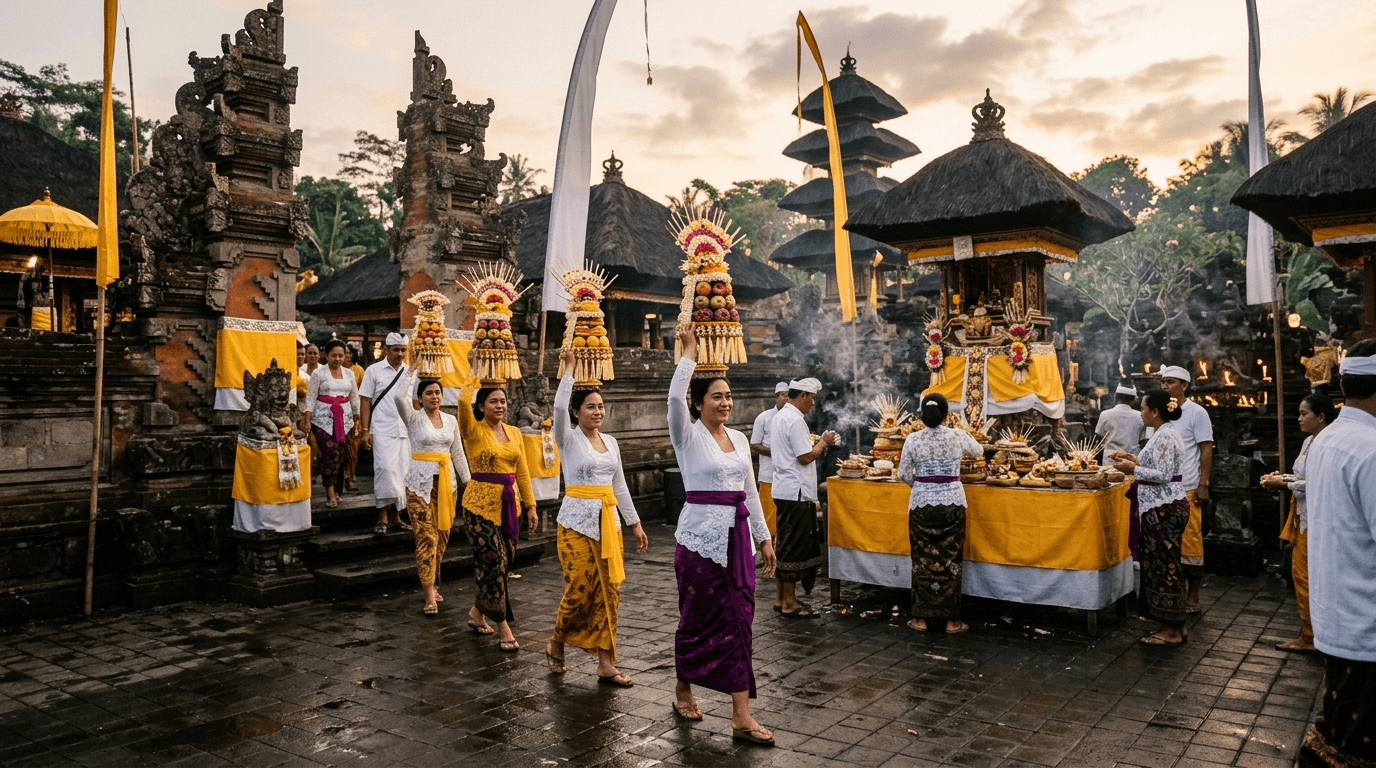
These are active places of worship, not museums, and they deserve careful, respectful behaviour from visitors. Many require a sarong and sash, which are often available to rent or borrow at the entrance, and some inner courtyards are reserved for praying devotees.
- Always wear a sarong and sash and cover your shoulders and knees.
- Stay out of the innermost areas reserved for worshippers unless clearly permitted.
- Do not enter a temple if you are unwell in ways tradition considers impure, and follow posted local customs.
- At Uluwatu, guard your belongings, sunglasses and phone from the resident monkeys.
- Be mindful during ceremonies and avoid intrusive photography of people in prayer.
A Sacred Circuit
Seen together, the directional and great temples of Bali form a pilgrimage of sorts, leading the traveller from clifftop to crater lake to volcanic mountainside. Each is breathtaking on its own, but understanding their shared purpose, to encircle and protect the island, transforms a series of beautiful stops into a single, profound encounter with the spiritual geography of Bali. Always check current opening times, dress codes and any ceremony closures before you go.