 MyGlob Editorial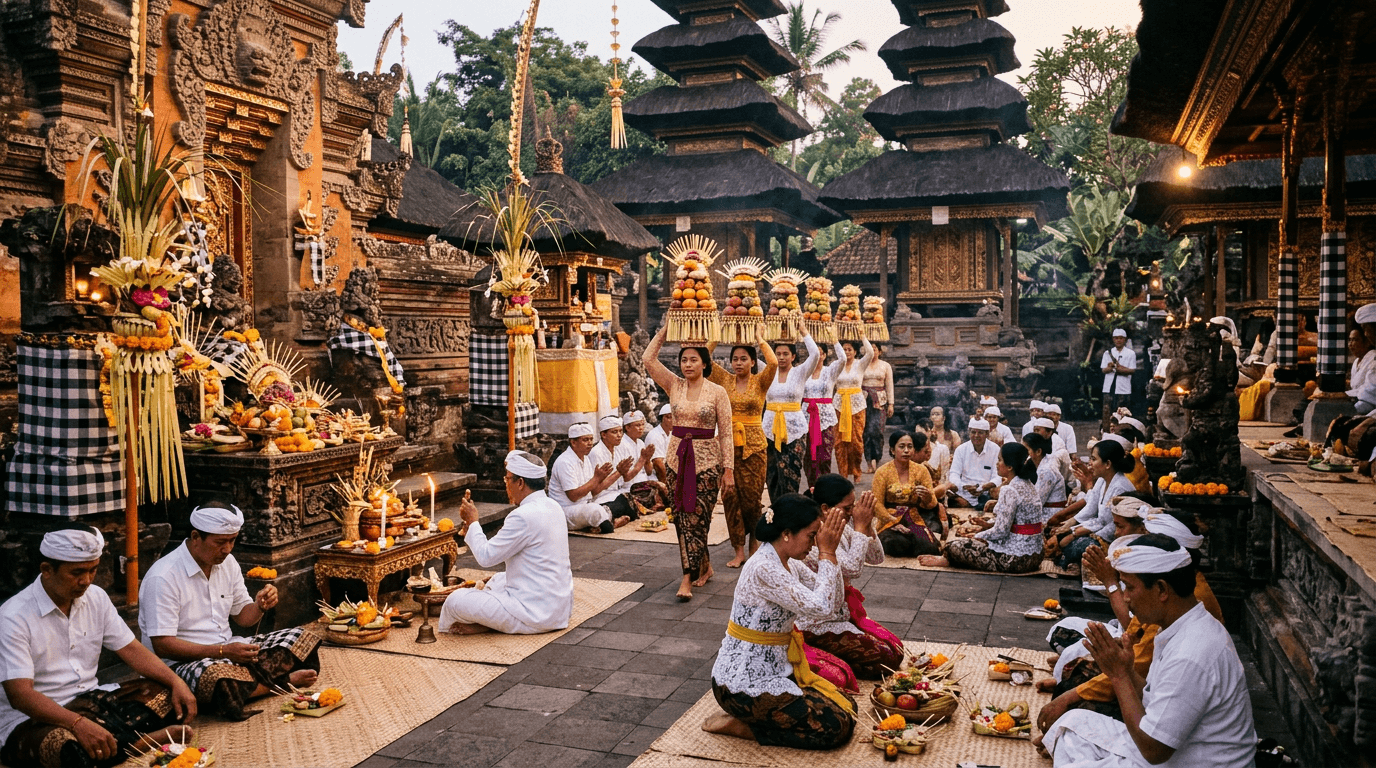
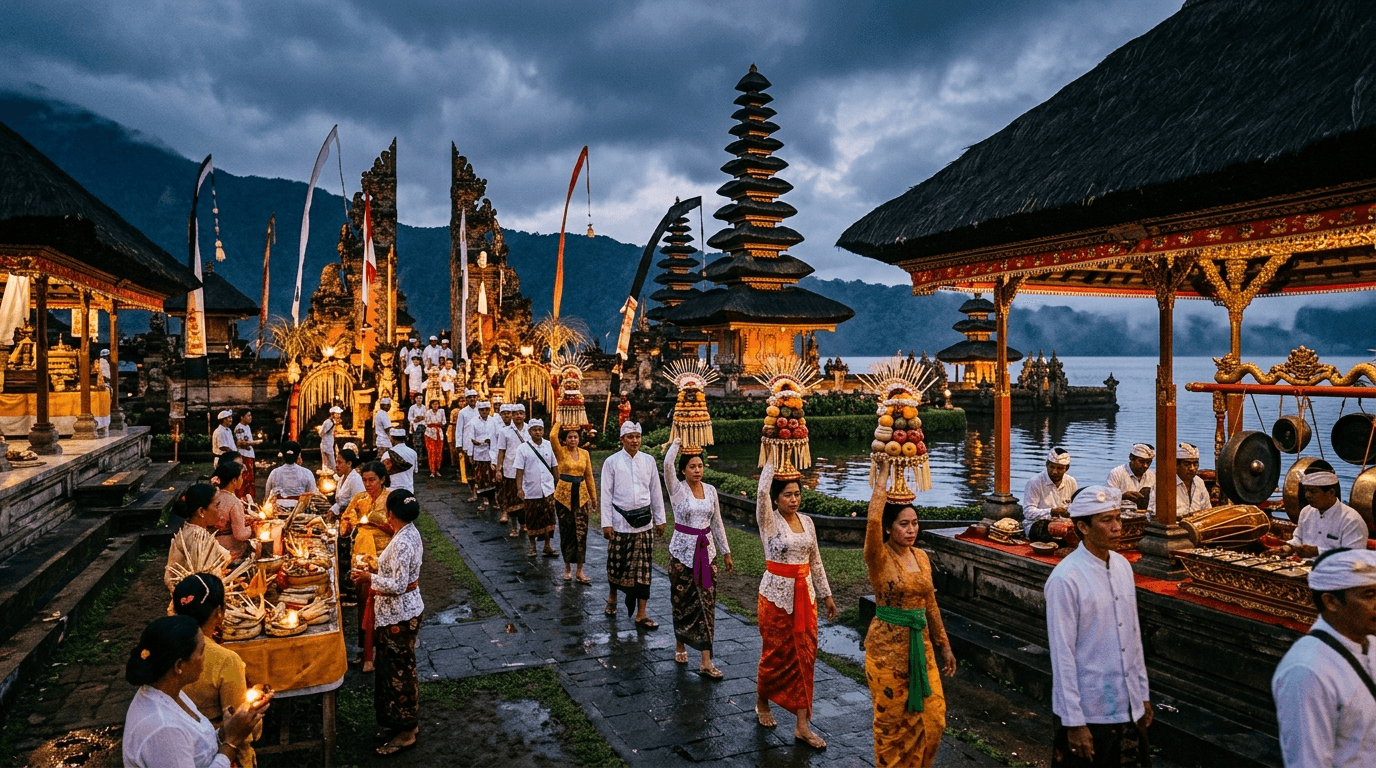
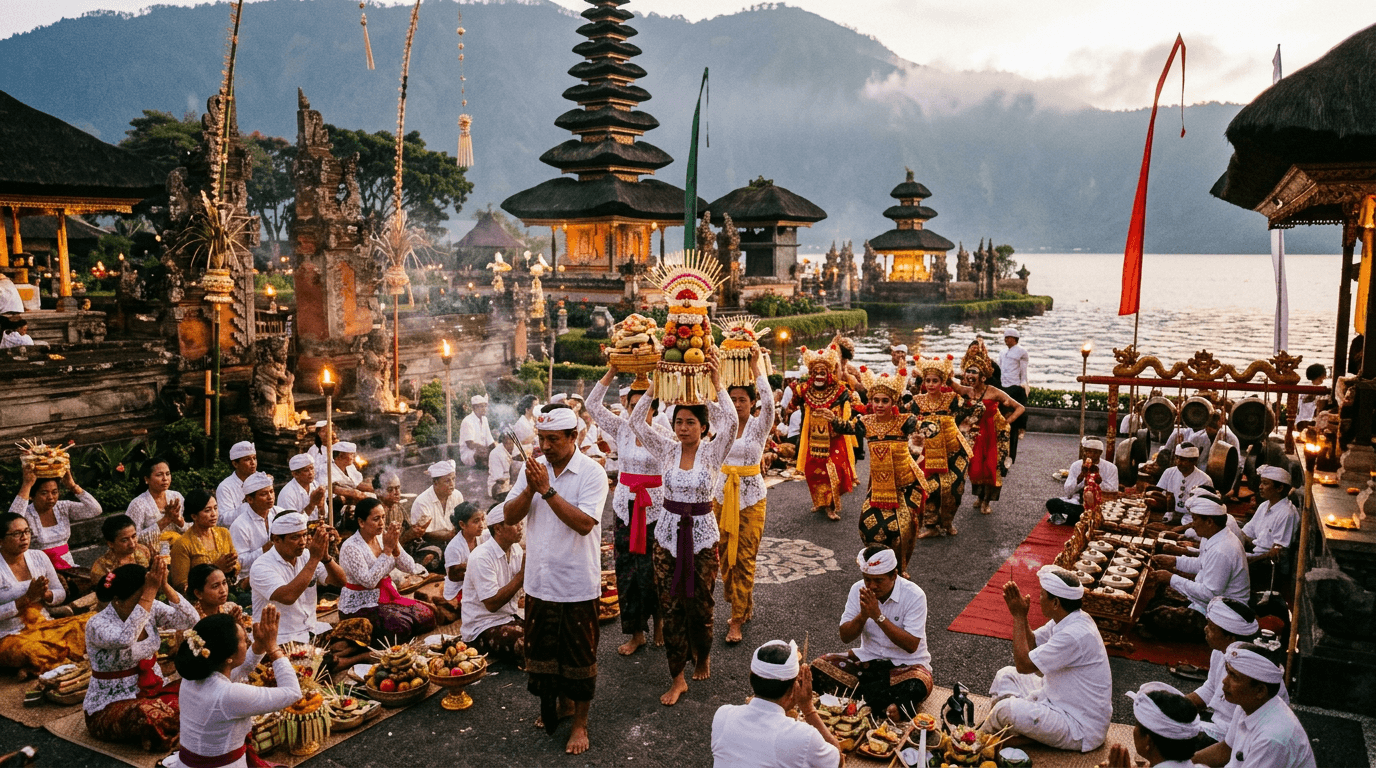
Visit Bali for a week and you will almost certainly stumble into a ceremony: a procession in white and gold, offerings stacked on a temple gate, or an entire village that has simply stopped to fall silent. Religious festivals are not occasional events here; they are the rhythm of life itself. The Balinese follow two overlapping calendars and a near-constant cycle of celebration that honours gods, ancestors and the delicate balance between good and evil.
Two Calendars, One Island
Understanding Bali's festivals starts with its calendars. The Pawukon is a 210-day cycle that governs many of the most important holidays, including Galungan and Kuningan, which therefore arrive roughly every seven months rather than once a year. Alongside it runs the Saka lunar calendar, which determines Nyepi, the Balinese New Year, falling around the spring equinox. Because dates shift each year, it is wise to confirm exact festival dates from official or local sources before planning a trip around them.
Galungan: When the Ancestors Return
Galungan is arguably the most important holiday in the Balinese Hindu calendar. It marks the victory of dharma (order and goodness) over adharma (chaos and evil), and the time when the spirits of deified ancestors descend to visit the family homes they once lived in. For ten days the gods and ancestors are believed to dwell on earth, and families welcome them with prayer, feasting and elaborate offerings.
The visual signature of Galungan is the penjor: tall, gracefully arching bamboo poles decorated with palm leaves, fruit, flowers and rice, planted outside every home and lining the roads. The effect transforms ordinary streets into golden tunnels of celebration. Families clean and decorate household temples, prepare special dishes, and dress in their finest traditional clothing to pray.
Kuningan: The Farewell
Ten days after Galungan comes Kuningan, the day the visiting ancestral spirits return to the heavens. The name comes from the yellow rice (nasi kuning) prepared as an offering, its colour symbolising gratitude and prosperity. Ceremonies are traditionally completed before midday, as the spirits are believed to ascend by noon. Special woven decorations and offerings are made to send the ancestors off with blessings, closing the sacred ten-day period that began with Galungan.
Melasti: Purification by the Sea
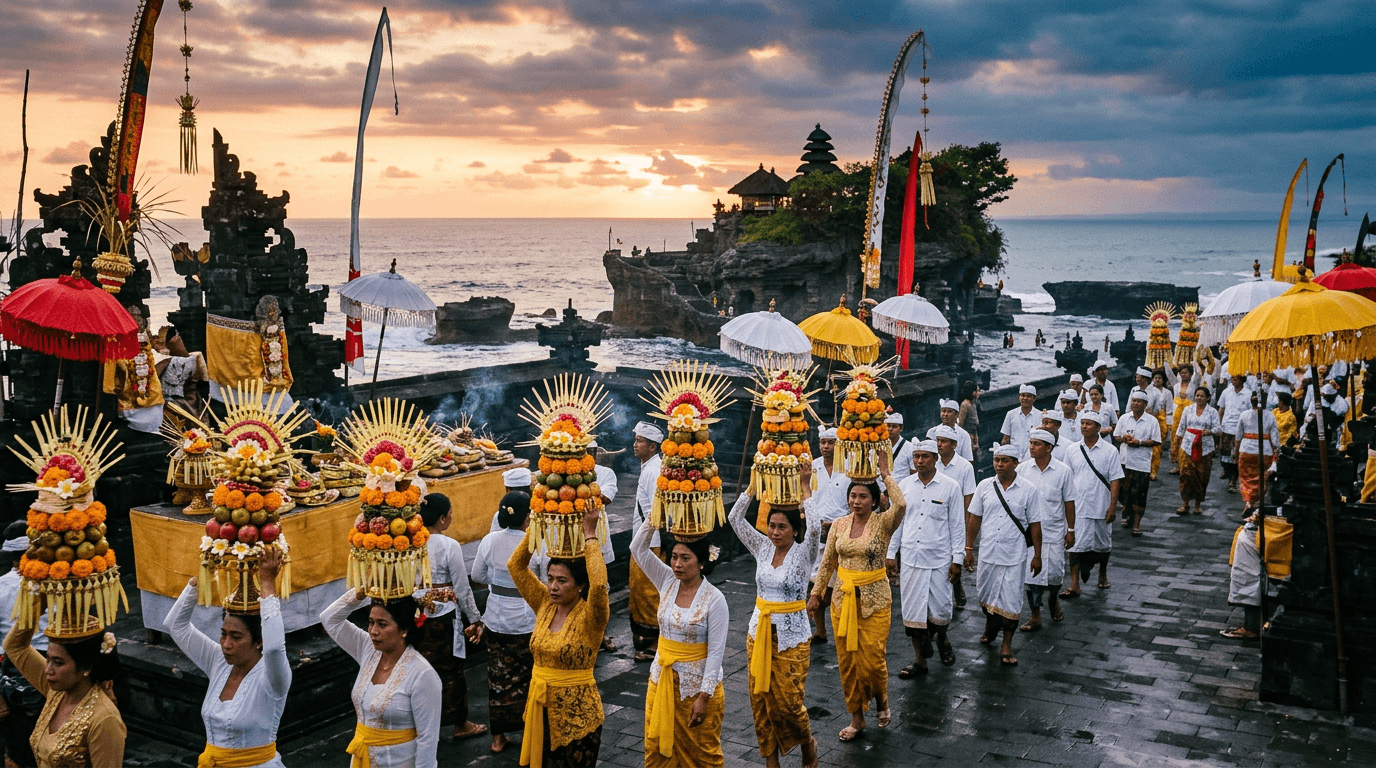
In the days leading up to Nyepi, villages across Bali hold the Melasti ceremony, a purification ritual performed at the coast or beside sacred springs and lakes. Sacred temple objects and effigies are carried in long, often spectacular processions down to the water, where the sea is believed to dissolve impurities and restore spiritual balance to the community and the cosmos.
For visitors, Melasti is one of the most photogenic of all Balinese ceremonies: rivers of worshippers in white streaming toward the beach, ceremonial parasols and banners catching the wind, gamelan music drifting over the sand. If you witness one, keep a respectful distance, dress modestly, and never block the procession.
Nyepi: The Day of Silence
Nyepi, the Balinese New Year, is unlike any holiday on earth. For a full 24 hours the entire island shuts down. No flights land or depart, the streets empty, lights are dimmed, shops close, and even speaking loudly is discouraged. The four traditional restraints, the Catur Brata Penyepian, ask for no fire or light, no work, no travel, and no entertainment or indulgence. The day is meant for reflection, fasting and meditation.
The night before Nyepi is its dramatic opposite. During the Ngrupuk parade, communities carry enormous, grotesque papier-mache monsters called Ogoh-ogoh through the streets, accompanied by torches, drums and chanting. The towering demons represent negative forces, which are paraded, shaken and finally symbolically destroyed, cleansing the island before the silence begins.
Travellers should plan carefully around Nyepi. Tourists are required to stay inside their hotels or accommodation for the full day; hotels continue to serve guests, but you cannot leave the premises or use the beach or pool in ways that disturb the silence. The airport closes completely. Far from being an inconvenience, many visitors describe it as the most memorable day of their trip: a star-filled sky undimmed by light pollution and a stillness found nowhere else.
How to Experience Bali's Festivals Respectfully
Ceremonies are religious acts, not performances staged for tourists, even when they unfold in public. A few simple courtesies make all the difference, and they are warmly appreciated by the Balinese.
- Dress modestly: a sarong and sash are expected at temples and many ceremonies.
- Keep your distance from processions and never walk in front of people praying.
- Ask before photographing individuals and avoid using flash during rituals.
- Respect the rules of Nyepi completely; stay quiet and stay inside.
- Plan travel and shopping ahead, since many businesses close on major holidays.
To watch a Balinese festival is to glimpse a worldview in which the spiritual and the everyday are inseparable. Whether it is the joyful golden streets of Galungan or the profound silence of Nyepi, these ceremonies are the beating heart of the island, and the privilege of witnessing them comes with the responsibility of doing so with respect.