 MyGlob Editorial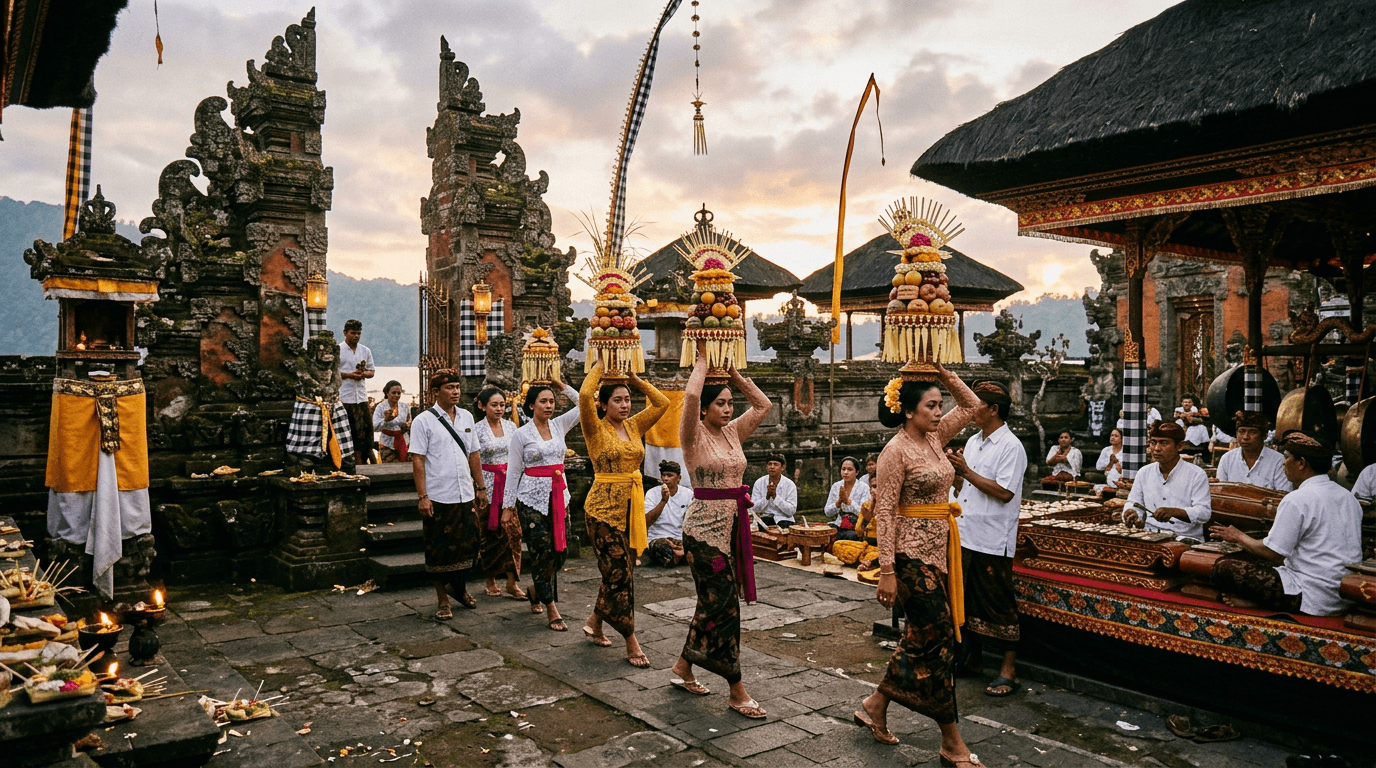
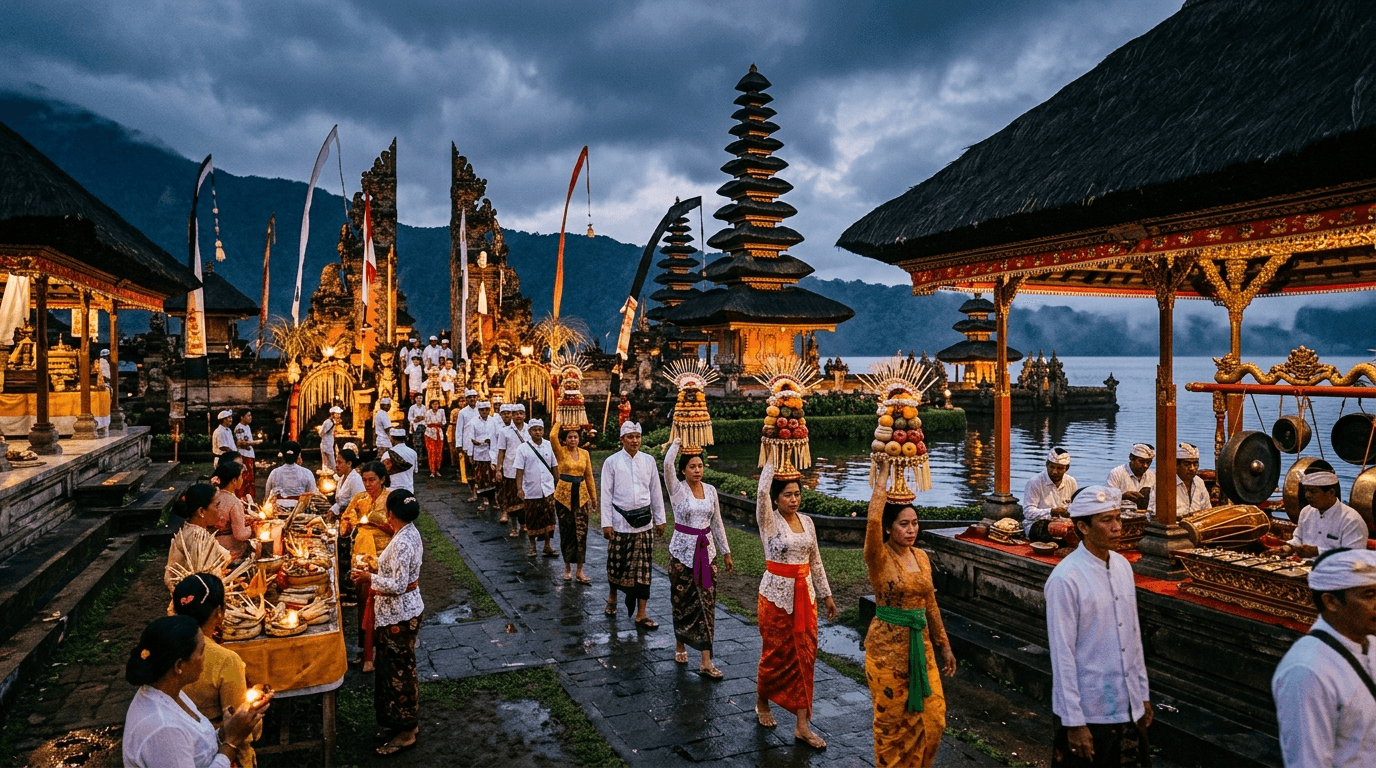
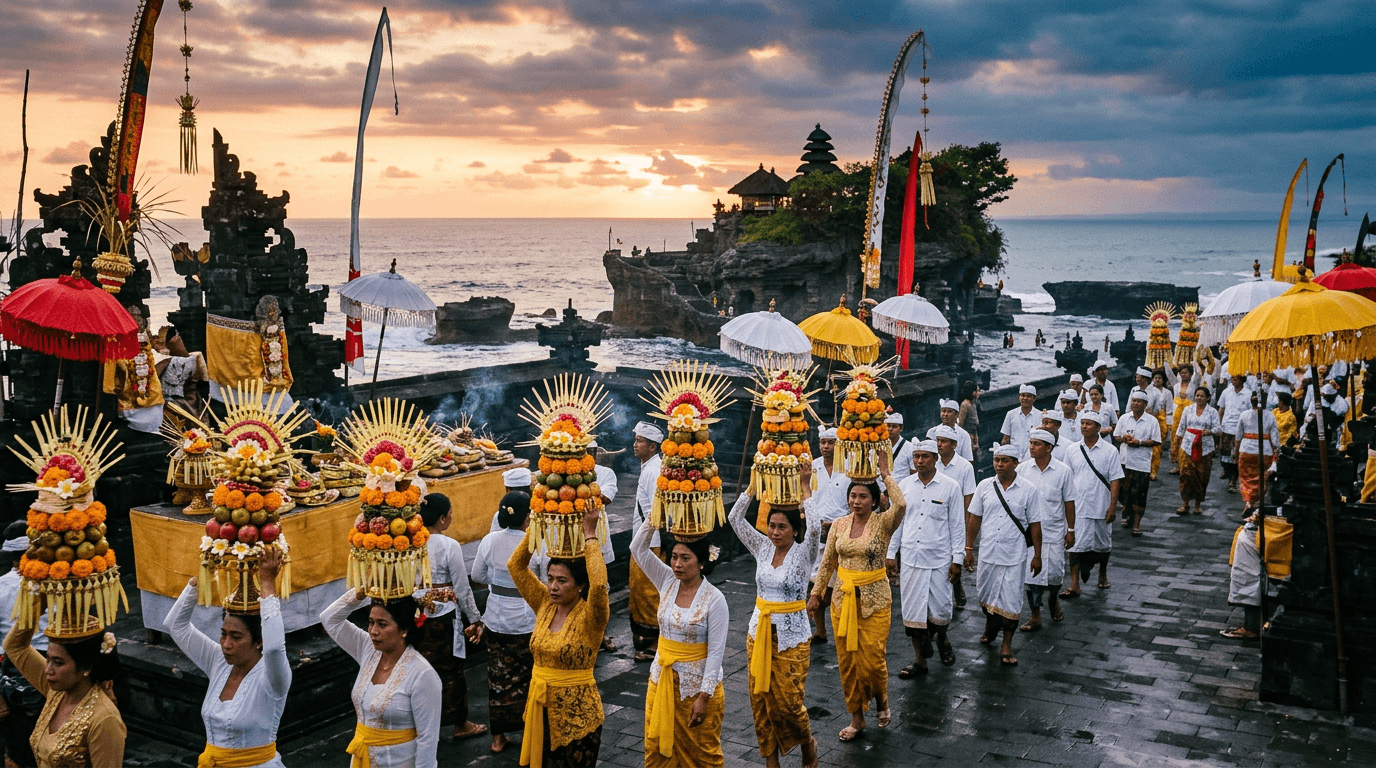
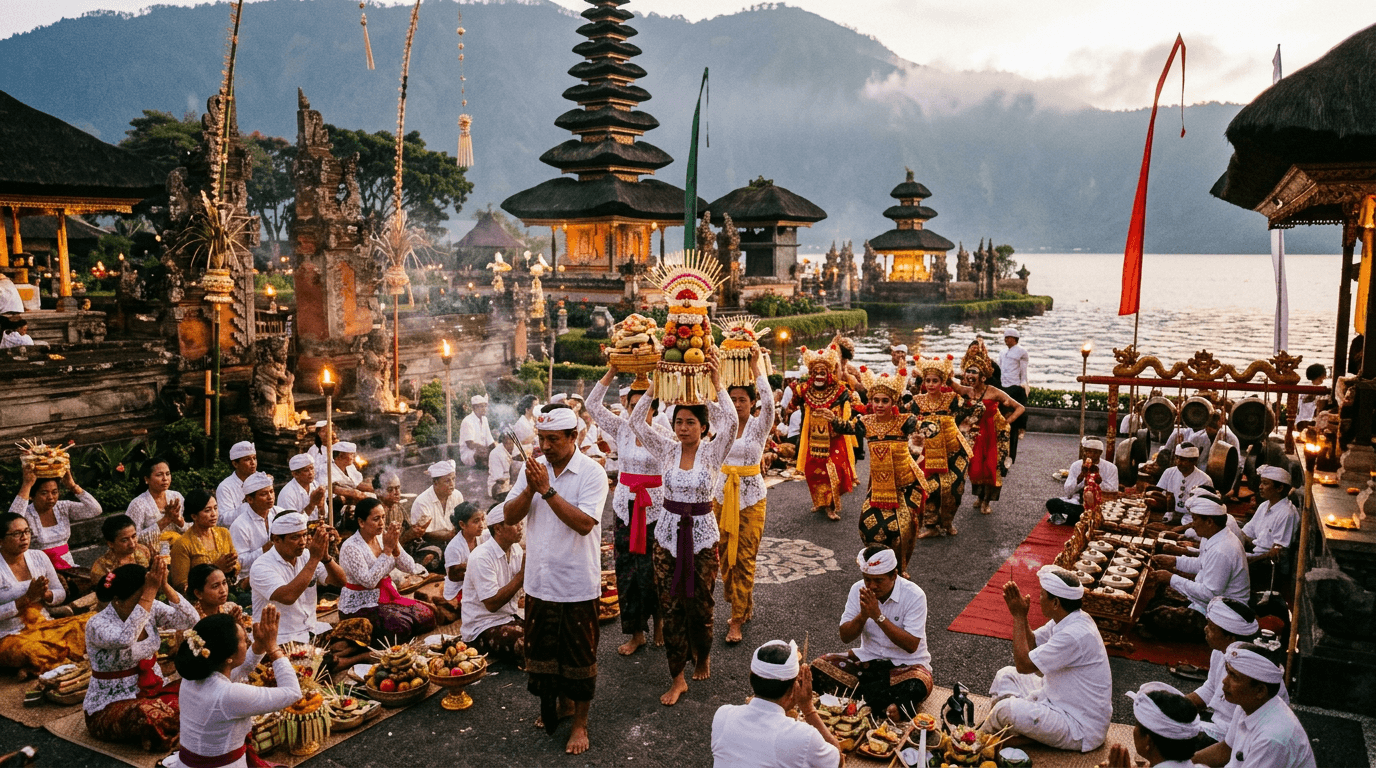
If you arrive in Bali in the days around Galungan, you will witness one of the island's most beautiful sights. Outside every home and along every road stand tall bamboo poles, arching overhead like a procession of golden fishing rods, their tips heavy with palm leaf, flowers, fruit and woven ornaments. These are penjor, and they turn ordinary Balinese streets into corridors of celebration. But the penjor is far more than festive decoration. It is a dense bundle of meaning, a physical prayer raised toward the heavens.
What a Penjor Symbolises
At its heart, the penjor is an expression of gratitude to Ida Sang Hyang Widhi Wasa, the supreme god, for the prosperity and abundance the earth provides. Its graceful curved shape is said to represent Mount Agung, Bali's highest and most sacred volcano, the dwelling place of the gods. By raising a penjor, a family symbolically brings the holy mountain to their doorstep and bows it in reverence.
The penjor is also associated with the naga, the mythical dragon or serpent linked to fertility, water and prosperity. The whole structure becomes an offering of thanks for the harvest and a request for continued blessings, planted at the very moment, during Galungan, when the gods and ancestors are believed to descend to earth.
The Anatomy of a Penjor
A traditional penjor is built from a single long bamboo pole, chosen for its natural arc, and dressed with materials drawn from the land. Each element carries symbolism, often representing the produce of the earth and the components of nature that sustain life.
- The curved bamboo pole, evoking the sacred Mount Agung.
- Sampian, an intricate hanging ornament woven from young coconut leaves at the tip.
- Agricultural offerings such as rice, corn, coconut, fruit and tubers.
- Palm-leaf decorations and sometimes cloth that flutter along the pole's length.
- A small shrine or offering box (sanggah) at the base for daily offerings.
Sacred Versus Decorative Penjor
Not every penjor you see is the same. The Balinese distinguish between the penjor used as part of a sacred ceremony, complete with all its religious elements and the base shrine, and simpler decorative penjor erected purely to beautify streets, hotels or events. The ceremonial penjor follows traditional rules about materials and form, while the decorative version takes more creative liberty. Both are beautiful, but only the sacred penjor carries full ritual weight.
When and How Long They Appear
Penjor are raised the day before Galungan, on a day called Penampahan, and they remain standing throughout the ten-day sacred period until after Kuningan, when the ancestral spirits return to the heavens. For roughly a month before and after, much of Bali is lined with these golden arches, a clear visual signal to visitors that one of the island's most important religious seasons is underway. Because Galungan follows the 210-day Pawukon calendar, it falls roughly twice a year; checking local sources will tell you exactly when.
The Craft Behind the Curve
Making a penjor is a labour of devotion that often involves the whole family. Selecting and cutting the right bamboo, weaving the delicate coconut-leaf ornaments, and assembling the offerings can take a full day or more. In many households the men raise the heavy pole while the women prepare the woven decorations and offerings, a division of work that turns penjor-making into a communal ritual in itself. The artistry varies from simple and rustic to extravagantly ornate, and friendly informal competition over the most beautiful penjor in a neighbourhood is part of the fun.
How to Appreciate Penjor as a Visitor
Penjor are wonderful to photograph, especially in the soft light of early morning or late afternoon when the low sun catches the swaying palm-leaf decorations. As you admire them, remember that the small shrines at their base hold genuine offerings; never step over offerings or touch the structures. If you want to understand them more deeply, ask your driver or guide, most Balinese are delighted to explain the meaning behind their penjor. Seeing these golden arches stretch into the distance along a country road is one of those uniquely Balinese images that stays with travellers long after they leave the island.