 MyGlob Editorial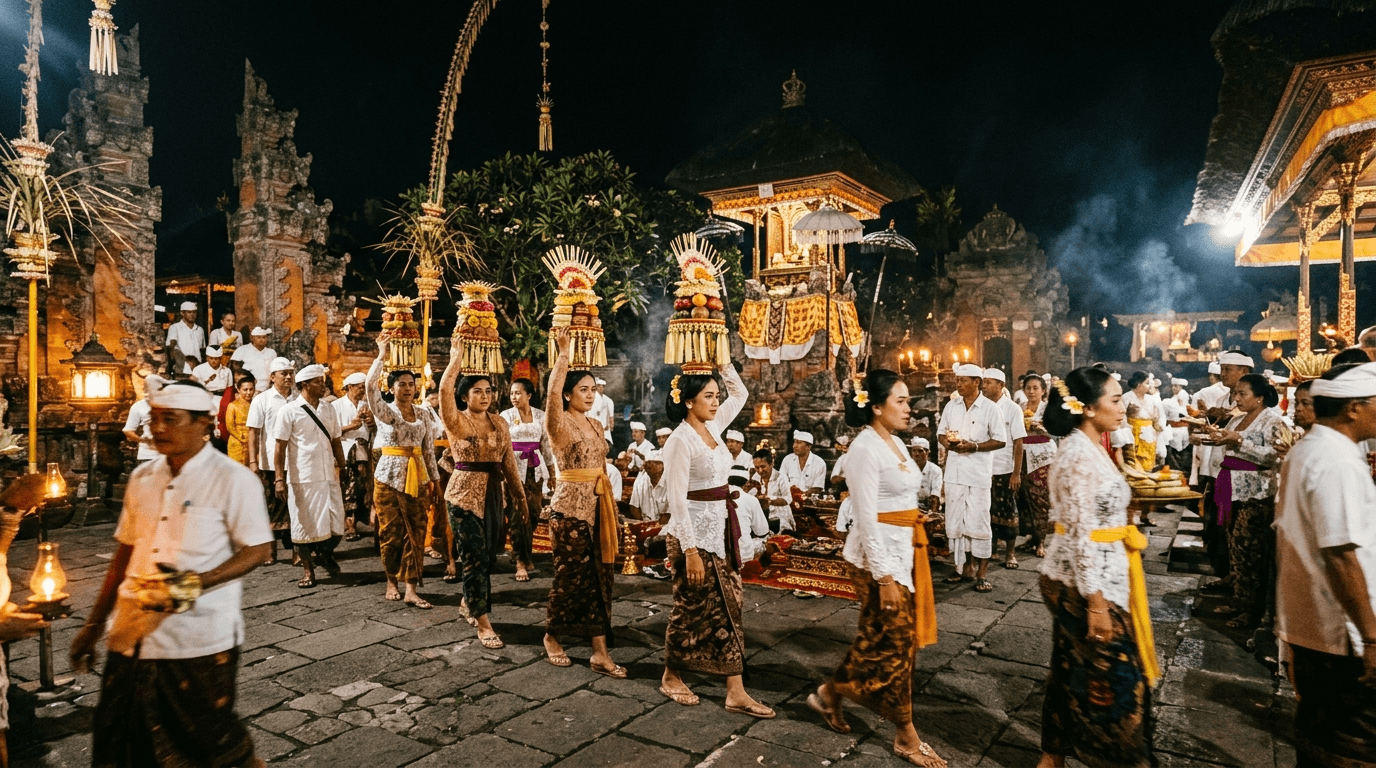
Bali is sometimes called the Island of a Thousand Temples, but the real number runs into the tens of thousands. From grand sea temples to the tiny shrines in every family compound, each one has a consecration anniversary, and each anniversary is celebrated with a festival called Odalan. Because there are so many temples and the celebrations follow a recurring calendar, an Odalan is happening somewhere on the island almost every day of the year. For travellers, this means the most authentic Balinese ceremony you ever witness may be one you simply happened upon.
What Odalan Means
Odalan is the anniversary of a temple's founding or consecration, a celebration of the day the temple was first sanctified and the gods invited to reside within it. On this day the deities are believed to descend and occupy the temple once more, and the community gathers to welcome, honour and entertain them with prayer, offerings, music and dance. It is, in a sense, the temple's birthday party, hosted for the gods and the ancestors.
Why It Comes Around So Often
Most Odalan follow the 210-day Pawukon calendar, which means a temple celebrates its anniversary roughly every seven months rather than once a year. Some temples, however, mark their Odalan by the lunar Saka calendar, in which case the festival falls about once a year on the full moon of a particular month. Either way, the date of each temple's Odalan is fixed by its own calendar, so dedicated worshippers know exactly when their temples will celebrate. If you hope to witness a specific temple's Odalan, ask locally, as the timing varies temple by temple.
What Happens During an Odalan
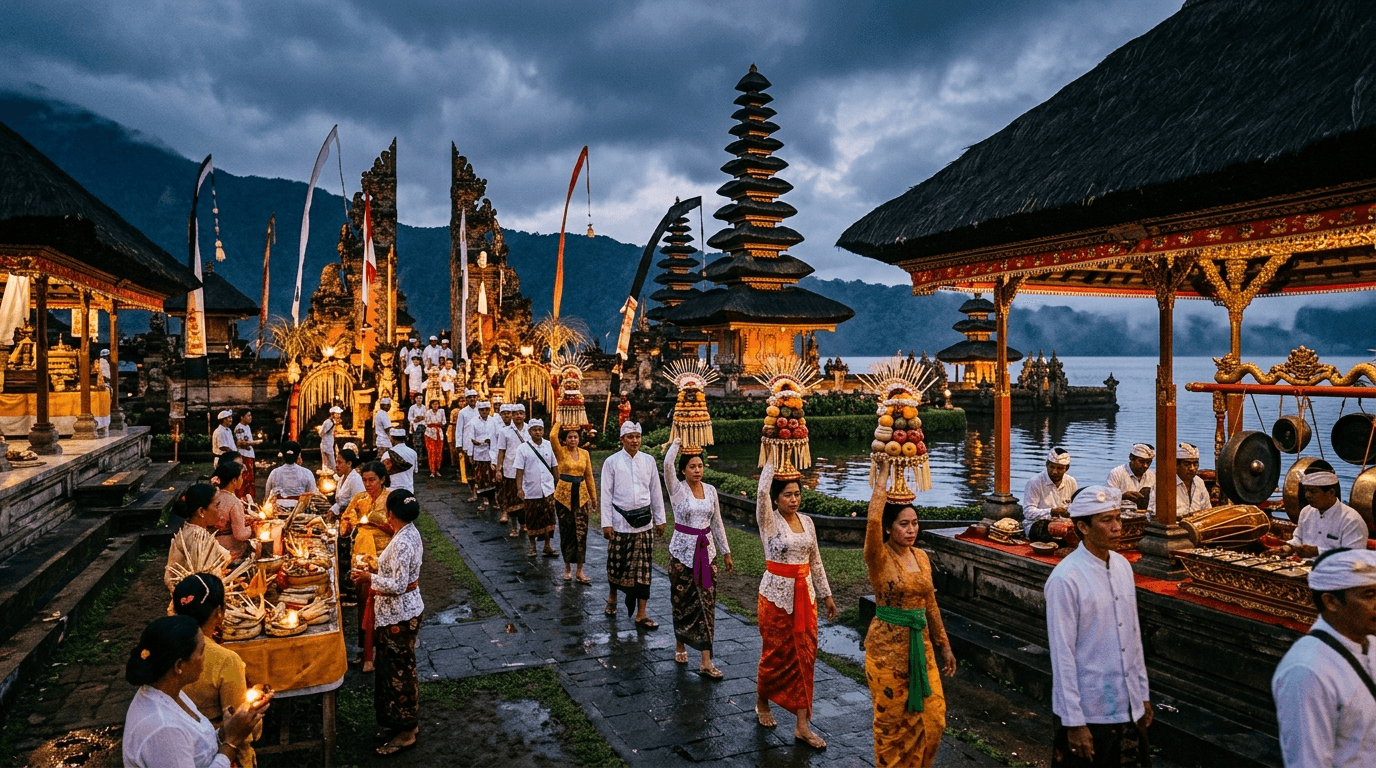
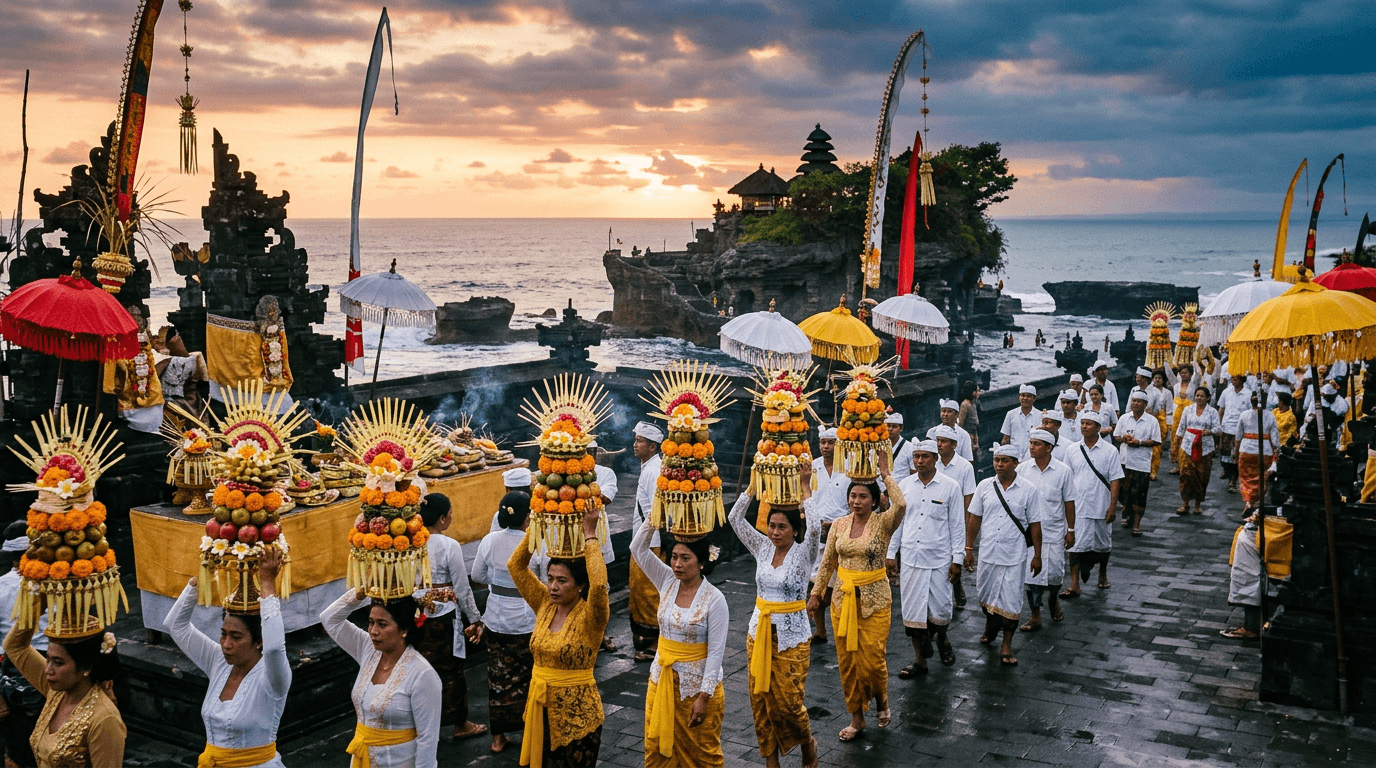
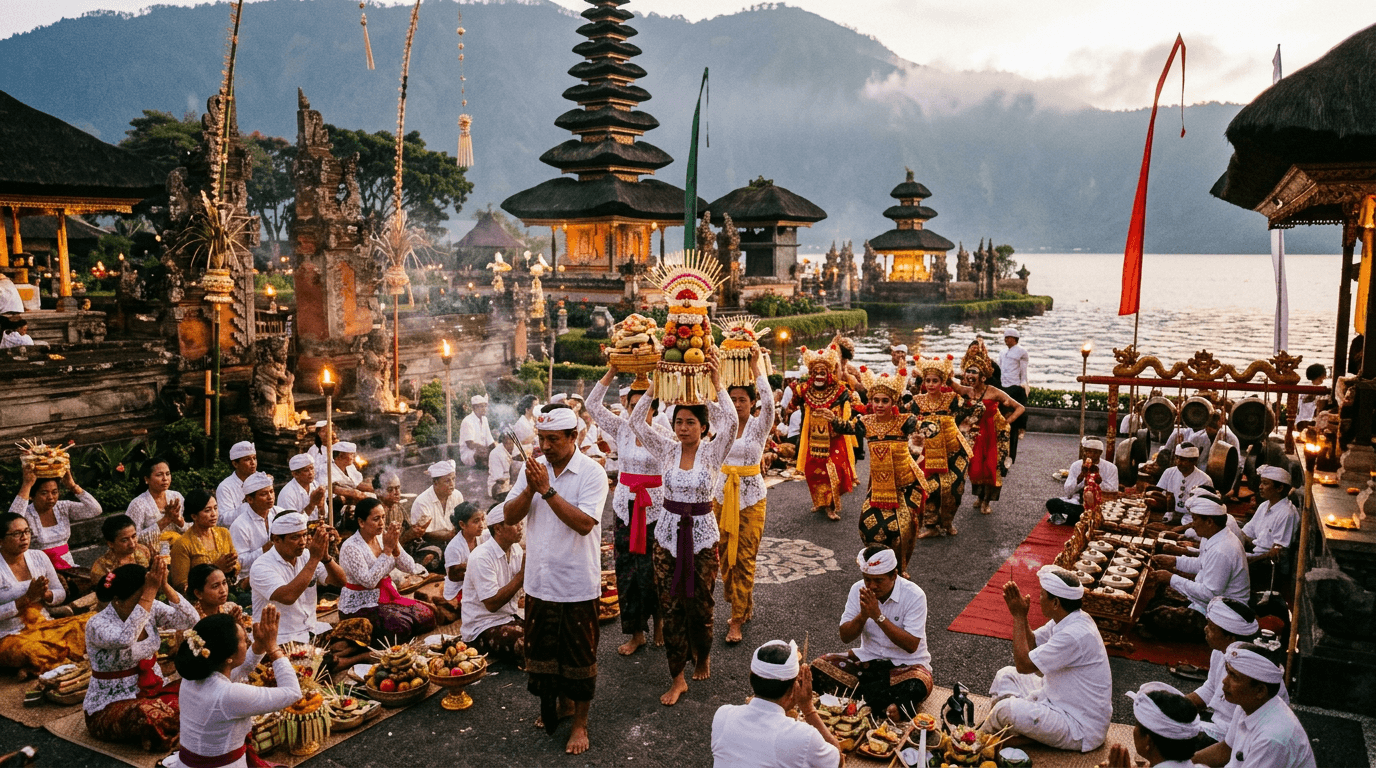
An Odalan transforms a temple completely. Days of preparation precede it: cleaning the grounds, dressing shrines in fresh cloth, building offerings and decorating gates with palm-leaf ornaments. On the day itself, villagers arrive in their finest traditional dress, women balancing towering offerings of fruit, cakes and flowers on their heads in stacks that can be astonishingly tall.
- Elaborate offerings (banten) presented to the visiting deities.
- Communal prayer led by a priest (pemangku or pedanda), with holy water blessings.
- Gamelan music filling the temple with shimmering bronze sound.
- Sacred dances such as Rejang or Topeng performed as offerings to the gods.
- Days of festivity that may run from a single day to a week or more.
The Role of the Community
An Odalan is a community effort organised by the banjar, the local neighbourhood association that underpins Balinese social life. Everyone has a role: preparing food, weaving decorations, providing music, or performing dances passed down through generations. The work is unpaid and given freely as a religious and social duty, and it is one of the threads that binds Balinese communities so tightly together. Watching a village pour days of collective labour into honouring its temple reveals how deeply Hinduism is woven into daily life here.
How to Behave If You Encounter One
Because Odalan are so frequent, the odds are good that you will come across one. Visitors are generally welcome to observe respectfully, but remember you are a guest at a sacred event, not an audience at a show.
- Wear a sarong and sash; these are required to enter a temple in ceremony.
- Dress modestly with shoulders covered, and remove hats inside the temple.
- Never sit higher than the priest or the offerings, and avoid pointing your feet at shrines.
- Stay at the back, do not block worshippers, and ask before taking close-up photos.
- Women who are menstruating traditionally do not enter temple grounds.
Why Odalan Is Worth Seeking Out
Major festivals like Galungan and Nyepi draw the headlines, but Odalan offers something quieter and, in many ways, more revealing. Unstaged and unhurried, it shows Balinese Hinduism as it is actually lived: at the neighbourhood temple, among friends and family, with the gentle insistence that the sacred and the everyday belong together. Ask your driver or hotel whether an Odalan is happening nearby; being welcomed to observe one, dressed properly and behaving with respect, can be the most memorable cultural moment of an entire trip to Bali.