 MyGlob Editorial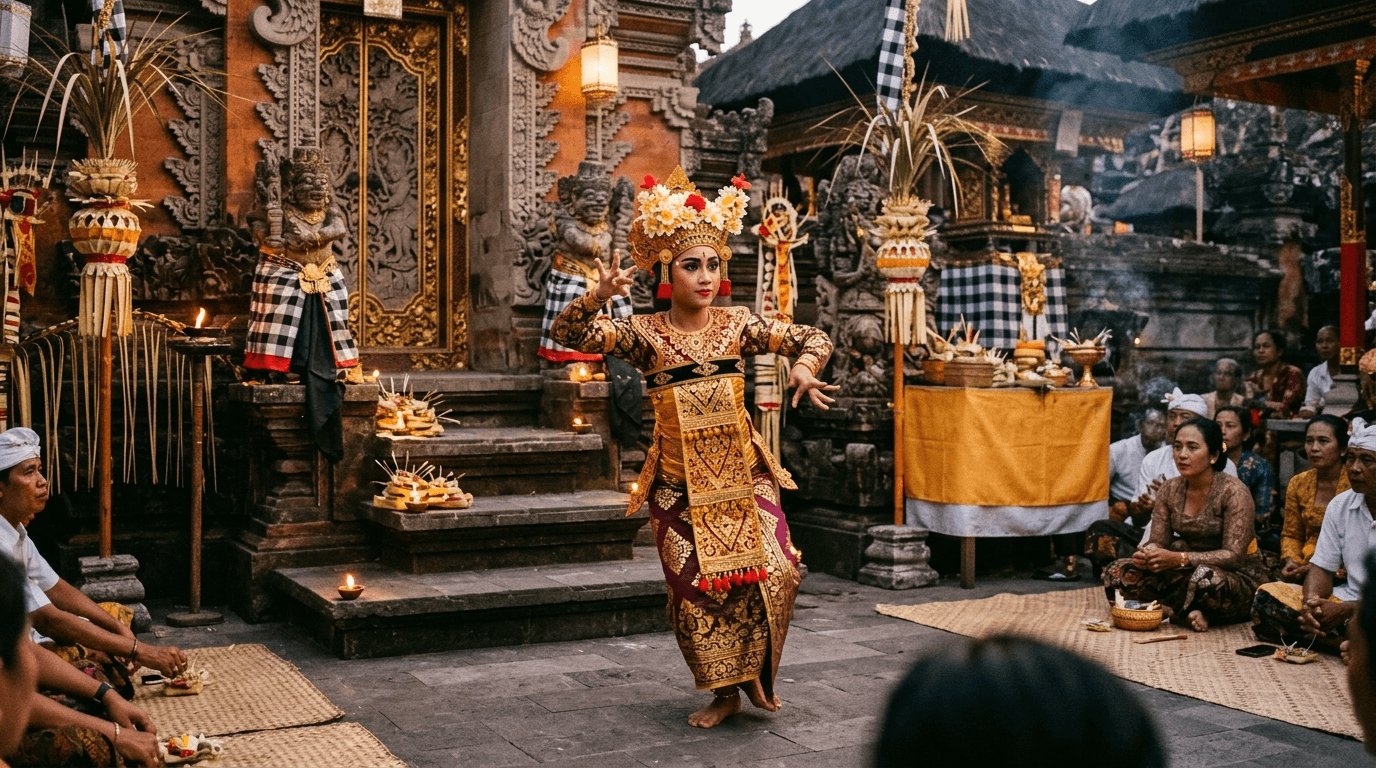
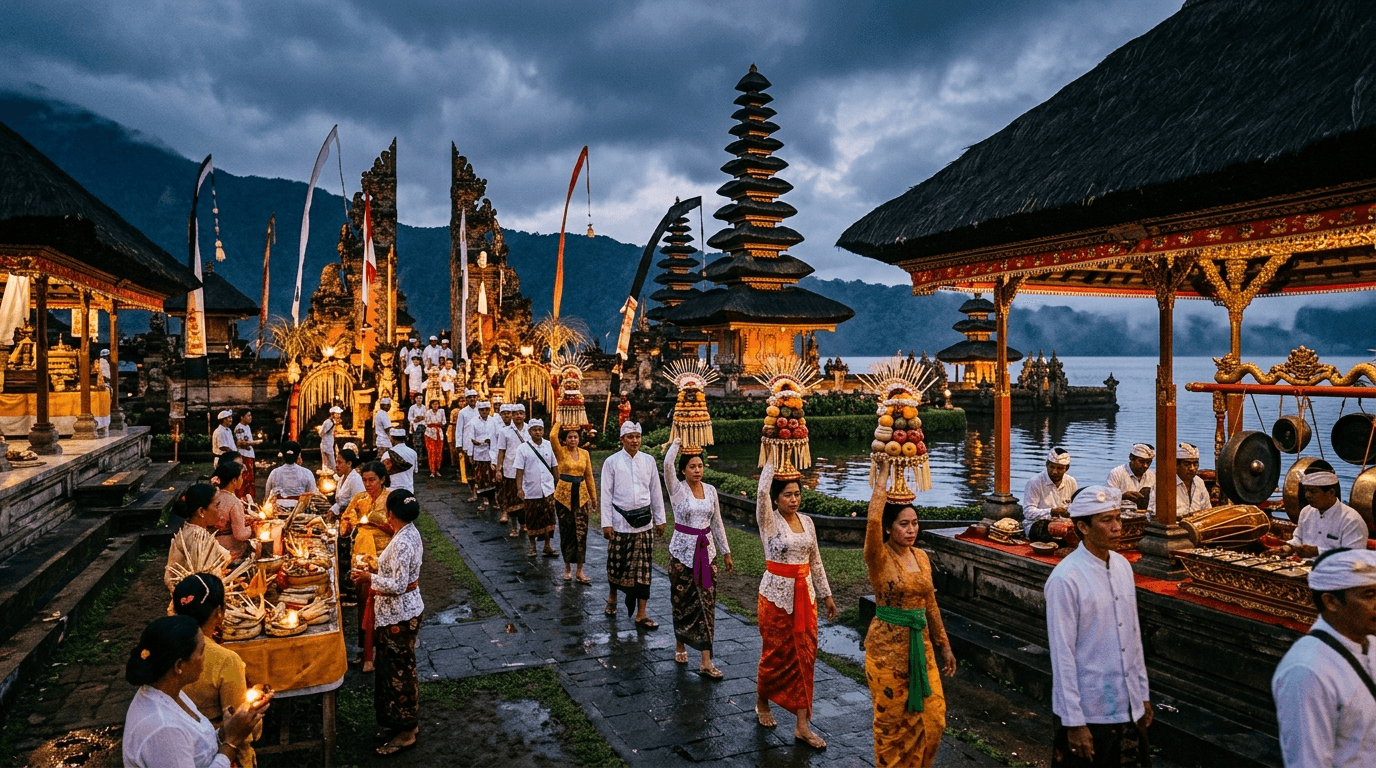
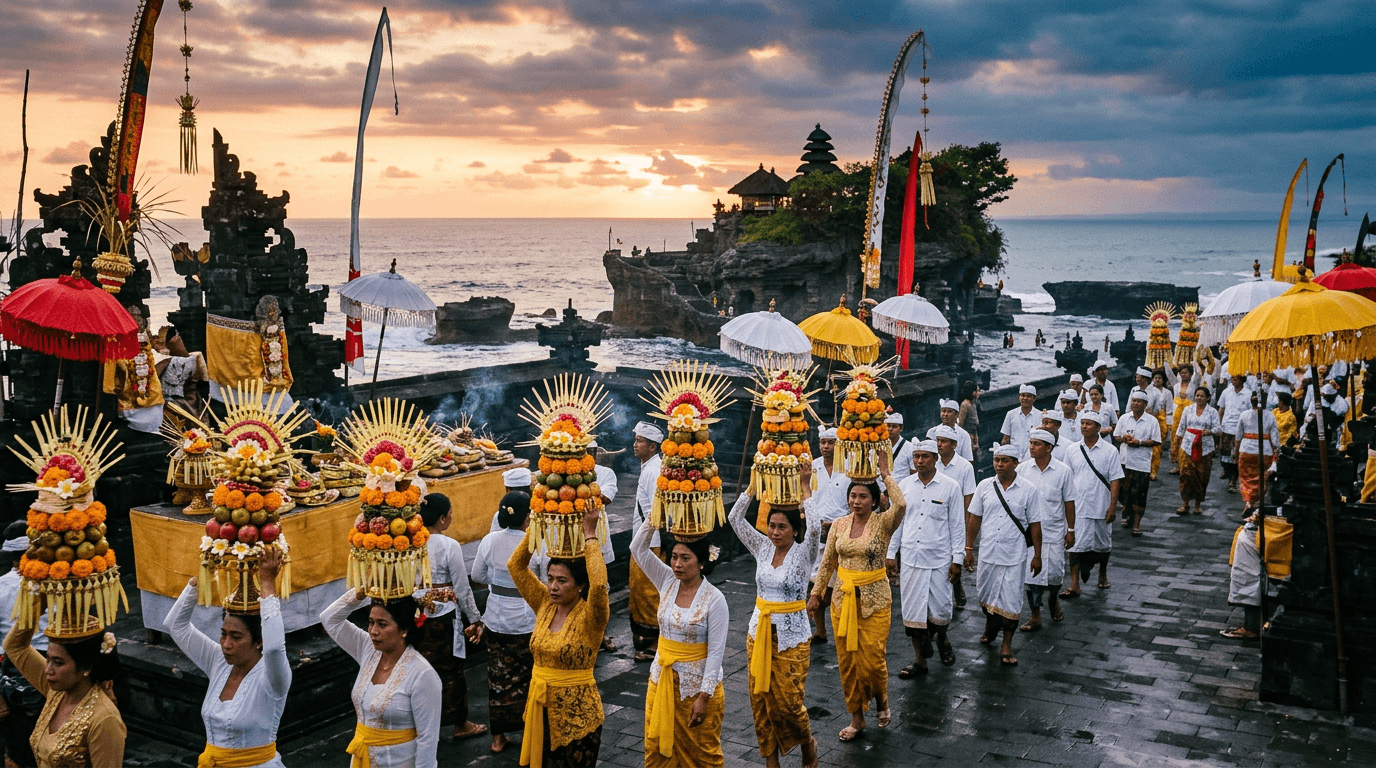
In the days leading up to the Balinese New Year, something extraordinary unfolds along the coastlines of Bali. Long processions of villagers dressed in white move toward the sea, carrying ceremonial parasols, banners and the sacred objects of their temples. They are heading to the water for Melasti, a ritual of purification that cleanses both the community and its holiest relics before the year begins anew. For visitors, Melasti is a rare chance to witness profound Balinese devotion in a spectacular open-air setting.
What Melasti Is
Melasti is a purification ceremony performed in the days before Nyepi, the Day of Silence. Its purpose is twofold: to cleanse sacred objects and to restore harmony to the world. Worshippers carry the deities and revered items of their temple, usually housed in small palanquins, down to a source of holy water, most often the sea, but sometimes a sacred lake or spring. There, the symbolic impurities of both people and objects are washed away, and the cosmos is rebalanced ahead of the new year.
The Meaning Behind the Water
In Balinese Hindu belief, the sea is a powerful source of purification, the place where impurities are dissolved and life energy is renewed. Water itself, amerta, is sacred and life-giving. By bringing the temple's sacred objects to the ocean, the community draws on this cleansing power to neutralise negativity that has accumulated over the year. Melasti is therefore not just a washing but a spiritual reset, preparing both the human and divine worlds for renewal.
When Melasti Takes Place
Melasti is held in the days immediately before Nyepi, which falls in March around the spring equinox according to the Saka lunar calendar. Different villages and temples schedule their Melasti on slightly different days within this window, so the ceremonies unfold across the island over several days rather than all at once. Because the exact dates shift each year, it is best to confirm the timing locally or through official sources, and to ask your hotel or a local guide when and where nearby processions will pass.
What You Will See
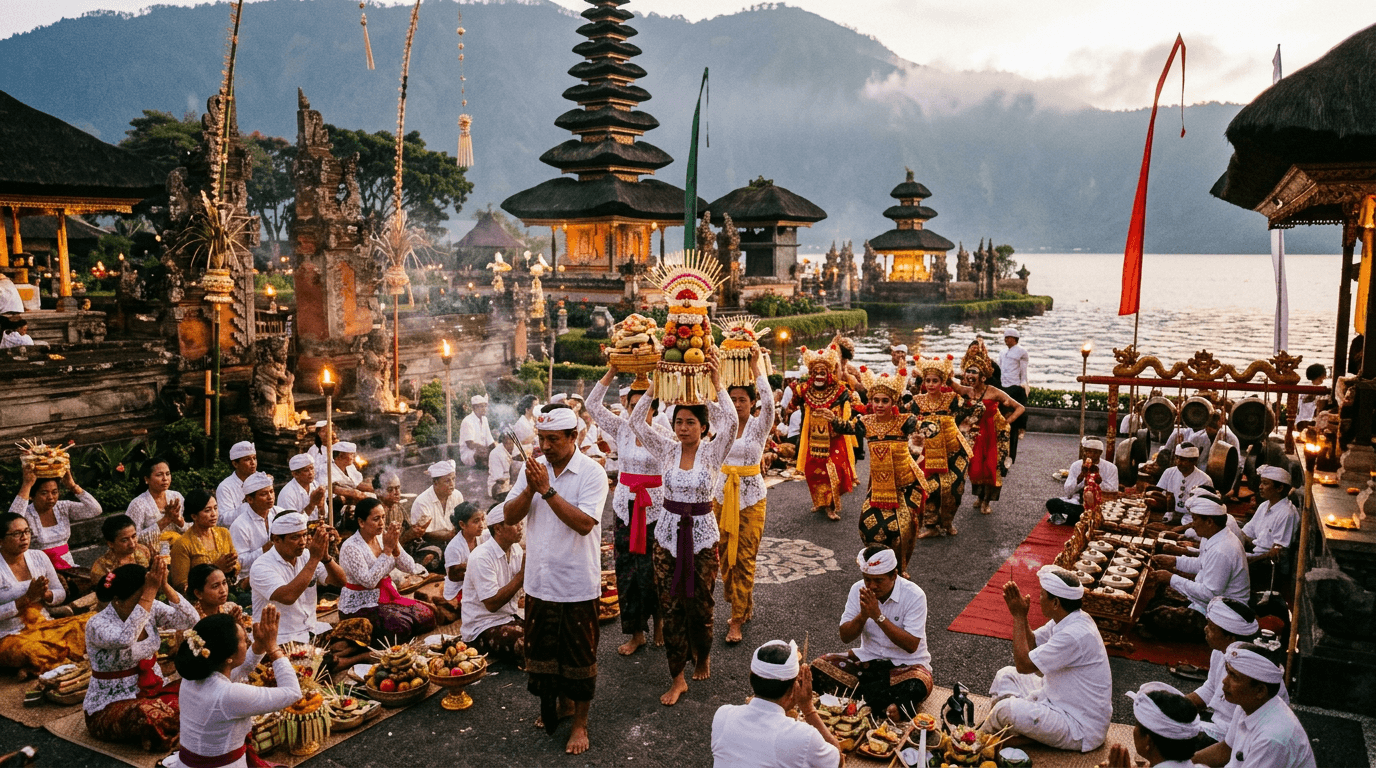
Melasti is one of the most visually striking ceremonies in Bali, a moving river of colour, sound and devotion making its way to the shore.
- Long processions of worshippers dressed almost entirely in white.
- Sacred temple objects and effigies carried in ornate palanquins.
- Towering ceremonial parasols, flags and banners in gold and bright colours.
- Gamelan musicians and sometimes ceremonial figures accompanying the procession.
- Prayers, offerings and blessings performed at the water's edge.
Where to Watch Melasti
Because every coastal community holds its own Melasti, processions can be seen at beaches all around the island, from the busy southern shores to quieter stretches in the east and west. Temples set near the sea, particularly the dramatic clifftop and oceanfront temples, often host especially memorable ceremonies. Rather than chasing a specific famous spot, the easiest approach is to ask where the nearest village will hold its procession; you may find one passing remarkably close to where you are staying. Arrive early, as crowds and the participants themselves gather well before the rituals at the water begin.
How to Watch Respectfully
Melasti is a sacred religious ceremony, not a tourist performance, even though it takes place in public. Observing with respect is essential and deeply appreciated by the Balinese.
- Dress modestly with shoulders and knees covered; a sarong and sash are ideal.
- Never walk in front of, through or against the flow of the procession.
- Keep a respectful distance from the sacred objects and from people praying.
- Ask before taking close-up photos of individuals and avoid using flash.
- Stay quiet and unobtrusive; do not treat the ritual as a backdrop for selfies.
To stand on a Balinese beach as a procession of white-clad worshippers carries their gods down to the sea, parasols swaying and gamelan ringing across the sand, is to witness the island at its most devout and beautiful. Melasti is the gentle, purifying overture to Nyepi, and catching one is a privilege that rewards every traveller who approaches it with curiosity and respect.