 MyGlob Editorial
Spend any time in Bali and you will see it everywhere: a priest flicking water from a flower over bowed heads, droplets glistening on offerings, a family sprinkling their shrine at dawn. Holy water, known as tirta, is the single most essential element of Balinese Hindu practice. So central is it that the island's distinctive faith is often called Agama Tirta, the religion of holy water. Understanding tirta is to understand the spiritual rhythm that beats beneath everyday Balinese life.
What Holy Water Means
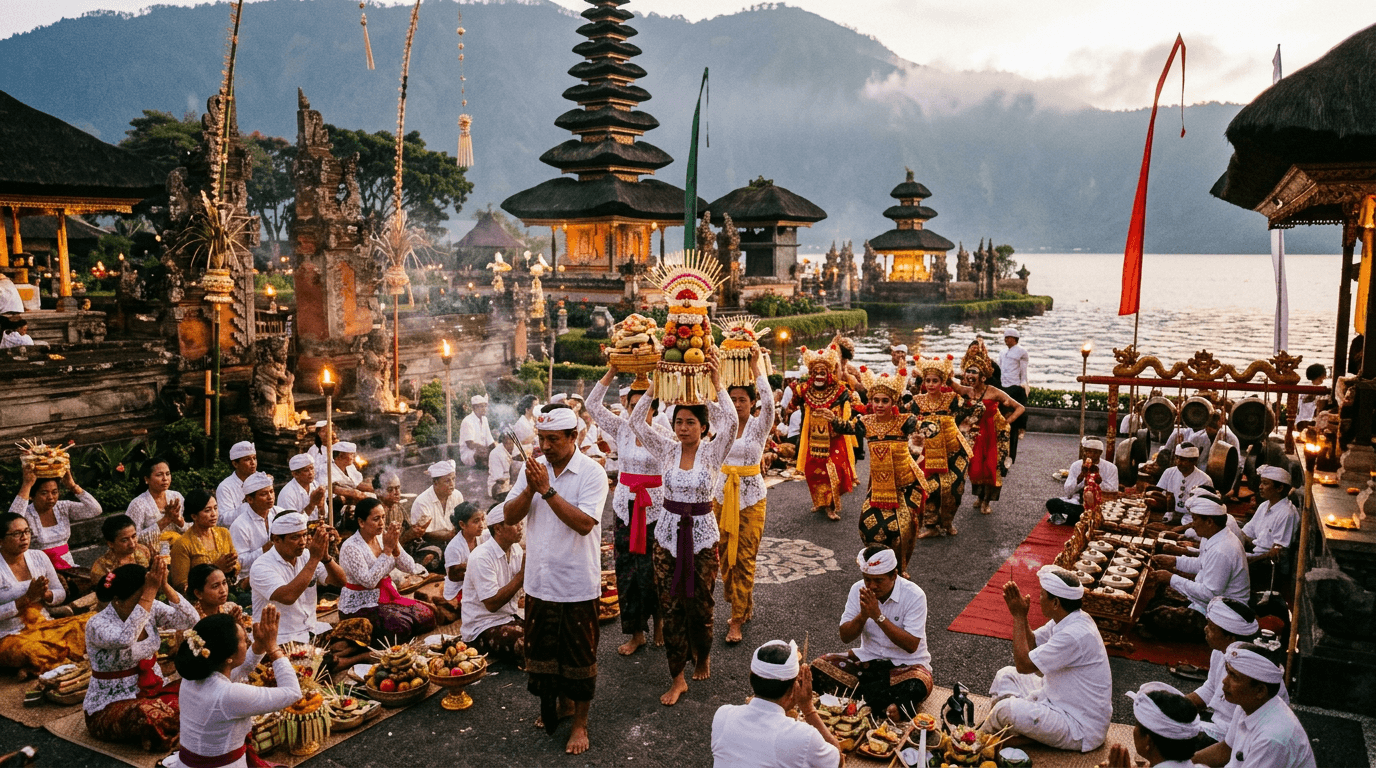
Tirta is water that has been blessed and infused with spiritual power, transforming it from ordinary water into a sacred medium. It is believed to carry purifying energy capable of cleansing both body and soul, removing negative influences and connecting worshippers with the divine. No major ceremony in Bali is complete without it. Whether for a temple festival, a wedding, a cremation or a simple household blessing, holy water is the indispensable thread that ties the ritual together.
Where Holy Water Comes From
Tirta is drawn from many sources, each with its own significance. Some comes from sacred springs and mountain lakes, places considered naturally pure. Some is consecrated by high priests, known as pedanda, through elaborate prayers, mantras and offerings. Famous temples are renowned for their holy water, and devotees travel to collect it for important ceremonies. The most powerful tirta is created by priests during ritual, but spring water from a sanctified site is also widely revered.
Tirta Empul: The Island's Most Famous Source
No discussion of holy water is complete without Tirta Empul, the temple near Tampaksiring whose name literally refers to a holy spring that bubbles up from the earth. According to legend the spring was created by the god Indra, and for more than a thousand years pilgrims have come to bathe in its sequence of carved stone fountains. The ritual of melukat, spiritual cleansing, draws both Balinese devotees and respectful visitors who move from spout to spout, praying and purifying themselves. It remains one of Bali's most moving cultural experiences.
How Holy Water Is Used in Ritual
- Sprinkling: a priest uses a flower or special whisk to flick tirta over worshippers as a blessing.
- Drinking: a small sip of holy water is taken three times during prayer as an act of inner purification.
- Anointing: water is touched to the head as a final blessing, sometimes with grains of rice pressed to the forehead.
- Consecration: offerings, shrines and ceremonial objects are sprinkled to sanctify them.
Etiquette for Visitors
Travellers are often welcome to witness and even take part in water rituals, but respect is essential. Wear a sarong and sash at temples, follow the guidance of local attendants, and at bathing sites such as Tirta Empul use the appropriate fountains and avoid the ones reserved for funerary purification. Dress modestly, keep your voice low, never point your feet at shrines, and ask before photographing people in prayer. Approaching these moments as a guest in a sacred space, rather than a spectacle, honours the meaning that tirta holds for the Balinese.
Why Holy Water Defines Balinese Faith
In a religion that blends Hindu cosmology with ancient local belief, holy water is the great unifier, the element that makes the sacred tangible. It links the high peaks where the gods are said to dwell with the smallest household shrine, and it carries blessing from temple priest to ordinary family. To watch tirta sprinkled over a row of bowed heads is to glimpse the quiet devotion at the centre of Balinese life. For visitors seeking to understand the island beyond its scenery, holy water is the most revealing place to begin.