 MyGlob Editorial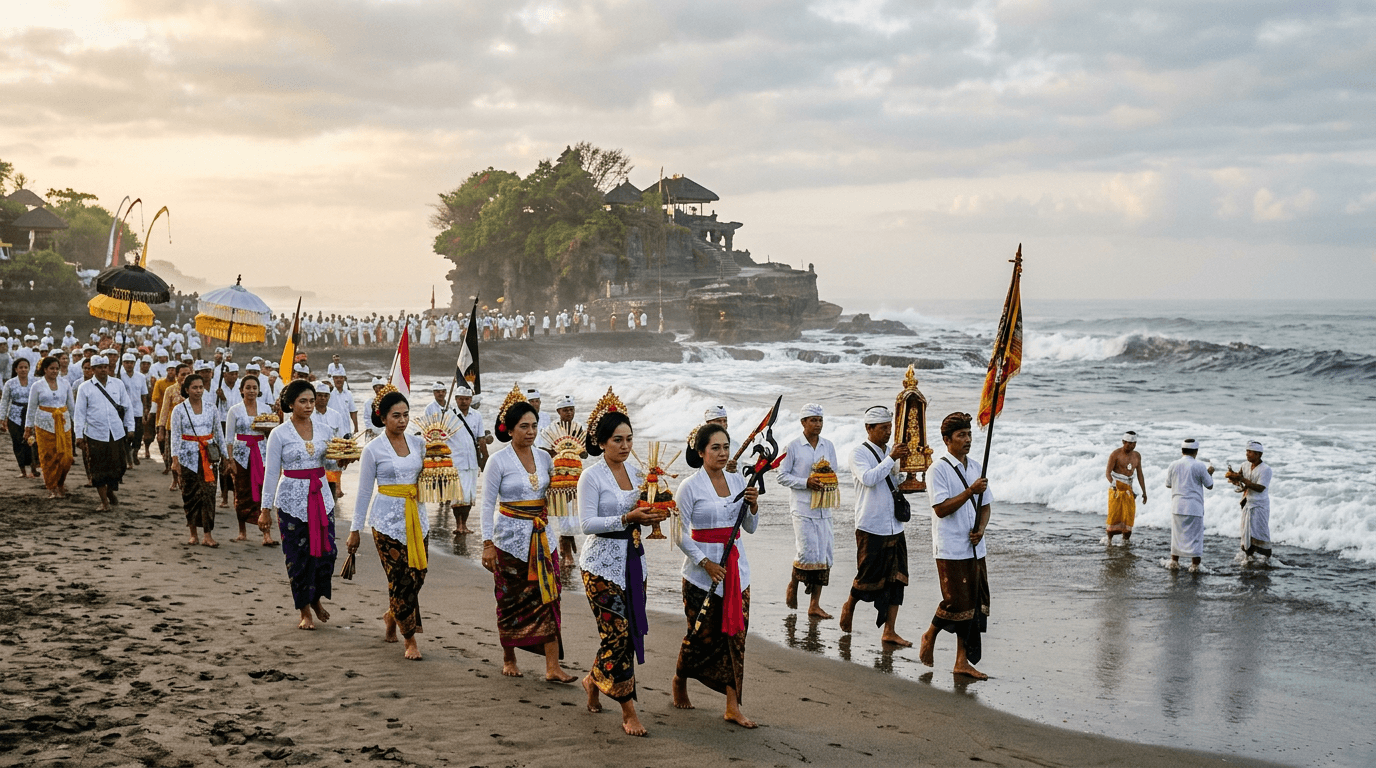
If you visit Bali and find every street lined with soaring, gracefully arched bamboo poles dripping with decorations, you have arrived during Galungan. This is one of the most important festivals in the Balinese Hindu calendar, a celebration of the victory of dharma, or righteousness, over adharma, the forces of chaos and evil. For ten days the island becomes a stage of devotion, family reunion and quiet beauty. Understanding Galungan offers a window into the spiritual heart of Bali at its most radiant.
The Meaning Behind Galungan
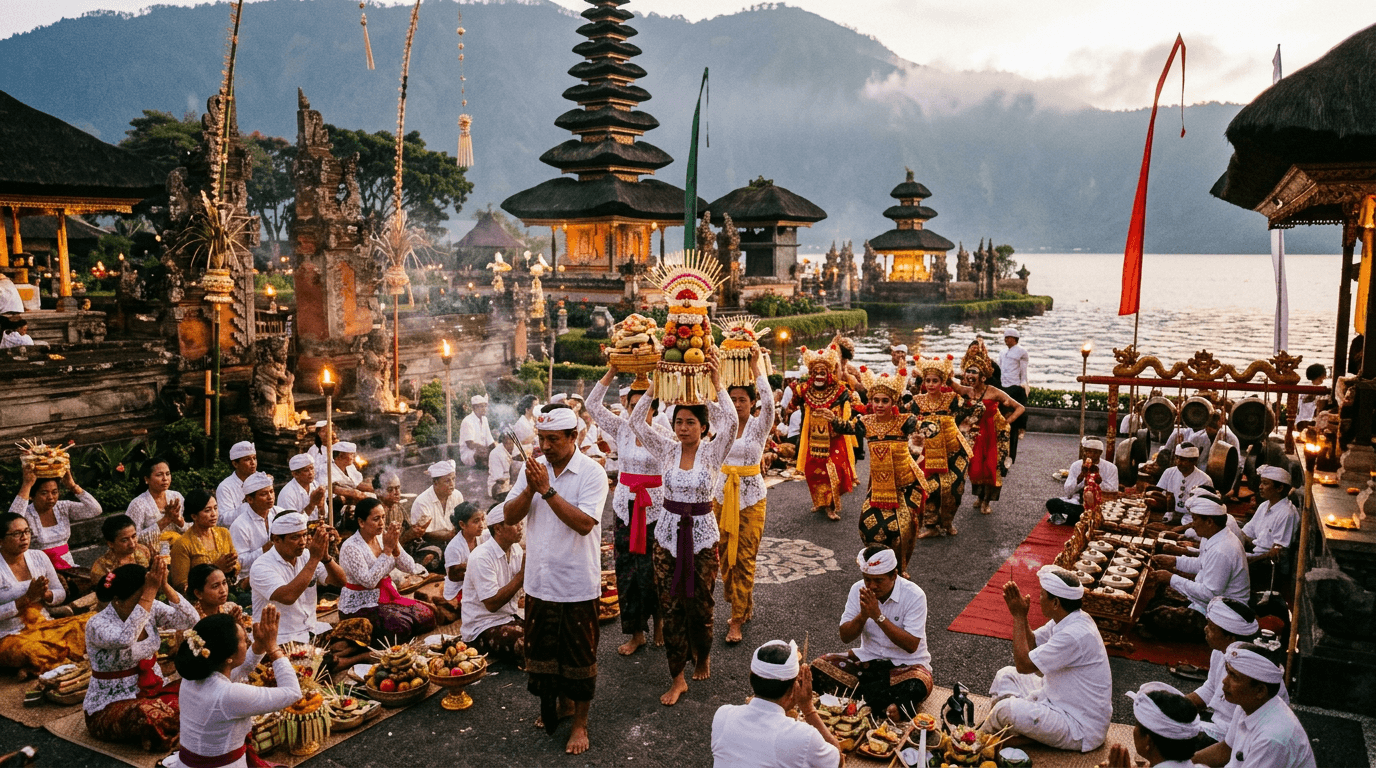
Galungan commemorates the triumph of good over evil, often told through the legend of a tyrannical king named Mayadenawa who was defeated so that order and faith could be restored. During the festival the Balinese believe that the spirits of ancestors return to visit the family homes they once lived in. The living welcome them with prayers, offerings and feasts, making Galungan as much a celebration of family and ancestry as of cosmic balance.
When Galungan Takes Place
Galungan follows the 210-day Balinese pawukon calendar rather than the Western year, which means it occurs roughly every seven months and falls on different Gregorian dates each time. Because of this cycle, some years see Galungan celebrated twice. Travellers hoping to witness it should check the current Balinese calendar in advance, as the timing shifts. The festival always falls on a Wednesday and is preceded by days of intense preparation.
The Penjor: Bali's Iconic Bamboo Poles
The defining sight of Galungan is the penjor, a tall, curving bamboo pole that arches over the road outside each family compound. Decorated with young coconut leaves, fruit, cakes, rice and flowers, the penjor is an expression of gratitude to the divine and a symbol of prosperity and the sacred mountain. Each one is handmade, and together they turn ordinary lanes into avenues of golden, swaying art. Photographing the penjor-lined streets is one of the great pleasures of visiting during this season.
Days and Rituals of the Festival
- Penyajaan and Penampahan: the days before Galungan are spent making offerings and preparing food, including the slaughter of pigs for festive dishes such as lawar and babi guling.
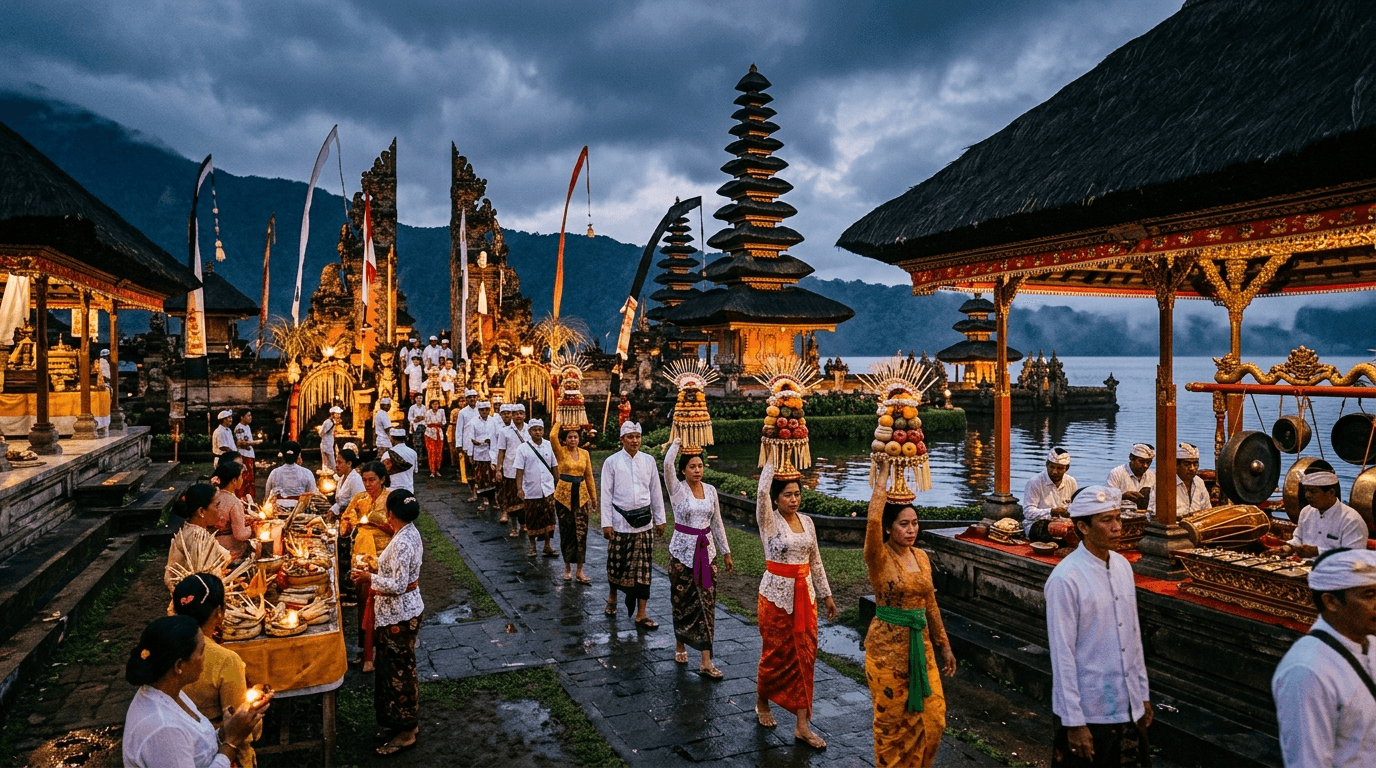
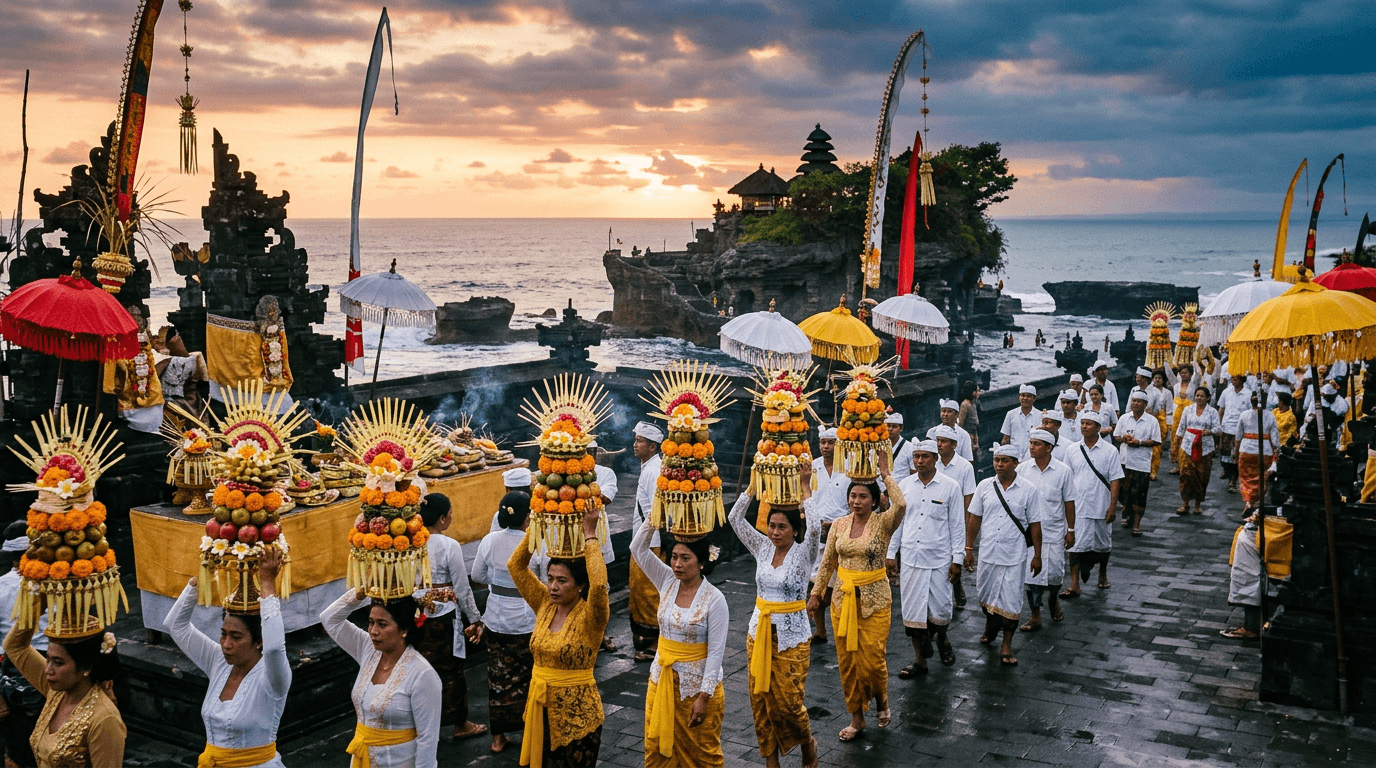
- Galungan day: families dress in traditional clothing, visit temples and pray to welcome ancestral spirits.
- The days between: relatives visit one another, and the festive atmosphere continues across communities.
- Kuningan: ten days after Galungan, the celebration closes as the ancestral spirits are believed to return to the heavens.
Experiencing Galungan as a Visitor
Galungan is a wonderful time to be in Bali, but it is worth knowing what to expect. Many Balinese-run shops, warungs and businesses close so families can celebrate, and temples and roads can be busy with worshippers in their finest dress. Visitors are generally welcome to observe and even enter temples if appropriately attired in a sarong and sash, but should remain respectful, keep to the edges of ceremonies and ask before photographing people at prayer. Booking transport and accommodation ahead is wise during this period.
Why Galungan Captures the Spirit of Bali
More than a single day, Galungan is a rhythm of preparation, devotion, reunion and renewal that draws the whole island together. It expresses the core Balinese belief that the universe must be kept in balance, that good must be honoured and evil kept at bay, and that the bond between the living and their ancestors endures. To walk beneath the penjor as families stream to temple in their bright ceremonial clothes is to feel Bali at its most graceful and alive. Confirm exact dates on a current Balinese calendar before planning your trip around it.