 MyGlob Editorial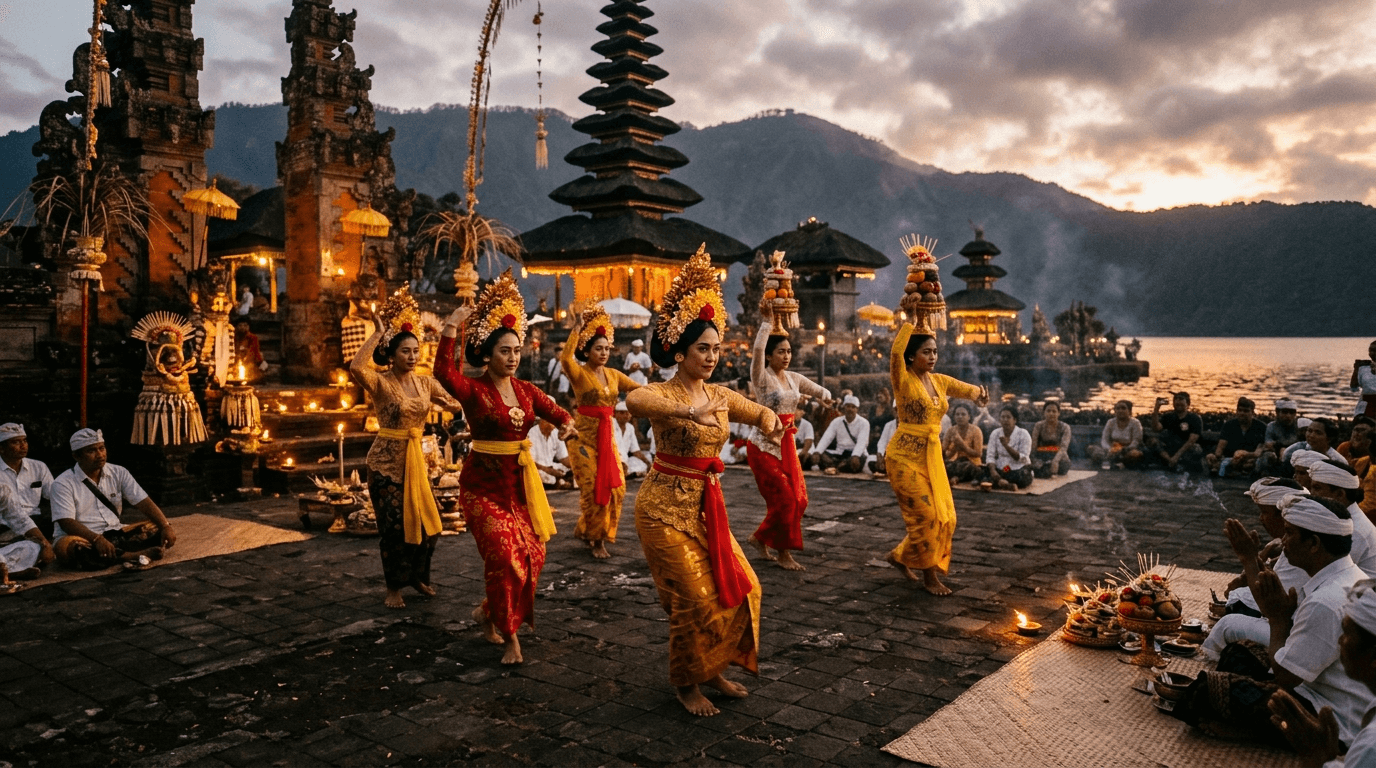
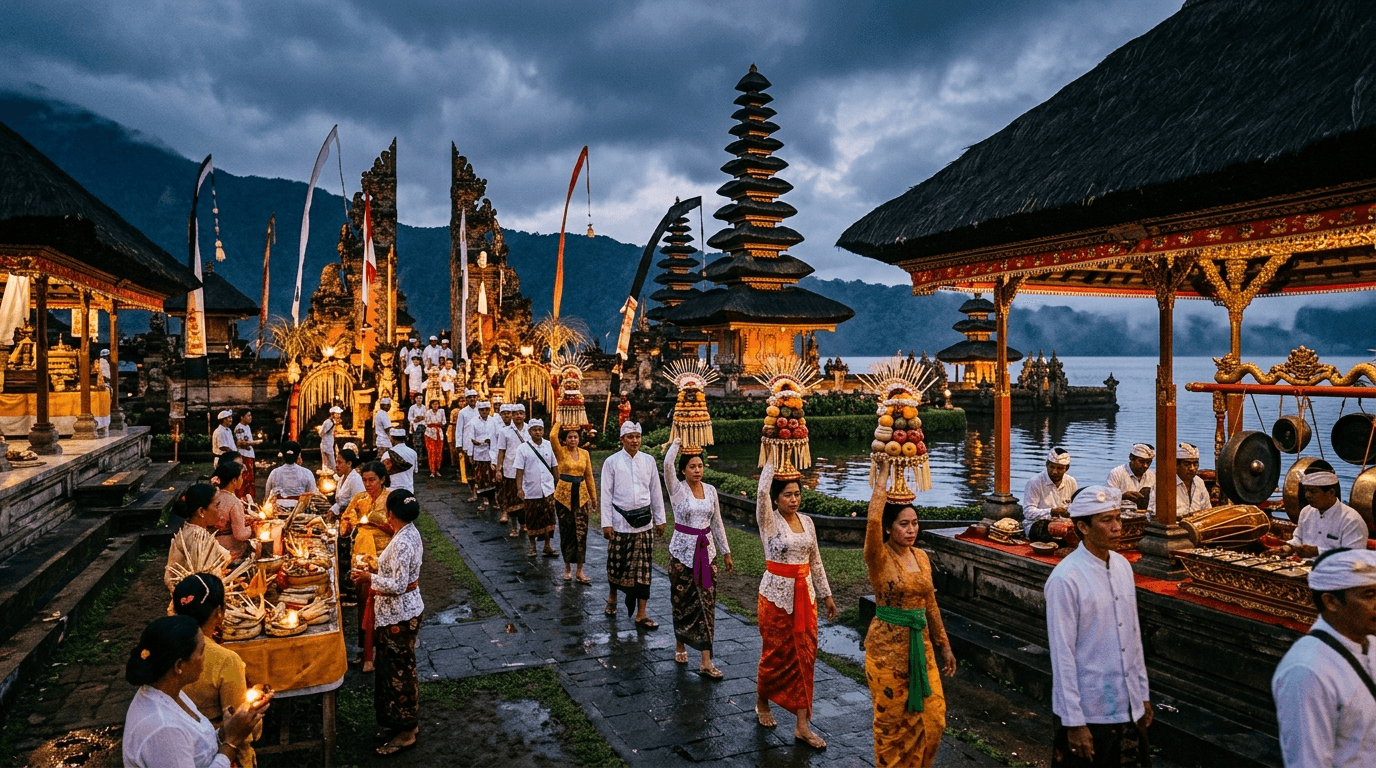
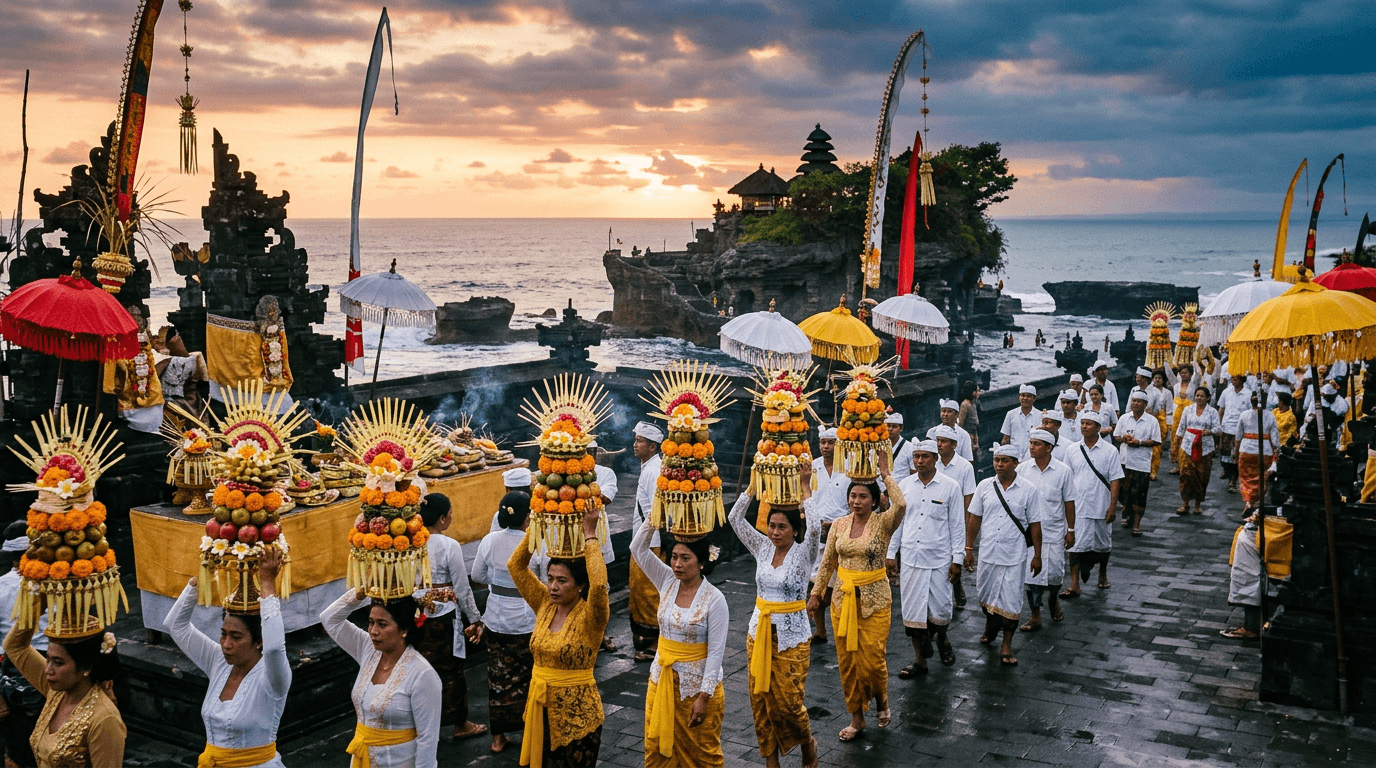
Bali is often described as a paradise, but its real story is far more interesting than any postcard. The island we know today, with its terraced rice fields, water temples and daily offerings, is the product of more than two thousand years of migration, religion, trade and resistance. Understanding even a little of that history changes the way you see the place. The temple you photograph at sunset is not a museum piece; it is a working part of a culture that has been quietly adapting for centuries.
The First Balinese
Human settlement in Bali stretches back thousands of years. The ancestors of today's Balinese were part of the great Austronesian migrations that spread across the Indonesian archipelago, bringing wet-rice cultivation, pottery and a deep reverence for ancestors and natural spirits. Long before Hinduism arrived, villages on Bali practised forms of animism and ancestor worship, beliefs that never fully disappeared. Even now, much of Balinese spiritual life honours mountains, rivers, the sea and the unseen forces of place, a legacy of those earliest communities.
These early farmers also developed the foundations of the famous subak system, the cooperative water-sharing networks that turn steep volcanic slopes into emerald rice terraces. Subak is far more than irrigation engineering; it is a social and spiritual institution that links every farmer to a shared temple and a shared calendar. It survives today and is recognised by UNESCO as a cultural landscape.
Indian Influence and the Coming of Hinduism
From roughly the first centuries of the common era, trade routes carried Indian merchants, ideas and religion across Southeast Asia. Hinduism and Buddhism gradually took root in Java and Bali, blending with existing beliefs rather than replacing them. Early Balinese inscriptions, some written in old Balinese and Sanskrit, record kings, temples and religious endowments, showing an organised society with a literate elite by the eighth and ninth centuries.
This was not a wholesale conversion but a slow fusion. Balinese Hinduism absorbed local gods, ancestor spirits and agricultural rituals into a broader Hindu framework. The result is a faith found nowhere else on earth, deeply concerned with balance, purification and the relationship between the seen and unseen worlds.
The Majapahit Legacy
The single most important event in shaping classical Balinese culture was the influence of the Majapahit empire, the great Hindu-Javanese kingdom that dominated the region in the thirteenth to fifteenth centuries. As Islam spread across Java, many Hindu nobles, priests, artists and scholars are said to have moved east to Bali, bringing refined courtly arts, literature, architecture and ritual.
Bali became, in effect, the inheritor of Hindu-Javanese civilisation. The caste system, the classical dance and shadow-puppet traditions, the temple architecture and much of the priestly knowledge that define Balinese culture trace back to this Majapahit inheritance. Many Balinese families still treasure genealogies connecting them to that era.
Kingdoms, Trade and the Dutch
For centuries Bali was divided into competing regional kingdoms, each centred on a royal court that patronised the arts and managed the temples. These courts traded in rice, textiles and, less proudly, enslaved people, and they fought frequently among themselves. Their rivalry, however, also fuelled an extraordinary flowering of dance, music, carving and painting, as each palace tried to outshine its neighbours.
The Dutch, already controlling much of the archipelago, turned their full attention to Bali in the nineteenth and early twentieth centuries. Resistance was fierce. The most haunting episodes are the puputan, ritual fights to the death in which royal families and their followers, dressed in white, walked into Dutch gunfire rather than surrender. These events in the early 1900s effectively ended Balinese independence but became powerful symbols of dignity and resistance.
Colonial Tourism and the Invention of Paradise
Under Dutch rule, and partly to soothe their reputation after the violent conquest, the colonial authorities promoted Bali as a unique living museum of Hindu culture. Western artists, anthropologists and travellers arrived in the early twentieth century and helped craft the enduring image of Bali as an unspoiled artistic paradise. This image was a simplification, but it also encouraged the preservation and even revival of traditional arts.
Indonesia declared independence after the Second World War, and Bali became part of the new republic. The twentieth century brought enormous change: a devastating volcanic eruption of Mount Agung in the 1960s, periods of political turmoil, and from the 1970s onward the steady rise of international tourism that would transform the island's economy.
Modern Bali
Today Bali is a global destination, home to surfers, digital nomads, wellness seekers and millions of holidaymakers. Tourism has brought prosperity but also pressure: traffic, water shortages, development and the challenge of protecting both the environment and the culture that draws visitors in the first place. The island continues to balance, sometimes uneasily, between commerce and tradition.
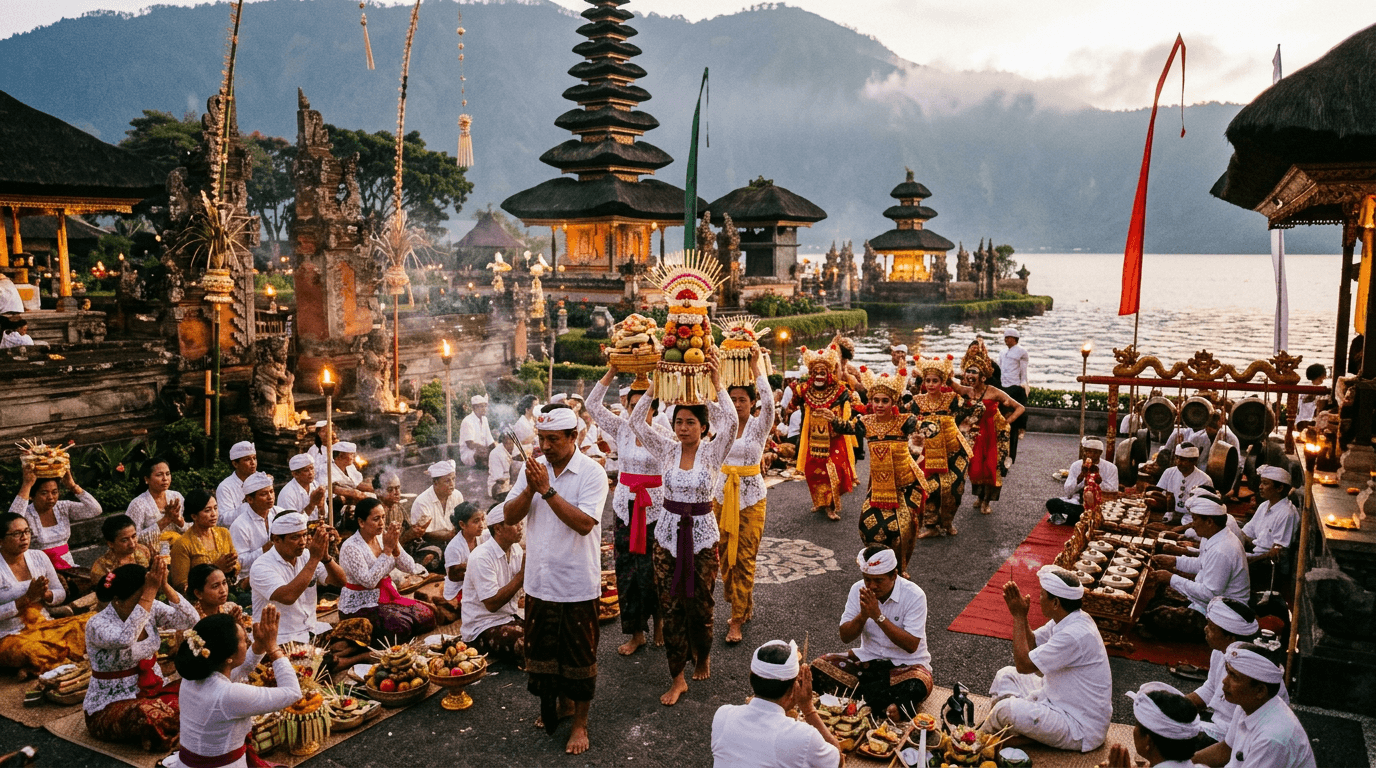
What is remarkable is how resilient Balinese culture remains. Temple festivals still fill the calendar, offerings are still placed at doorways each morning, and the rhythms of the religious year still shape daily life. The history of Bali is not finished; it is being written every day in the rituals, ceremonies and quiet devotions of the Balinese themselves. To visit with even a basic sense of that story is to travel more respectfully, and to see far more than the beaches.