 MyGlob Editorial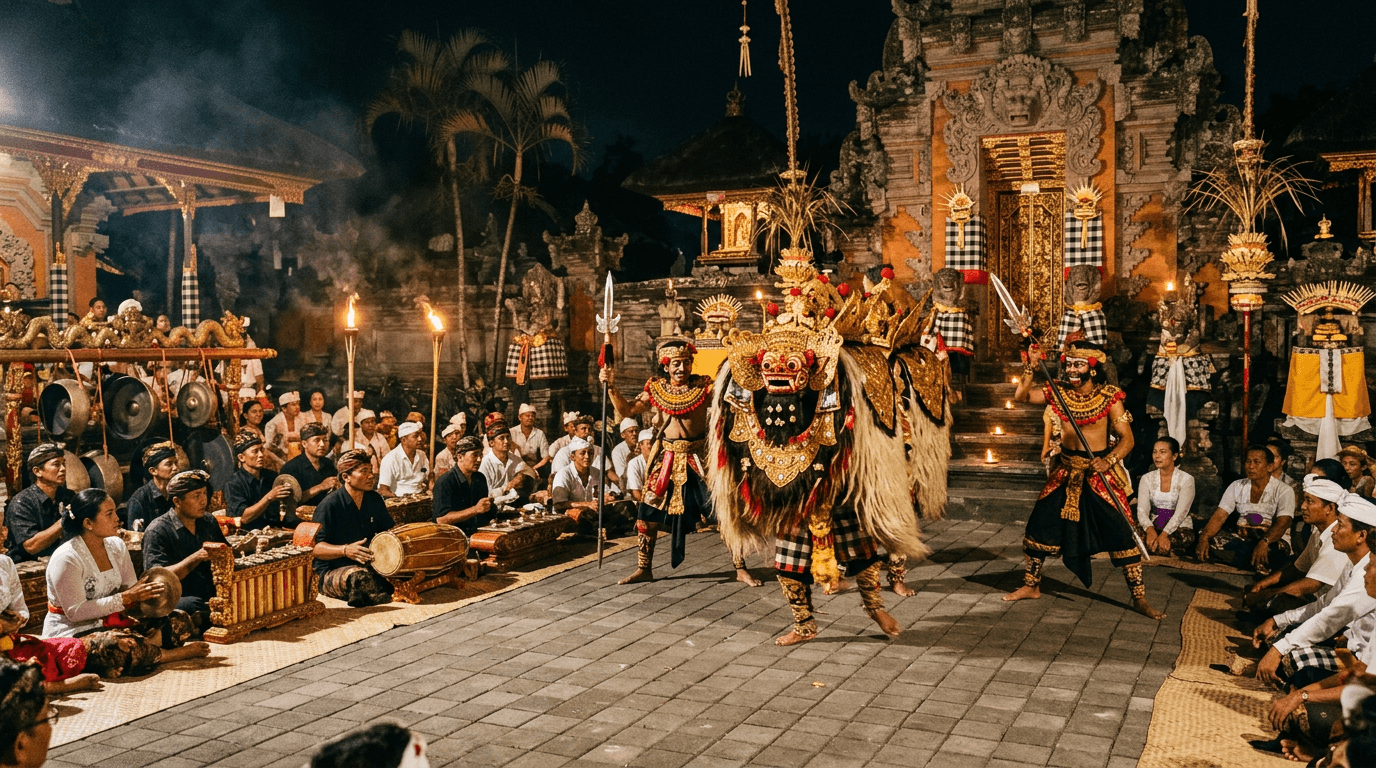
Walk down any street in Bali in the morning and you will step carefully around them: small square trays woven from palm leaf, filled with flowers, a few grains of rice, perhaps a sweet or a cigarette, topped with a smoking stick of incense. These are canang sari, the most common of the Balinese offerings known collectively as banten. They are everywhere, on temple shrines and shop counters, motorbike seats and beachfronts, and they are one of the clearest expressions of the Balinese spiritual world.
What an Offering Really Is
To outsiders, offerings can look like decoration or superstition. To the Balinese, they are something much deeper: a daily act of gratitude and balance. Offerings are given to thank the gods for peace and prosperity, to honour ancestors, and also to appease the lower spirits and demons so that good and evil forces stay in equilibrium. The point is not bribery but harmony, keeping the relationship between humans, nature and the unseen world in balance.
Crucially, the value of an offering lies less in its material contents than in the time, care and intention with which it is made. The act of creating and presenting banten is itself a form of devotion, a small daily sacrifice of effort and attention. This is what gives meaning to the phrase gifts of self-sacrifice: the giver offers a piece of their own time and labour.
Canang Sari: The Everyday Offering
Canang sari is the simple daily offering most visitors notice. The base is a small tray woven from coconut or palm leaf. Inside go flowers arranged by colour and direction, each colour associated with a particular god and point of the compass: white for the east, red for the south, yellow for the west and blue or green for the north, with a mixture at the centre. A pinch of rice, a little lime and betel, and sometimes a coin or sweet are added, then incense is lit and holy water sprinkled while a brief prayer is said.
These offerings are placed and blessed several times a day, especially in the morning. Once the essence has been offered, usually carried upward by the smoke and the prayer, the physical remains are no longer sacred, which is why you will see yesterday's offerings swept up and renewed each day.
The Many Forms of Banten
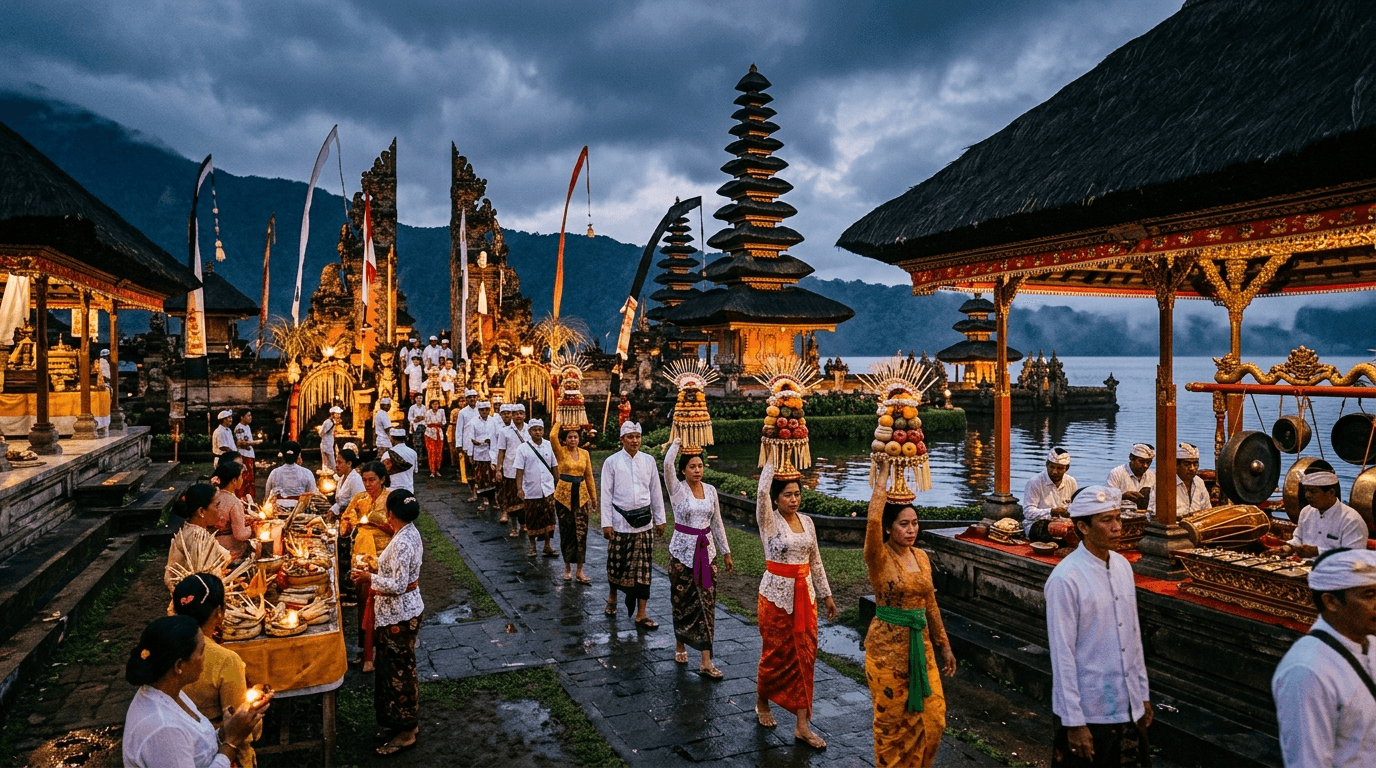
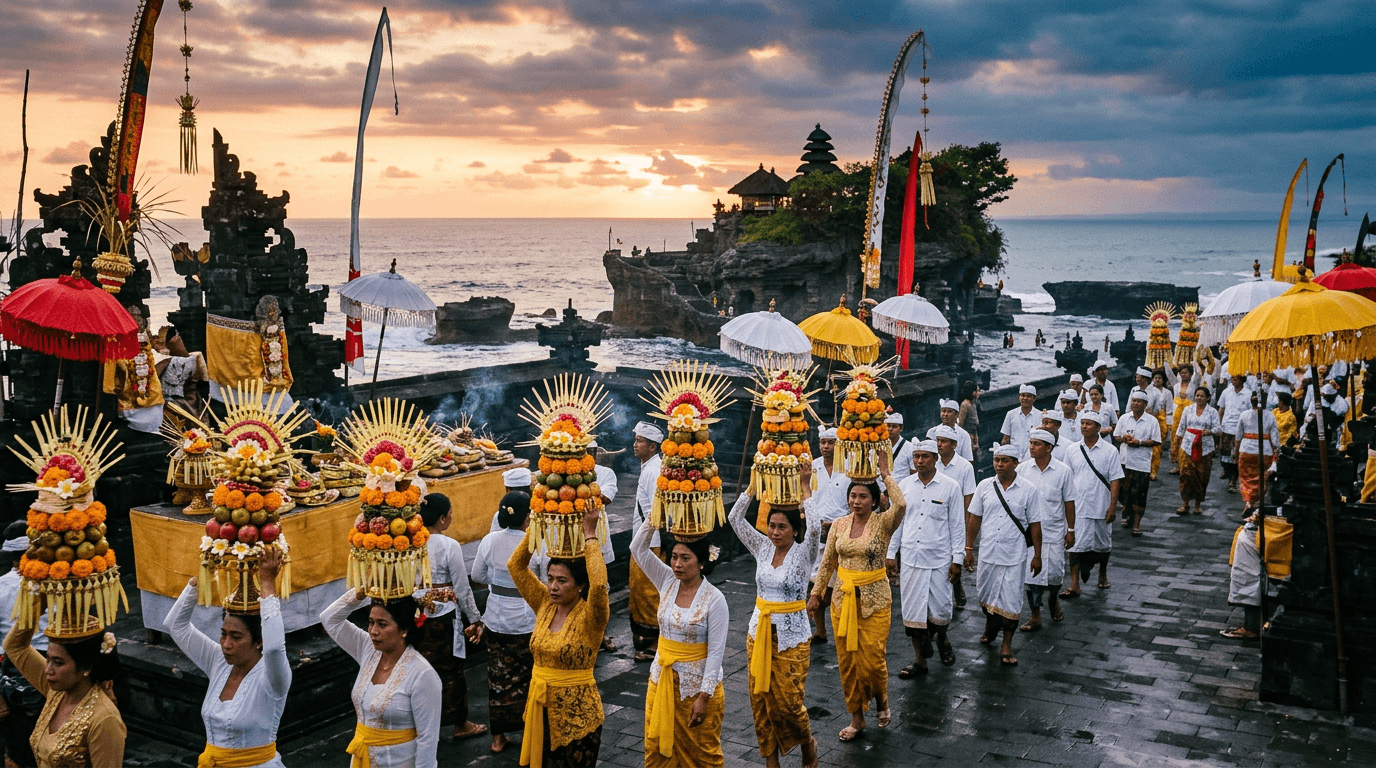
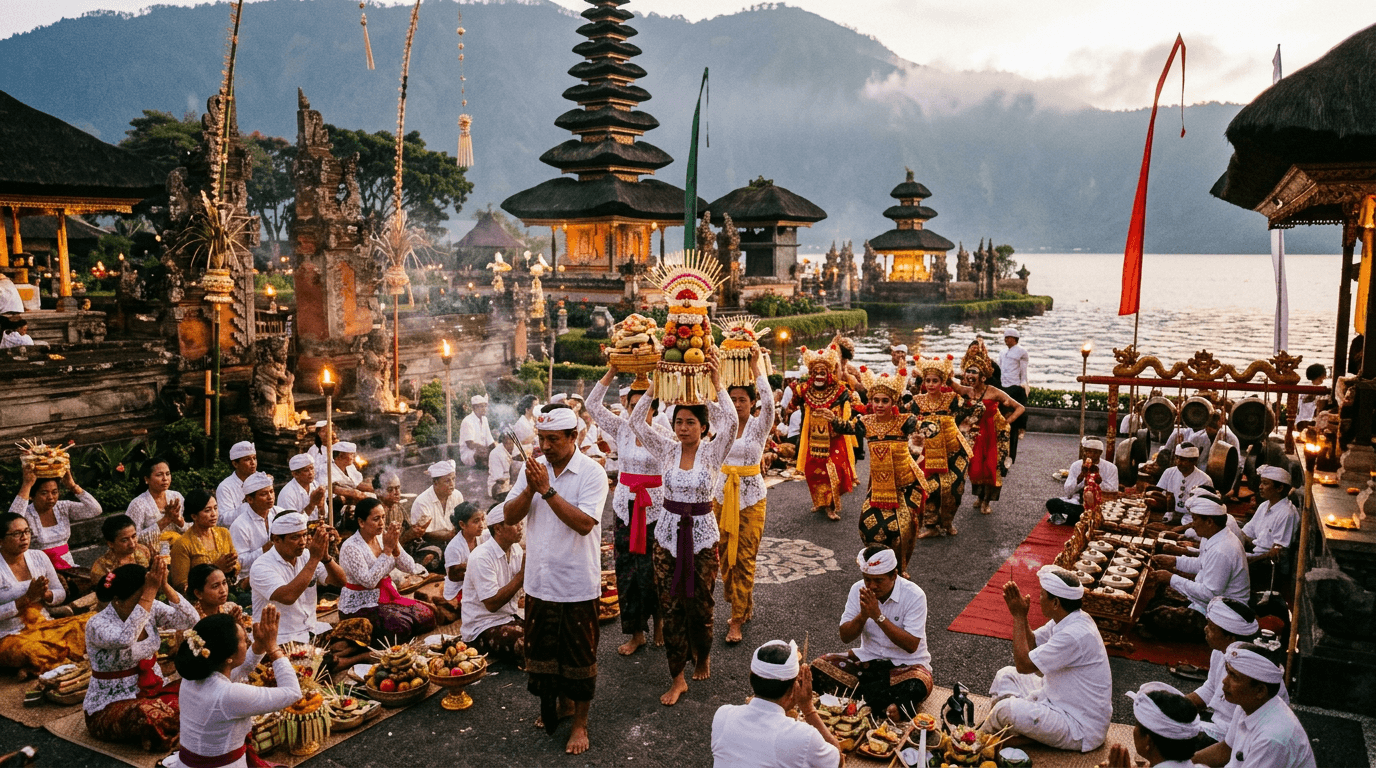
Canang sari is only the beginning. Banten encompasses an enormous range of offerings, from the tiny daily trays to towering, elaborate constructions built for major ceremonies. The most spectacular are the gebogan or pajegan, tall pyramids of fruit, cakes and flowers that women carry gracefully on their heads in temple processions. These can take hours to assemble and represent significant devotion and skill.
Different ceremonies call for different offerings, and there are specific forms for births, tooth filings, weddings, cremations and temple anniversaries, as well as offerings aimed at the lower spirits, often placed on the ground. The knowledge of how to construct the correct banten for each occasion is a respected skill, traditionally passed down among women and ritual specialists.
Colour, Direction and Symbolism
Almost nothing in a Balinese offering is random. The orientation of the flowers, the choice of colours, the ingredients and the placement all carry meaning rooted in Balinese Hindu cosmology. Offerings placed high on shrines honour the higher gods, while those set on the ground acknowledge the lower forces. Together they express the constant balancing act between the sacred and the demonic that defines Balinese religious life.
The Women Behind the Offerings
Making offerings is an enormous, largely invisible labour, and it falls mostly to women. Many households spend a meaningful part of each day weaving trays, arranging flowers and preparing banten for the family shrine, the local temple and special ceremonies. During major festivals the work multiplies dramatically. This daily devotion is one of the engines that keeps Balinese religion alive and visible, quietly performed in millions of small acts across the island.
How Visitors Should Behave
For travellers, the offerings demand simple courtesy. Try not to step on canang sari placed on the ground; if you accidentally do, it is not a disaster, but stepping over them deliberately or treating them carelessly is disrespectful. Never take items from an offering, and ask permission before photographing people making or presenting banten. A little awareness goes a long way.
Once you understand them, the offerings transform your experience of Bali. Those small trays of flowers are not clutter underfoot but a living conversation between the Balinese and their gods, repeated thousands of times a day across the island. They are perhaps the purest everyday symbol of what makes Balinese culture so distinctive: the constant, gentle effort to keep the whole world in balance.