 MyGlob Editorial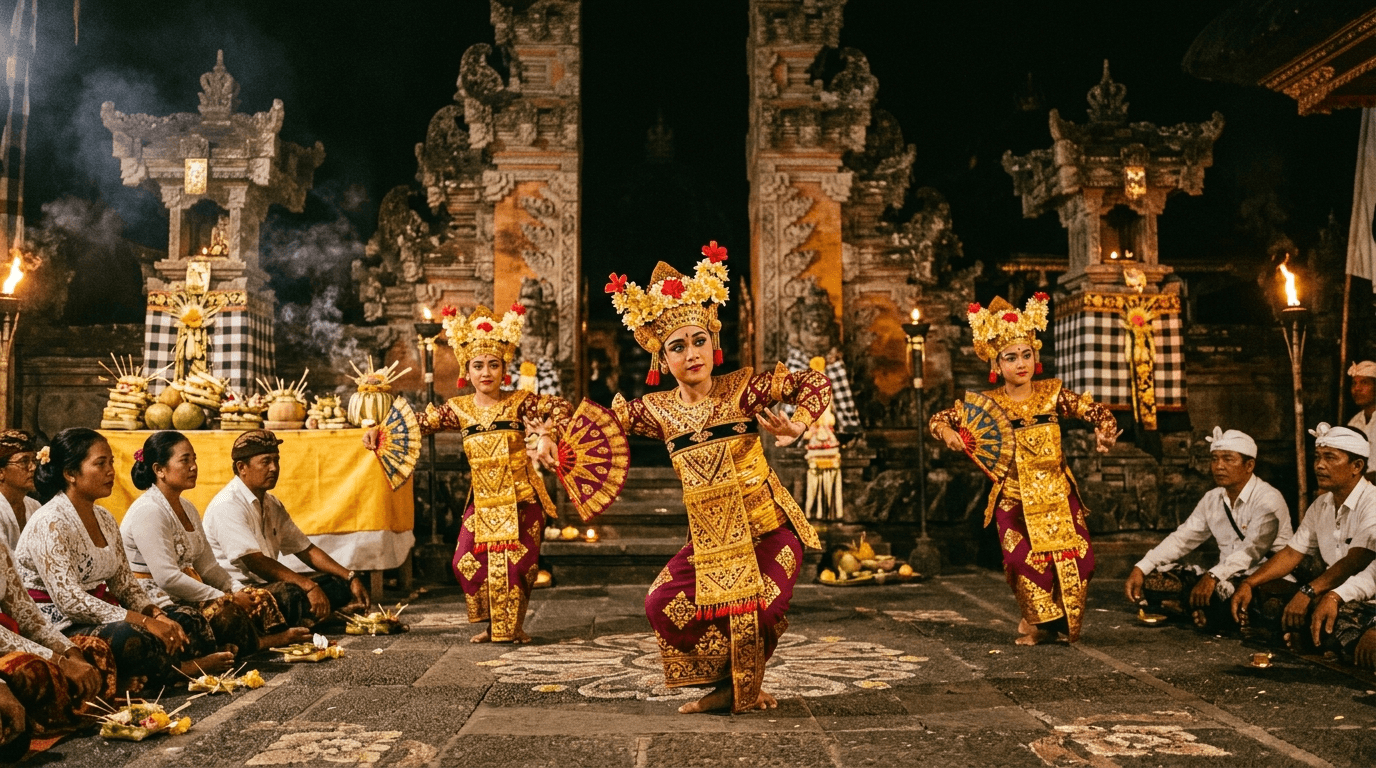
Bali is famous as the Hindu island, a single Hindu-majority province in the world's largest Muslim-majority country. But the faith practised here is not the Hinduism of India. It is a distinctive tradition, known formally as Agama Hindu Dharma, that fuses Indian religious concepts with Buddhism, ancestor worship and the animist beliefs that long predate them. Understanding its history and sources is the key to understanding almost everything else about Balinese life.
Before Hinduism: The Older Layer
Long before Indian religion reached the island, the ancestors of the Balinese practised animism and ancestor worship. They revered mountains as the abode of gods, the sea as a place of powerful and sometimes dangerous forces, and the spirits of the land and their forebears. This older spiritual layer was never erased. Instead it became the foundation onto which Hinduism was grafted, which is why Balinese religion remains so deeply tied to place, nature and the ancestors.
The Arrival of Indian Religion
From around the early centuries of the common era, trade and cultural contact carried Hindu and Buddhist ideas across Southeast Asia. In Bali, inscriptions in Sanskrit and old Balinese from over a thousand years ago record kings, priests and temples, showing that Indian religion had taken organised form by the eighth and ninth centuries. Hindu and Buddhist elements coexisted and intermingled rather than competing, a tolerance that still marks Balinese spirituality.
The Majapahit Inheritance
The decisive shaping of Balinese Hinduism came from the Majapahit empire of Java in the thirteenth to fifteenth centuries. As Islam spread across Java, Hindu priests, nobles, scholars and artists are traditionally said to have migrated east to Bali, bringing refined religious texts, rituals, the caste system and classical arts. Bali became the last stronghold of Hindu-Javanese civilisation, preserving and developing traditions that vanished from Java itself.
Much of the priestly knowledge, temple architecture and ceremonial structure of Balinese religion traces back to this period. The great Brahmana priestly lineages, the pedanda, and the sacred literature they guard are part of that Majapahit inheritance.
Core Beliefs and Sources
Balinese Hinduism shares core concepts with Indian Hinduism: belief in one supreme God, here often called Sang Hyang Widhi Wasa, who is manifested in many gods and forms; the great Hindu trinity of Brahma, Vishnu and Shiva; the principles of karma and reincarnation; and the goal of ultimate liberation. Its sources include the classic Hindu scriptures alongside local sacred texts, palm-leaf manuscripts and oral traditions developed in Bali itself.
Yet the emphasis differs sharply from India. Balinese practice centres less on personal salvation and more on ritual, balance and the harmony of the community with the gods, the ancestors and the natural world. Religion here is something you do, daily and collectively, more than something you contemplate alone.
Tri Hita Karana: The Guiding Philosophy
If one idea captures the spirit of Balinese Hinduism it is Tri Hita Karana, the three causes of well-being. This philosophy teaches that a good and prosperous life depends on maintaining harmony in three relationships: between people and God, between people and one another, and between people and nature. From this single principle flow the temples, the offerings, the cooperative farming and the elaborate ceremonies that fill the Balinese year.
A Religion of Ritual and Balance
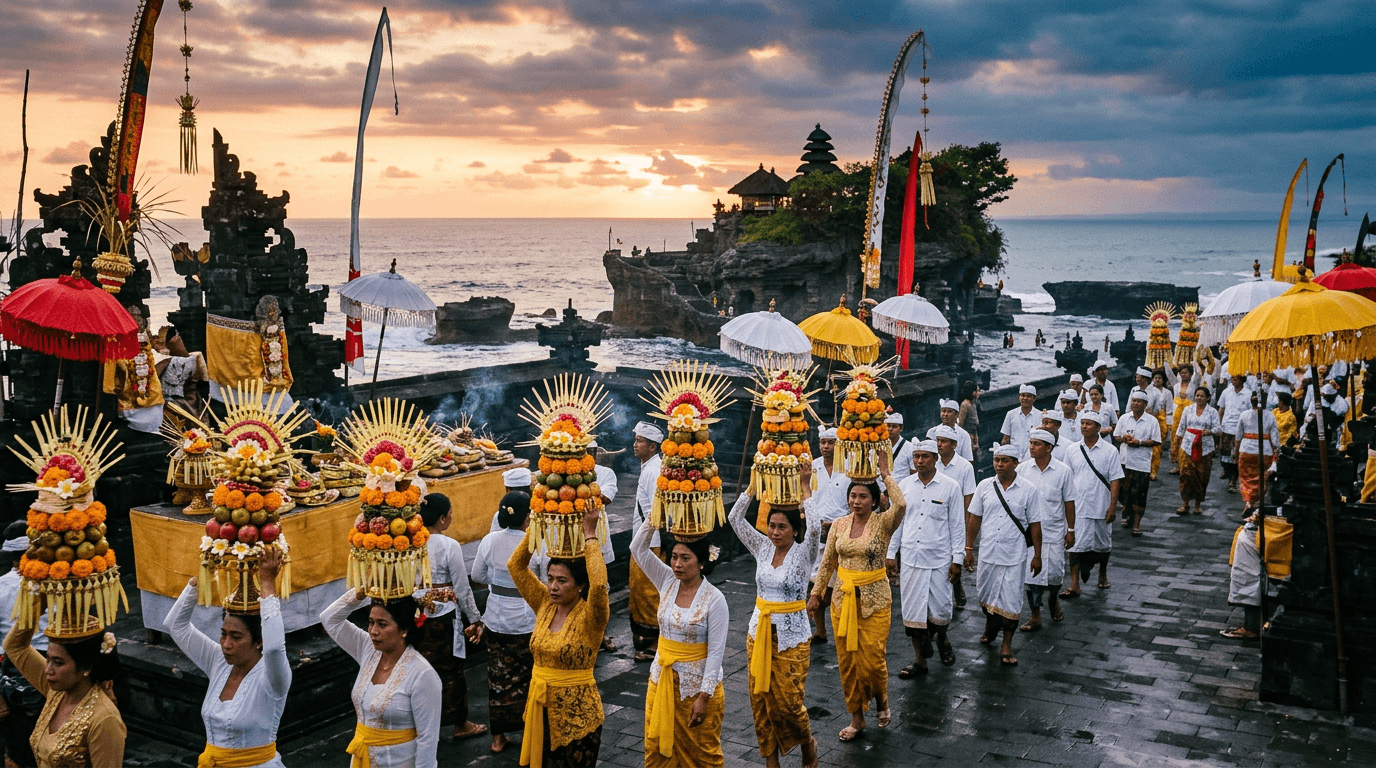
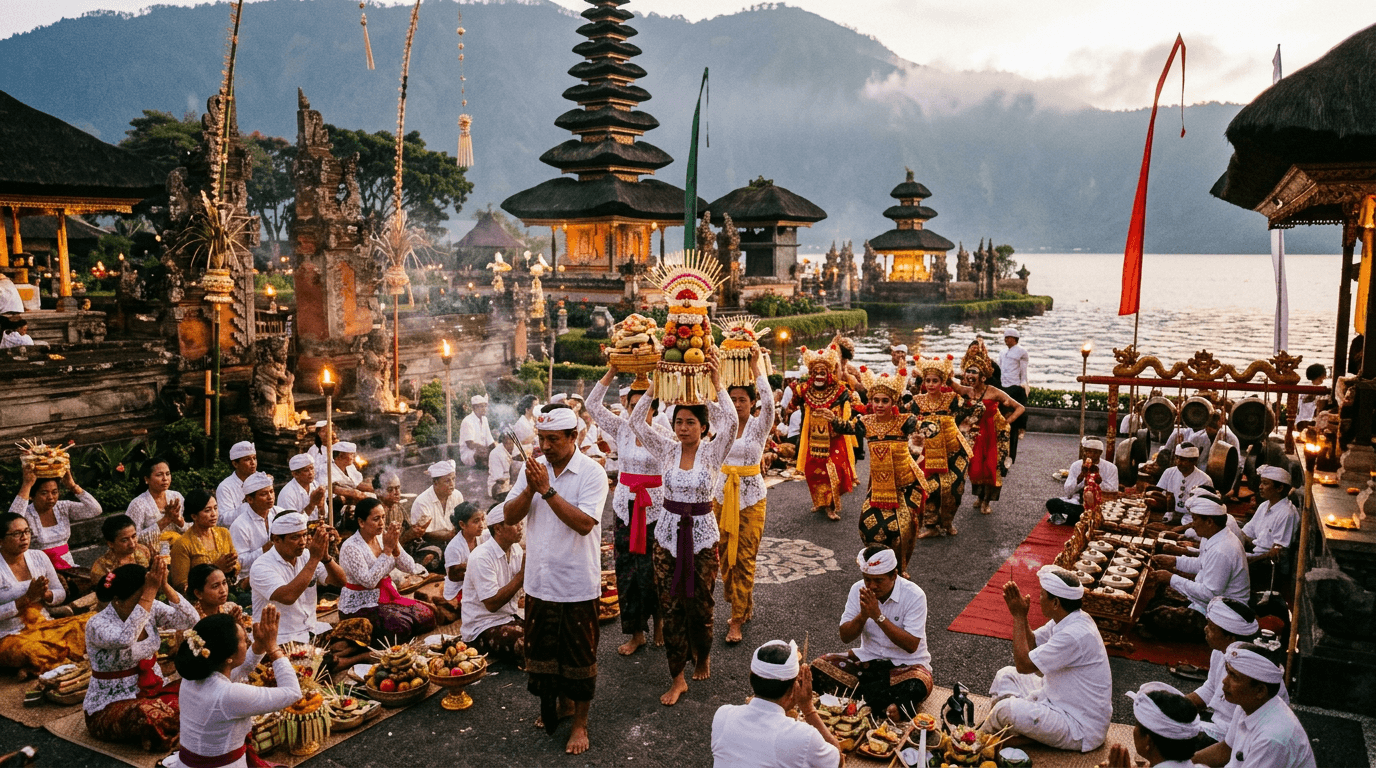
Balinese Hinduism is intensely ritual. Offerings are made every day, temples hold regular anniversary festivals, and the calendar is studded with ceremonies marking the cycles of life and the cosmos. Central to it all is the constant balancing of opposing forces, the good and the demonic, the pure and the impure, captured in symbols like the black-and-white poleng cloth. The aim is not to defeat the dark forces but to keep them in equilibrium with the light.
A Living Tradition
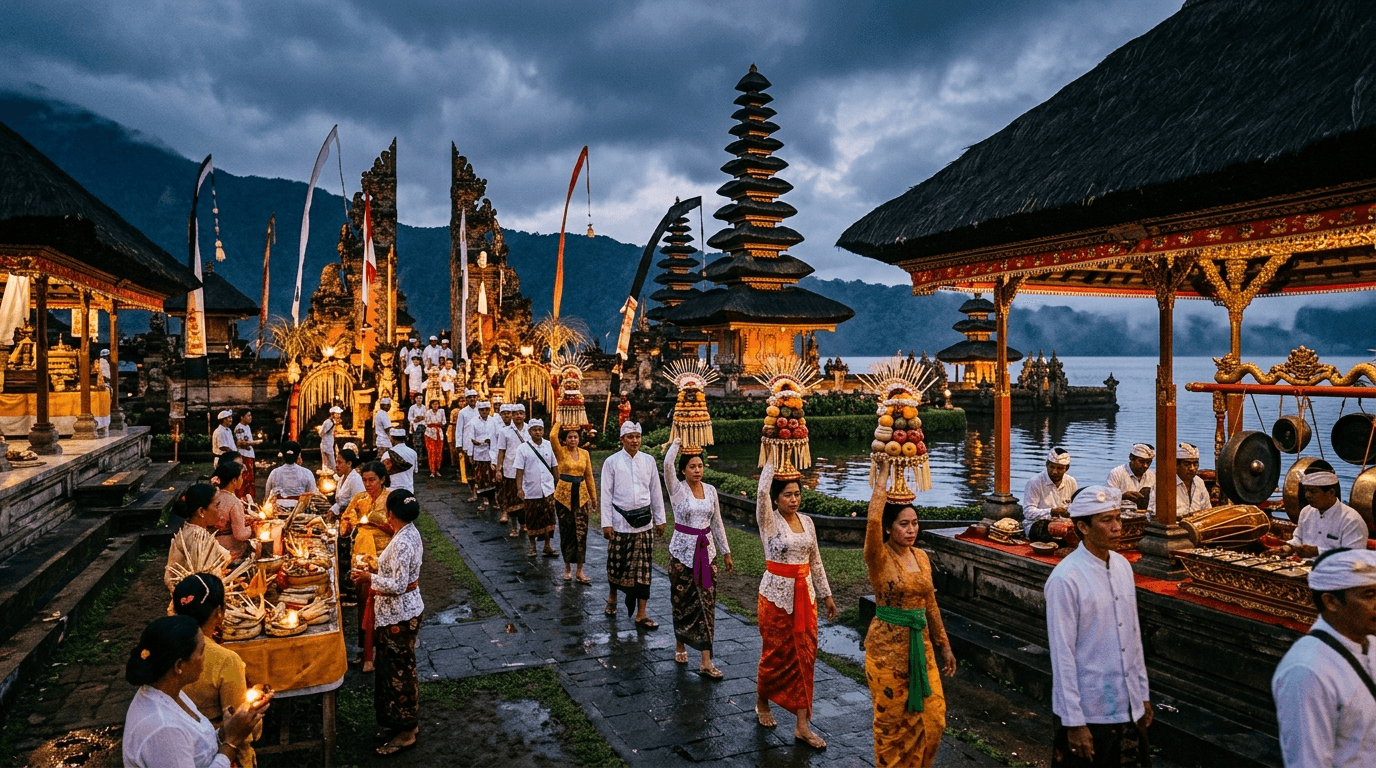
What makes Balinese Hinduism so striking to visitors is that it is utterly alive. It was officially recognised within the Indonesian state in the twentieth century, which helped it formalise and endure, but its real strength is in everyday practice. The morning offerings, the temple processions, the gamelan and dance that are themselves acts of worship, all keep the faith woven into the fabric of ordinary life.
For travellers, a little understanding of this history transforms a visit. The temples are not ruins, the ceremonies are not performances, and the offerings are not decoration. They are the visible surface of a deep, ancient and constantly renewed relationship between the Balinese, their gods, their ancestors and their island.