 MyGlob Editorial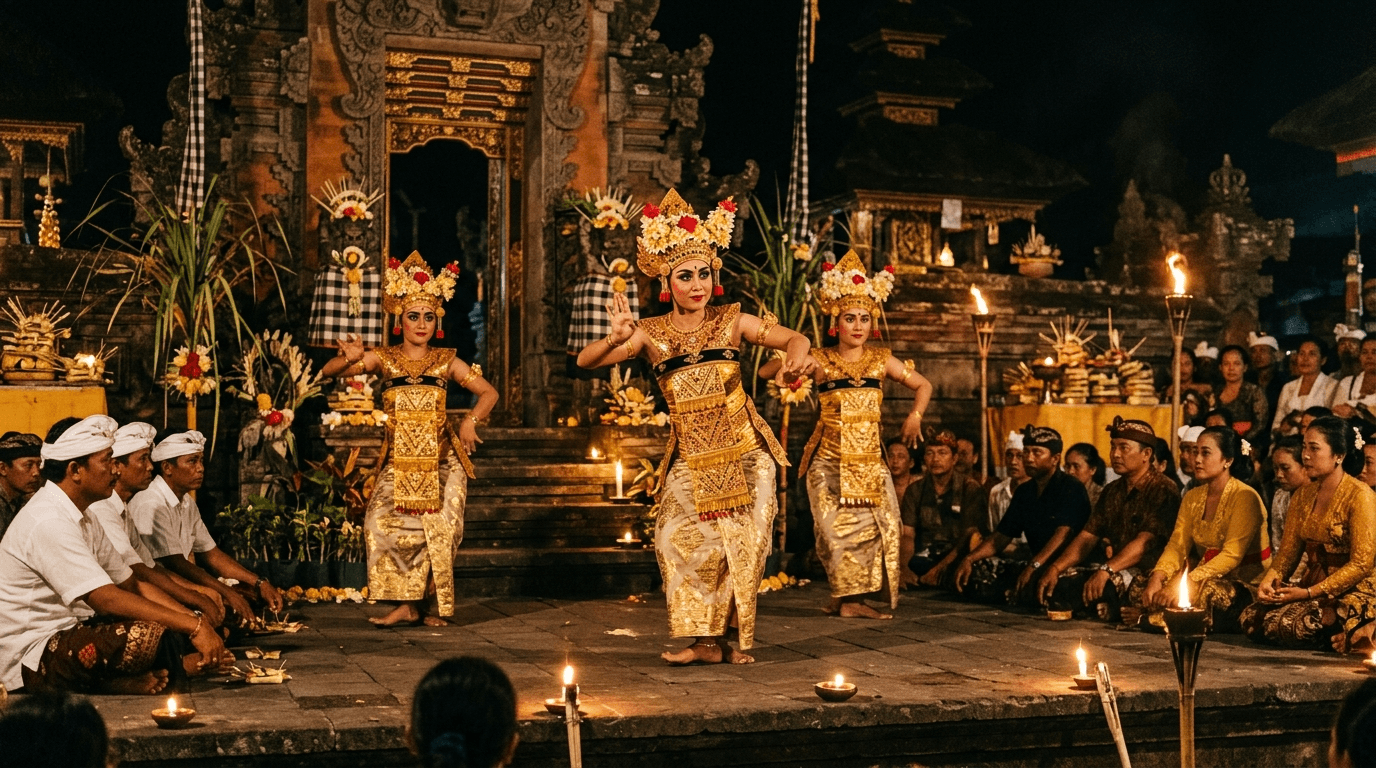
You hear it before you understand it: a cascade of shimmering bronze, bright and metallic, racing and crashing and suddenly falling silent, then rising again in waves. This is gamelan, the traditional orchestra of Bali, and it is the soundtrack to the island's spiritual and cultural life. From temple festivals to dance dramas to cremation processions, the gamelan is everywhere, and its sound, once heard, is impossible to forget.
What Is a Gamelan?
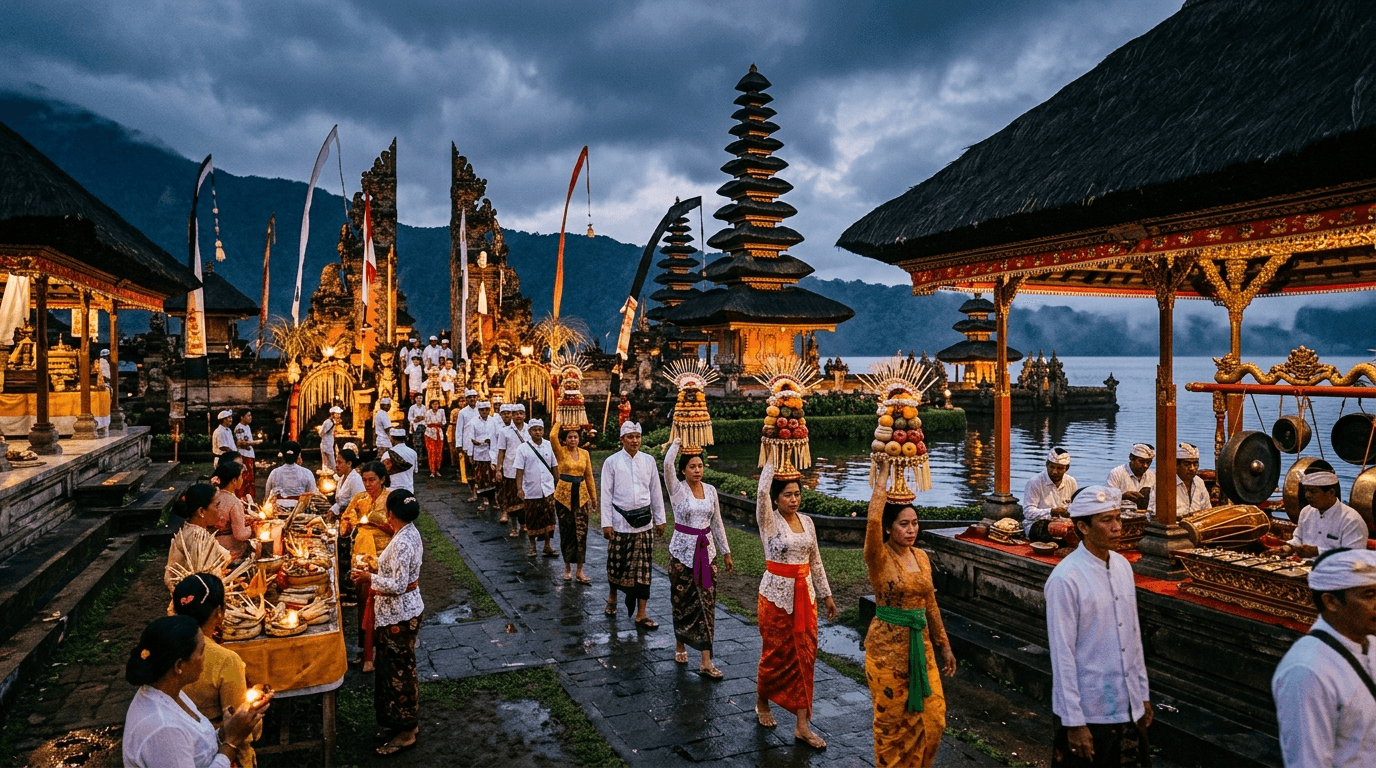
A gamelan is not a single instrument but an entire ensemble, a tuned set of bronze metallophones, gongs, drums, cymbals and sometimes flutes and strings, designed and built to be played together. The instruments are made and tuned as a matched set, so a gamelan belongs as a whole and is not meant to be mixed with instruments from another set. Many ensembles are owned communally by a village or temple, kept in a special pavilion and played by local men and increasingly women.
The Instruments
The heart of the gamelan is its bronze metallophones, the gangsa and gender, rows of tuned keys struck with mallets while the other hand damps the previous note to keep the texture crisp. Larger gongs anchor the music, marking the cycles and the deep, resonant pulse beneath everything. Drums, the kendang, lead the ensemble, setting the tempo and cueing changes. Smaller cymbals, the ceng-ceng, add bright, clattering accents, and bamboo flutes or bowed strings sometimes carry a singing melody on top.
Each instrument has a role in a layered structure: the lowest gongs lay down the framework, the mid-range instruments carry the core melody, and the highest instruments elaborate it with fast, intricate figuration. Listen carefully and the apparent chaos resolves into a beautifully ordered hierarchy of sound.
The Secret of Its Shimmer
Balinese gamelan has a distinctive shimmering, vibrating quality, and there is a clever reason for it. Pairs of instruments are deliberately tuned very slightly apart, one a touch higher than the other. When they play the same note together, the tiny difference creates an audible pulsing or beating that makes the sound shimmer and come alive. This intentional detuning, sometimes called paired tuning, is a hallmark of the Balinese sound and gives it that liquid, ringing brilliance.
Interlocking Patterns: Kotekan
Perhaps the most astonishing feature of Balinese gamelan is its speed, achieved through a technique called kotekan. Rather than one player attempting impossibly fast passages, two players share a single rapid line, each playing alternating notes that interlock perfectly to produce a single dazzling stream of sound. This requires extraordinary precision and trust between players, and it is what gives Balinese music its breathtaking velocity and intricacy.
Gong Kebyar and Other Styles
There are many kinds of gamelan in Bali, from ancient sacred ensembles to lively modern ones. The most famous and widespread today is gong kebyar, a vibrant, virtuosic style that emerged in the early twentieth century. The word kebyar suggests a sudden burst or flash, and the music lives up to it, full of explosive starts, dramatic stops, sudden tempo changes and dazzling displays. Older styles, such as the stately gamelan gong gede and the gentle gender wayang that accompanies shadow puppetry, preserve more ancient sounds.
Music as Worship and Community
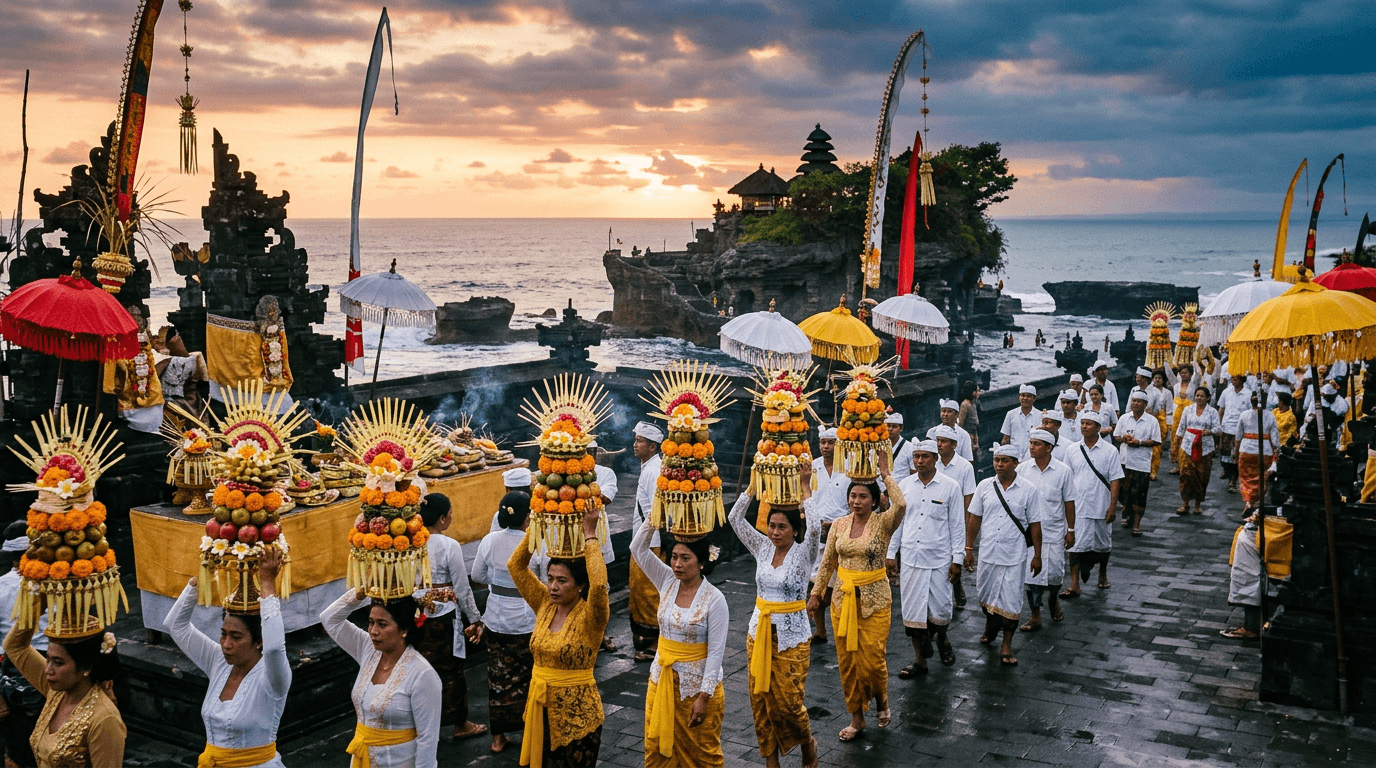
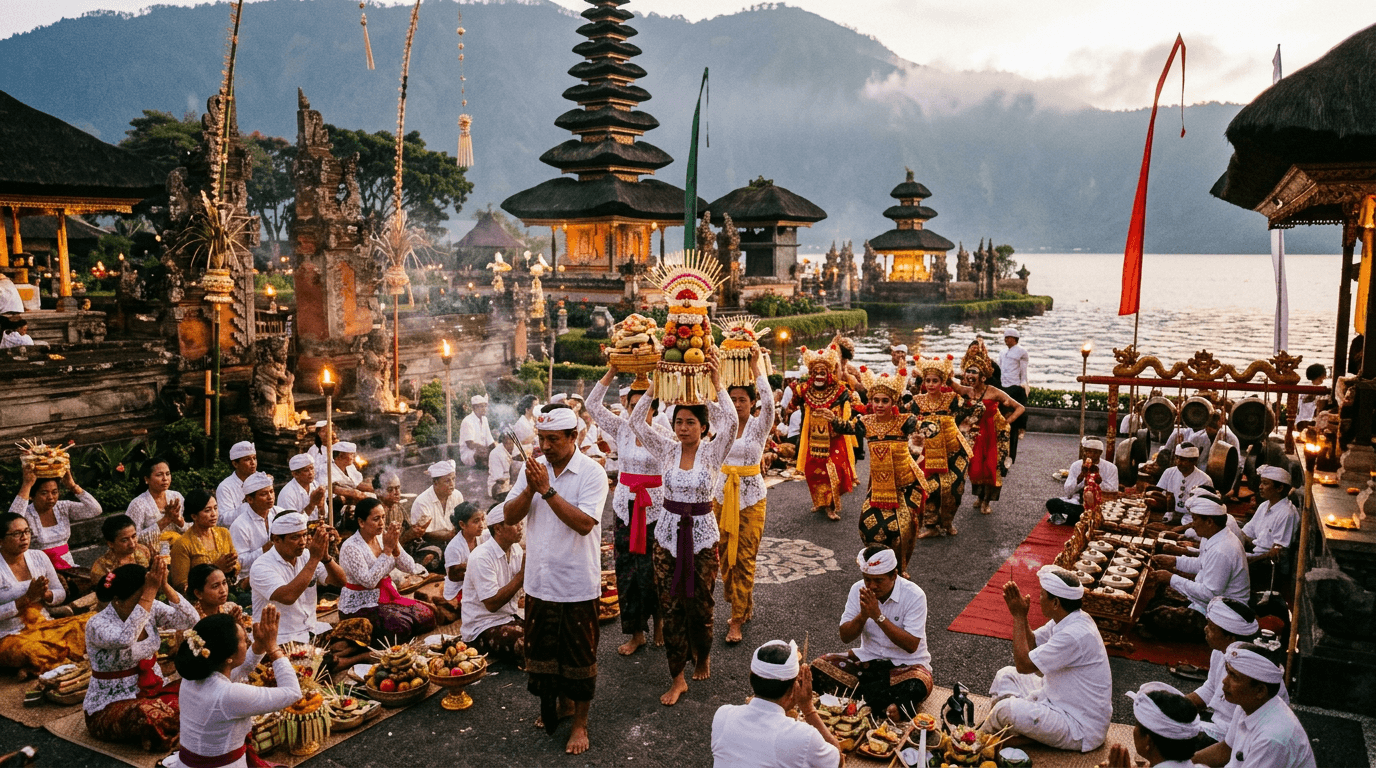
Gamelan is rarely just a concert. It accompanies temple ceremonies, sacred and secular dances, theatrical dramas and rites of passage, and playing it is considered an act of devotion and community service as much as entertainment. The instruments themselves may be blessed and treated with respect, and learning to play is part of growing up in many villages. Through gamelan, music, religion and social life are bound tightly together.
Where to Hear It
Visitors do not have to look hard. Gamelan accompanies the dance performances staged nightly around Ubud and other cultural centres, and you will hear it at any temple festival you are lucky enough to encounter. Some villages and schools welcome curious visitors to watch rehearsals, and the music education scene means new compositions are constantly being created alongside the old repertoire.
However you encounter it, give the gamelan your full attention for a few minutes. Let the layers separate in your ears, hear the low gongs anchoring the high filigree, feel the shimmer of the paired tuning and the impossible speed of the interlocking parts. It is one of the great musical traditions of the world, and in Bali it is still played, live and loud, almost every single day.