 MyGlob Editorial
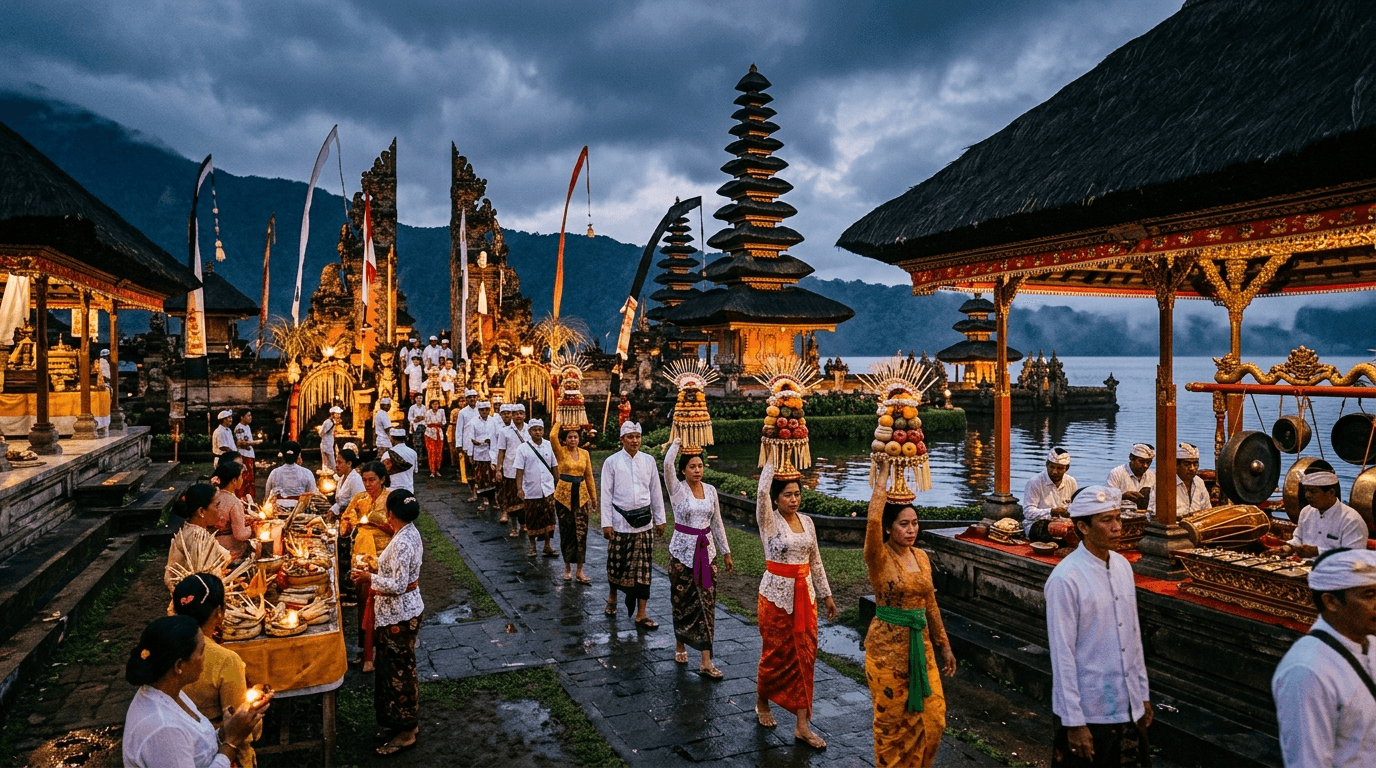
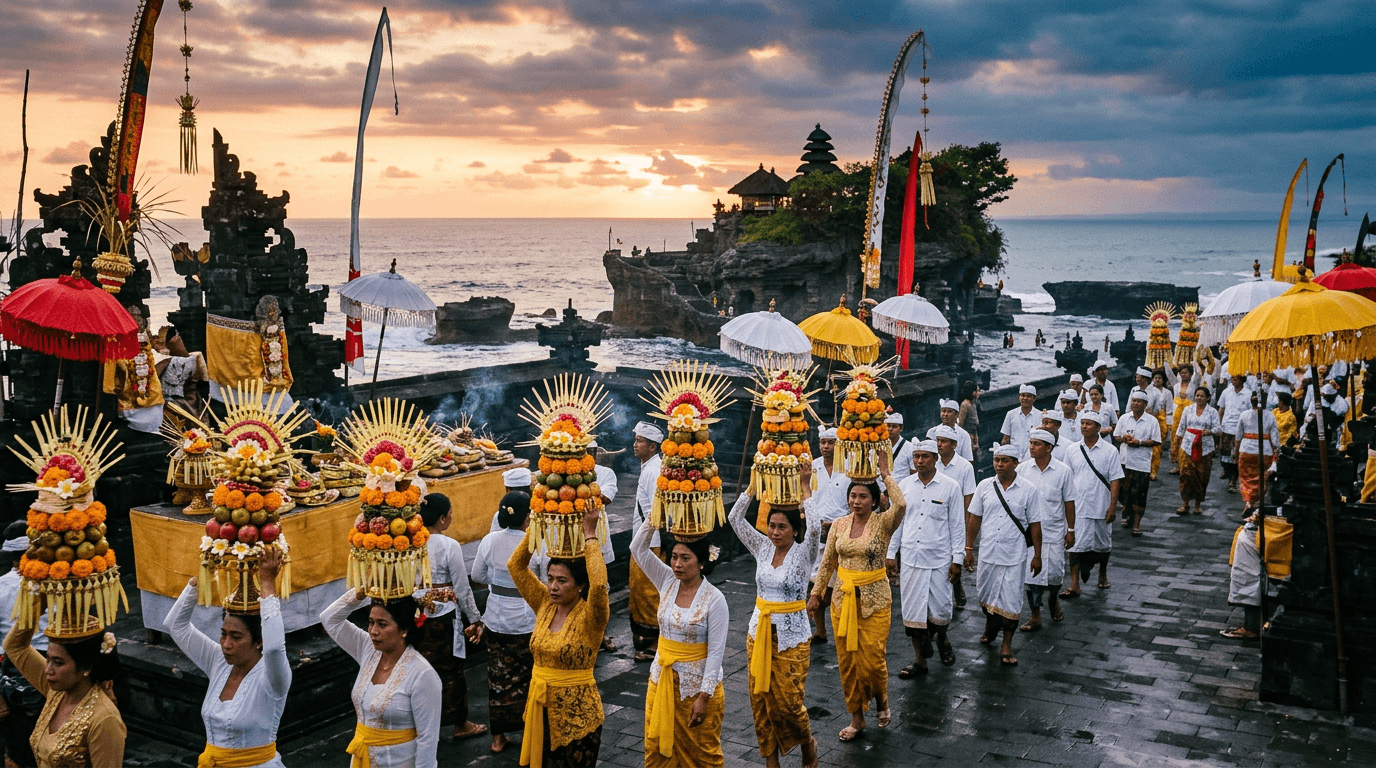
Spend even a few days in Bali and you will notice that ceremony is constant. Temples are decorated, offerings appear at dawn, and processions of women in lace kebaya carry towers of fruit on their heads with no obvious pattern to the timing. The explanation lies in the Balinese calendar, or rather calendars, because the island simultaneously runs two complex systems that together govern the entire ritual life of its people.
Two Calendars Running at Once
The Balinese keep time using both the Pawukon, a 210-day cycle inherited from Javanese tradition, and the Saka, a lunar calendar of Indian origin. Each governs different ceremonies. Temple anniversaries and many community rituals follow the Pawukon, while moon-based observances and the famous Nyepi New Year follow the Saka. A priest or a knowledgeable elder, often consulting a printed tika calendar, works out which auspicious days fall when.
The Pawukon and Its Overlapping Weeks
The Pawukon is the more intricate of the two. Rather than one week repeating endlessly, it runs ten different week-cycles at the same time, ranging from a one-day week up to a ten-day week. The most important are the three-day week, the five-day week and the seven-day week. The combination of where you stand in each of these cycles determines the character of any given day.
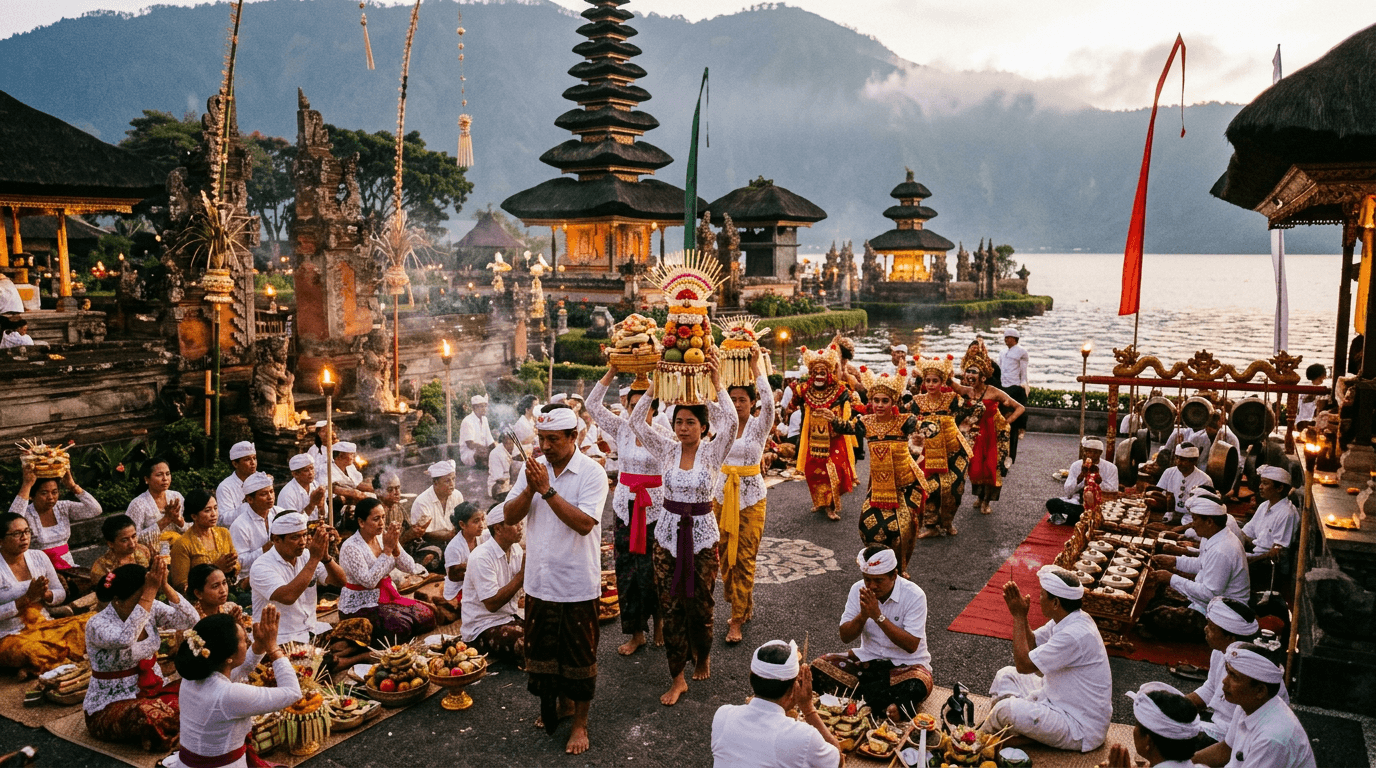
When particular days from different weeks coincide, powerful sacred days emerge. The full 210-day cycle is the basic ritual year for many purposes, which is why a temple's odalan, or anniversary festival, comes around roughly every seven months rather than annually.
Galungan and Kuningan
The best-known Pawukon festivals are Galungan and Kuningan. Galungan celebrates the victory of dharma, or order and goodness, over adharma, chaos and evil. For ten days the ancestral spirits are believed to descend to visit their families on earth, and the island fills with penjor, the tall arched bamboo poles decorated with palm leaves and offerings that line every street and lane.
Kuningan marks the close of this period, when the spirits return to their realm. Both fall on fixed points within the 210-day Pawukon, so on the standard Gregorian calendar they shift, occurring about every seven months rather than on the same date each year.
The Saka Calendar and the Moon
The Saka calendar is lunar, with months measured from new moon to new moon. Its rhythm is marked by purnama, the full moon, and tilem, the dark or new moon, both considered powerful days for prayer and offerings. To keep the lunar months roughly aligned with the solar year, an extra intercalary month is occasionally inserted, much as a leap day works in the Western system.
The Saka year count differs from the Gregorian one, and the calendar is most famous for governing Nyepi, the Balinese Day of Silence, which falls on the day after the new moon that opens the Saka New Year, usually in March.
Nyepi: A New Year of Silence
Nyepi is unlike any other new year on earth. For a full day the entire island shuts down: no flights land, no vehicles move, lights are kept low, and most people stay indoors in quiet reflection. The aim is to convince any lingering evil spirits that Bali is deserted so they move on. The night before brings the opposite energy, with huge papier-mache ogoh-ogoh monsters paraded and then burned to drive out negativity.
For visitors this means planning ahead. During Nyepi, hotels ask guests to remain on the property, beaches and streets are off limits, and even the airport closes for around 24 hours. It is an extraordinary experience but one that requires respecting the silence.
Why It All Matters to Travellers
Understanding the calendars helps make sense of Bali rather than just admiring it. If you see penjor poles everywhere, Galungan is near. If a temple is unusually busy and beautifully dressed, it may be celebrating its odalan. If shops mention an upcoming closure in March, Nyepi is approaching. Asking your hosts where Bali is in its calendar cycle is one of the quickest ways to deepen a visit and time it around the island's most memorable events.
Because both systems are complex and dates shift each year, always check current local calendars or ask a trusted local source before planning travel around a specific ceremony, especially Nyepi, when the island effectively closes.