 MyGlob Editorial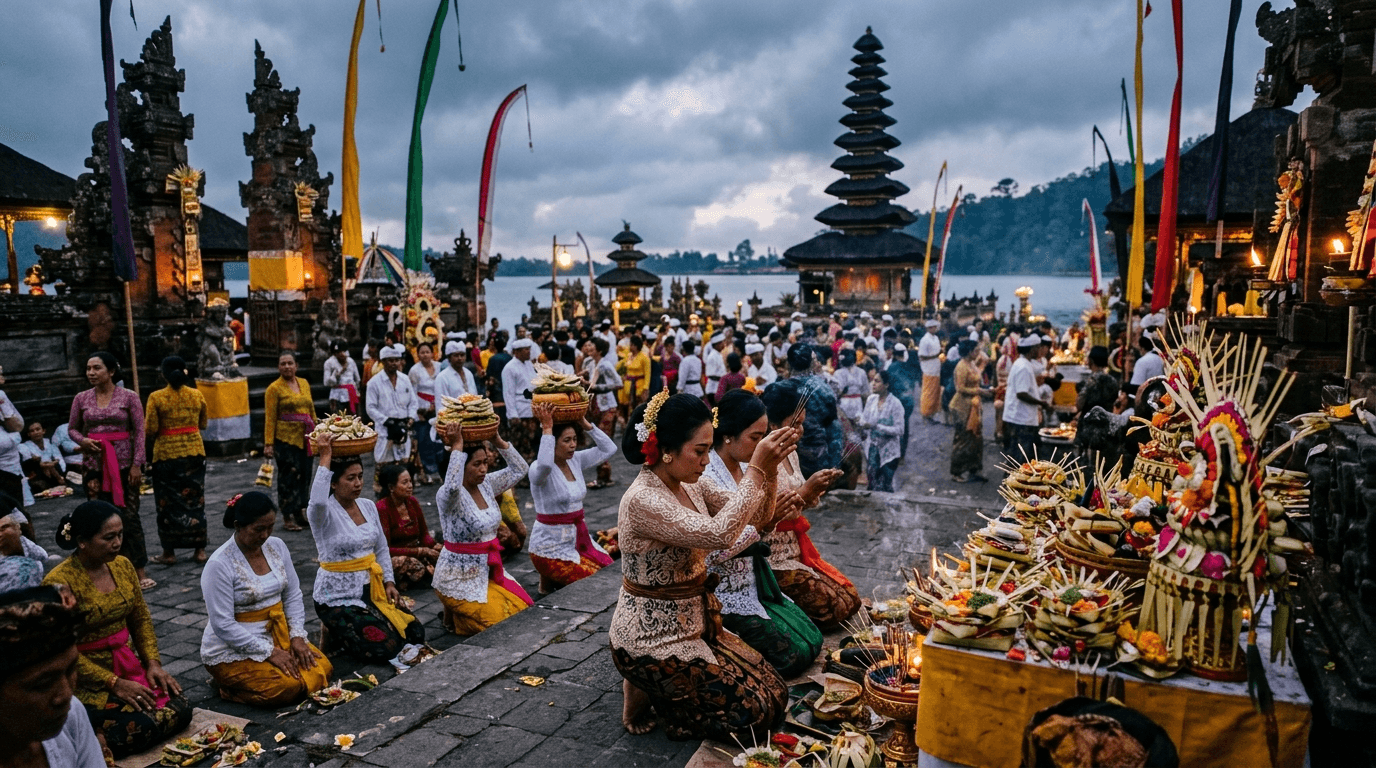
Balinese architecture is one of the most distinctive building traditions in Asia, instantly recognisable in its carved stone gates, thatched pavilions and walled compounds. Yet its beauty is more than decorative. Every measurement, orientation and structure follows a spiritual logic that ties the built environment to the human body, the natural world and the realm of the gods. To walk through a Balinese village is to move through architecture designed as a kind of living philosophy.
A Philosophy Built in Stone and Wood
Traditional Balinese building is guided by a body of knowledge often associated with the asta kosala kosali, the island's principles of sacred design and proportion, traditionally overseen by an undagi, a master builder who is part architect and part priest. The aim is harmony: between people and the divine, between people and nature, and between people themselves. This three-part balance is known as Tri Hita Karana, and it underpins almost every design decision on the island.
Orientation: The Sacred and the Profane
Direction is everything in Balinese architecture. The most sacred orientation is kaja, toward the mountains, especially Mount Agung, the towering volcano regarded as the home of the gods. The opposite direction, kelod, toward the sea, is associated with lower or impure forces. The rising sun in the east, kangin, is also auspicious. Buildings, shrines and even the placement of rooms within a home follow this cosmic compass, with the holiest structures set toward the mountain and the cleansing or service areas toward the sea.
Human Proportions as a Measuring System
Rather than relying on standard units, traditional builders often took measurements from the body of the home's owner, using the length of a foot, the span of a hand or the width of a finger. A house literally fitted its family. These dimensions were thought to bring prosperity and good fortune, embedding the residents into the very framework of their home and reflecting the belief that the building is a kind of extension of the human body.
The Balinese Family Compound
A traditional Balinese home is not a single house but a walled compound containing several separate pavilions, each with its own function, arranged around open courtyards. Like the human body, the compound has a head, a body and feet. The family temple, the sanggah or merajan, occupies the most sacred corner toward the mountain and the rising sun.
- The family temple in the kaja-kangin corner, the holiest part of the compound.
- Sleeping pavilions and a pavilion for ceremonies and receiving guests.
- The kitchen, traditionally placed toward the south and associated with fire.
- The rice granary, a status symbol in agricultural communities.
- Service areas, animal pens and waste toward the kelod, seaward side.
Gates That Speak: Candi Bentar and Kori Agung
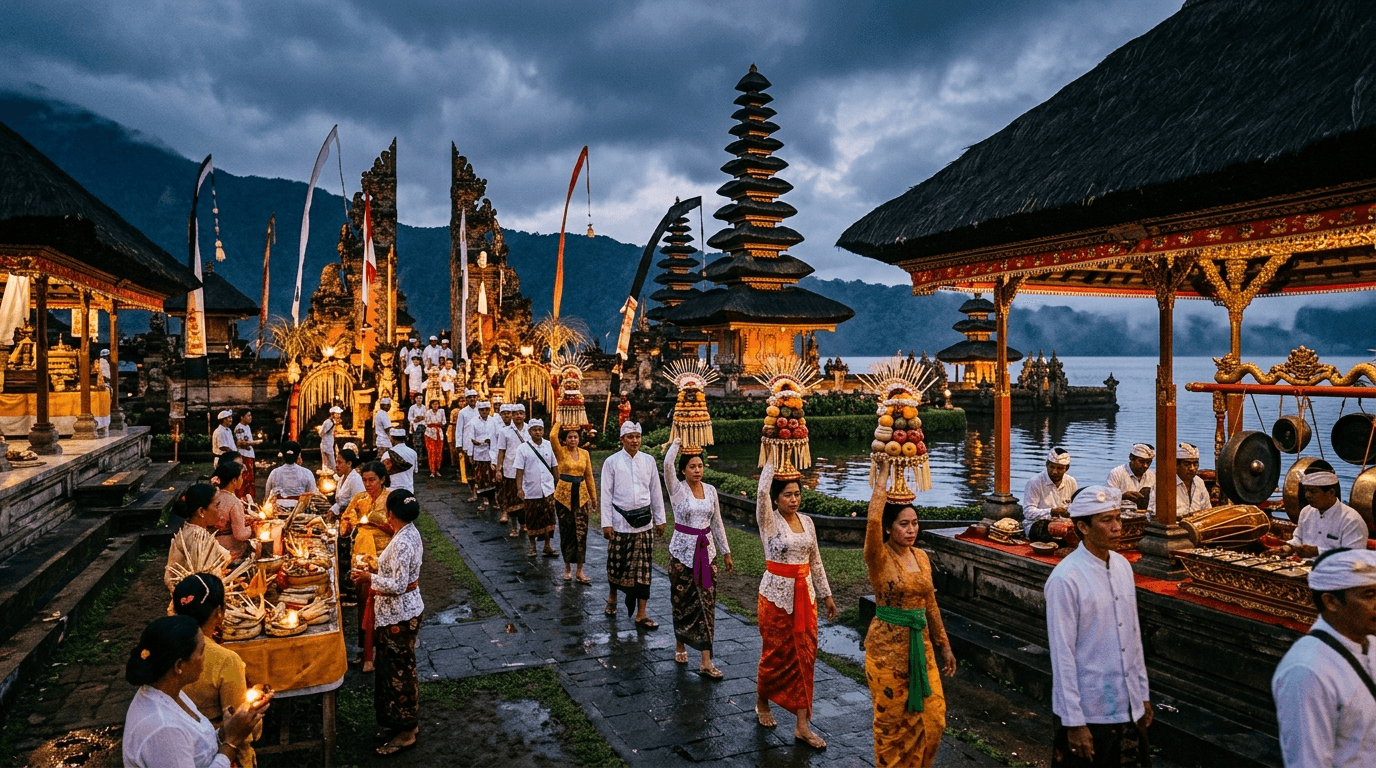
Two gateways define the Balinese threshold. The candi bentar is the dramatic split gate that looks like a single tower cleaved down the middle, marking the transition from the outer world into a more sacred space. The kori agung, or paduraksa, is a roofed and elaborately carved gate with a single doorway, leading into the innermost and most holy temple courtyard. Often a small wall called an aling-aling stands just behind it, designed to block direct entry and, symbolically, to deflect malevolent spirits, which are believed to travel only in straight lines.
The Temple and Its Three Courtyards
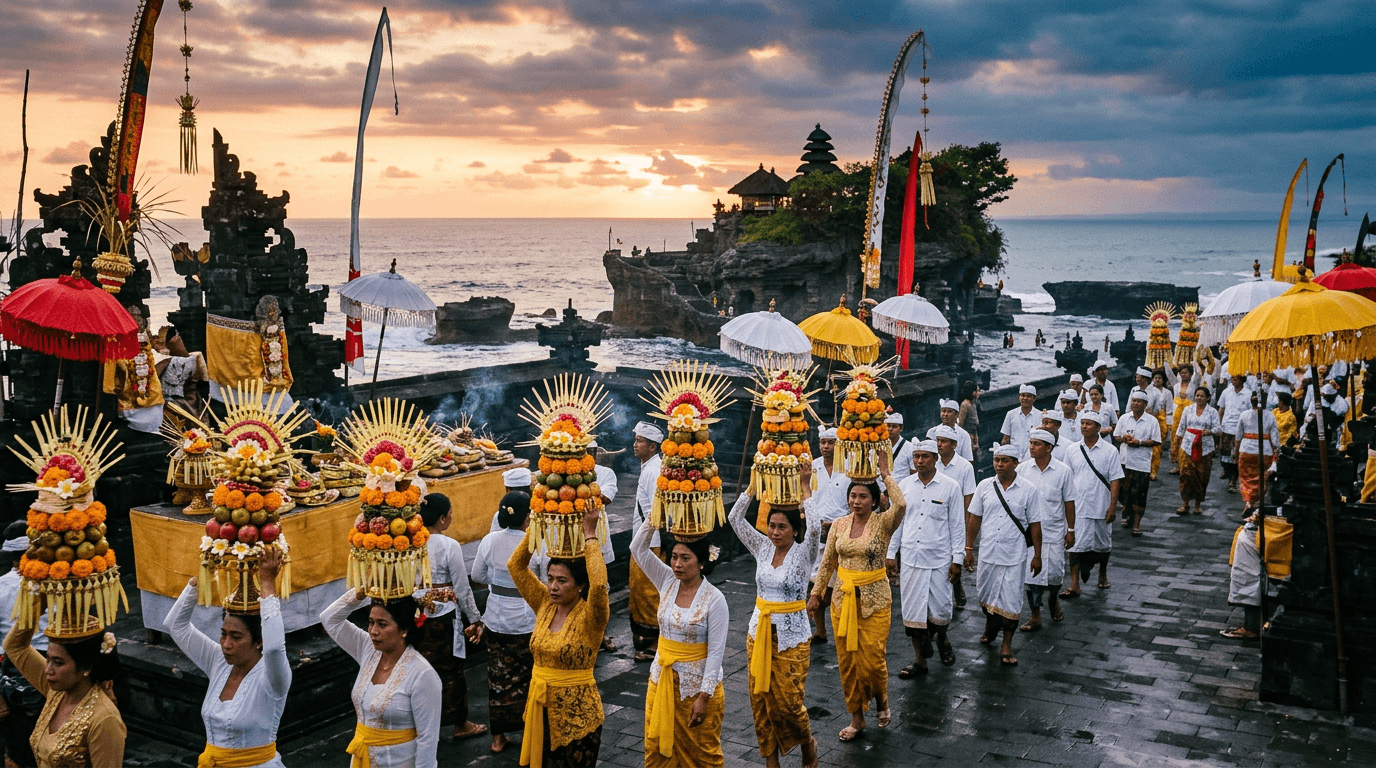
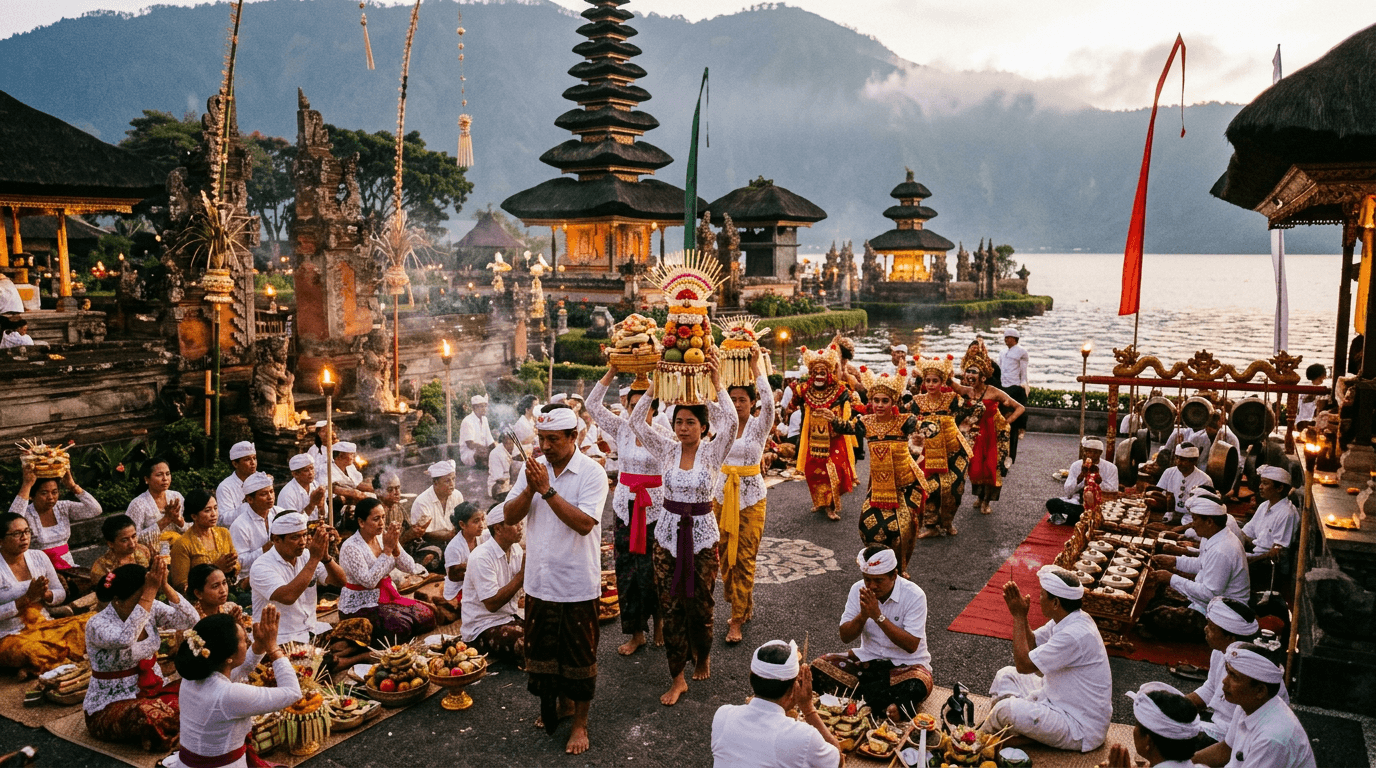
A Balinese pura, or temple, is typically organised into three concentric courtyards reflecting the three-part cosmos. The outer jaba is a transitional, semi-public space; the middle jaba tengah holds preparation areas and pavilions; and the innermost jeroan is the most sacred zone, home to the shrines and the multi-tiered meru towers whose thatched roofs, always in odd numbers, honour the gods and deified ancestors. This layering from least to most sacred mirrors the journey from the everyday world toward the divine.
Materials, Craft and Modern Change
Classic Balinese building relies on local materials: volcanic stone for carving, brick, timber, bamboo and alang-alang grass thatch for roofs. Skilled carvers cover stone and wood with floral motifs, mythical figures and guardian images, turning structure into storytelling. Today, concrete, tile and steel increasingly appear, and tourism has spawned a softer resort style sometimes called Bali modern. Even so, the underlying principles of orientation, courtyards and the sacred gate endure, keeping the island's architectural soul intact even as its materials evolve.
For the traveller, learning to read these forms transforms a walk past a wall into a glimpse of an entire worldview, one in which a home, a gate and a temple are all maps of the cosmos rendered in stone, wood and grass.