 MyGlob Editorial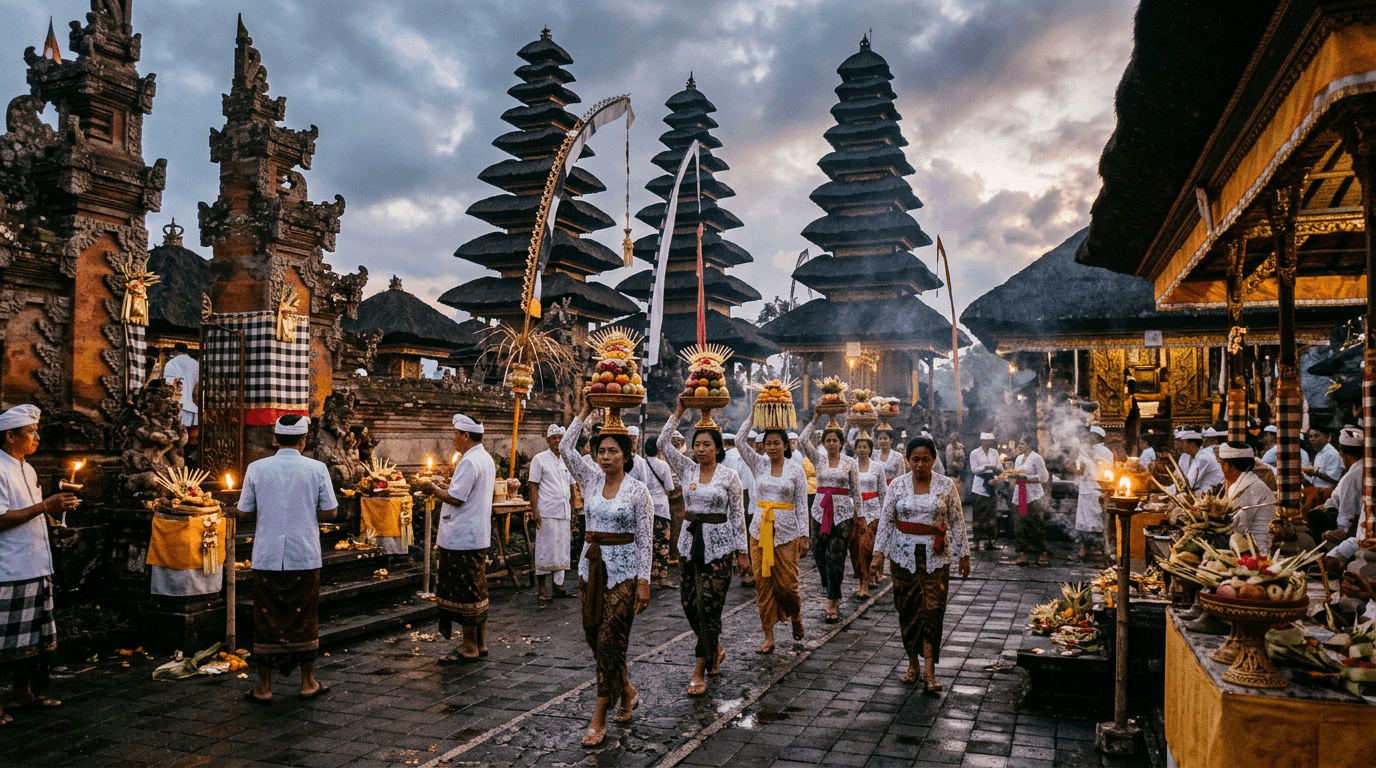
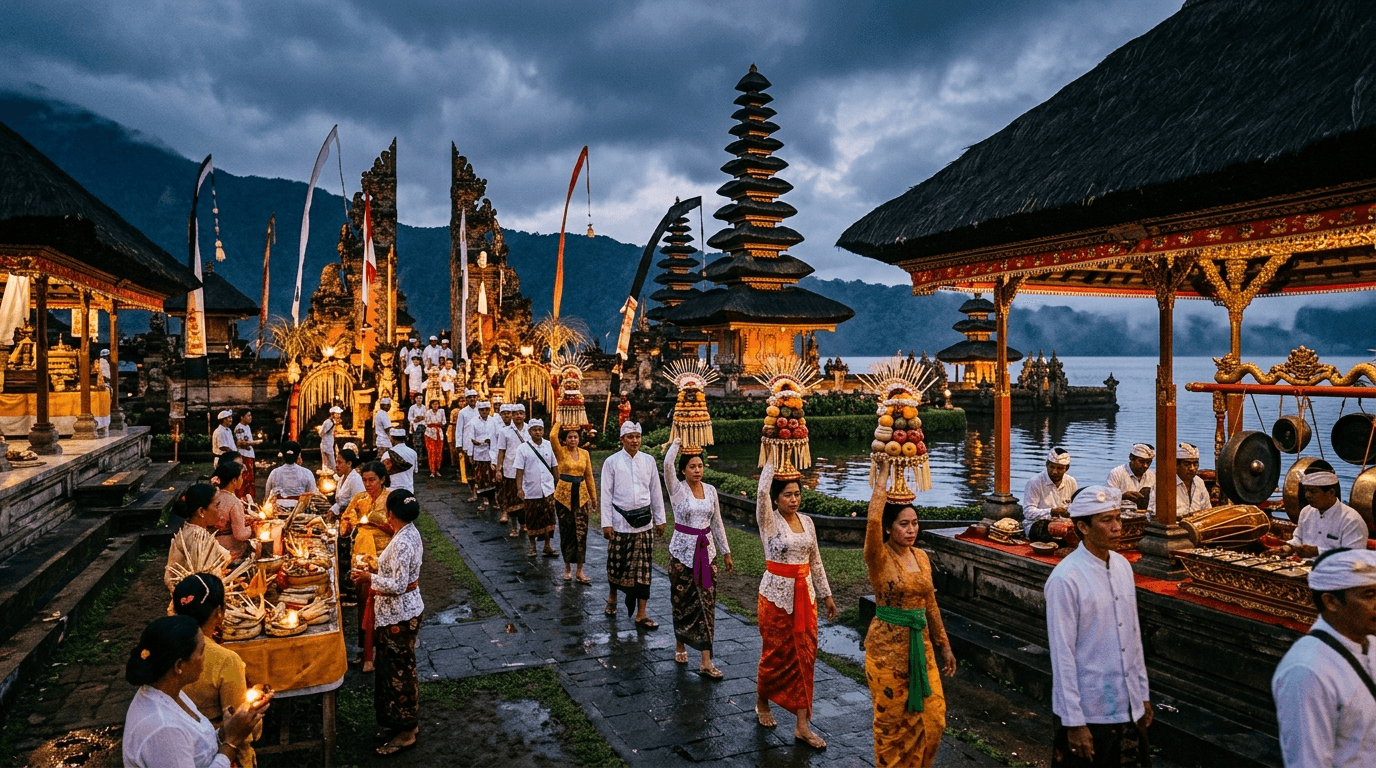
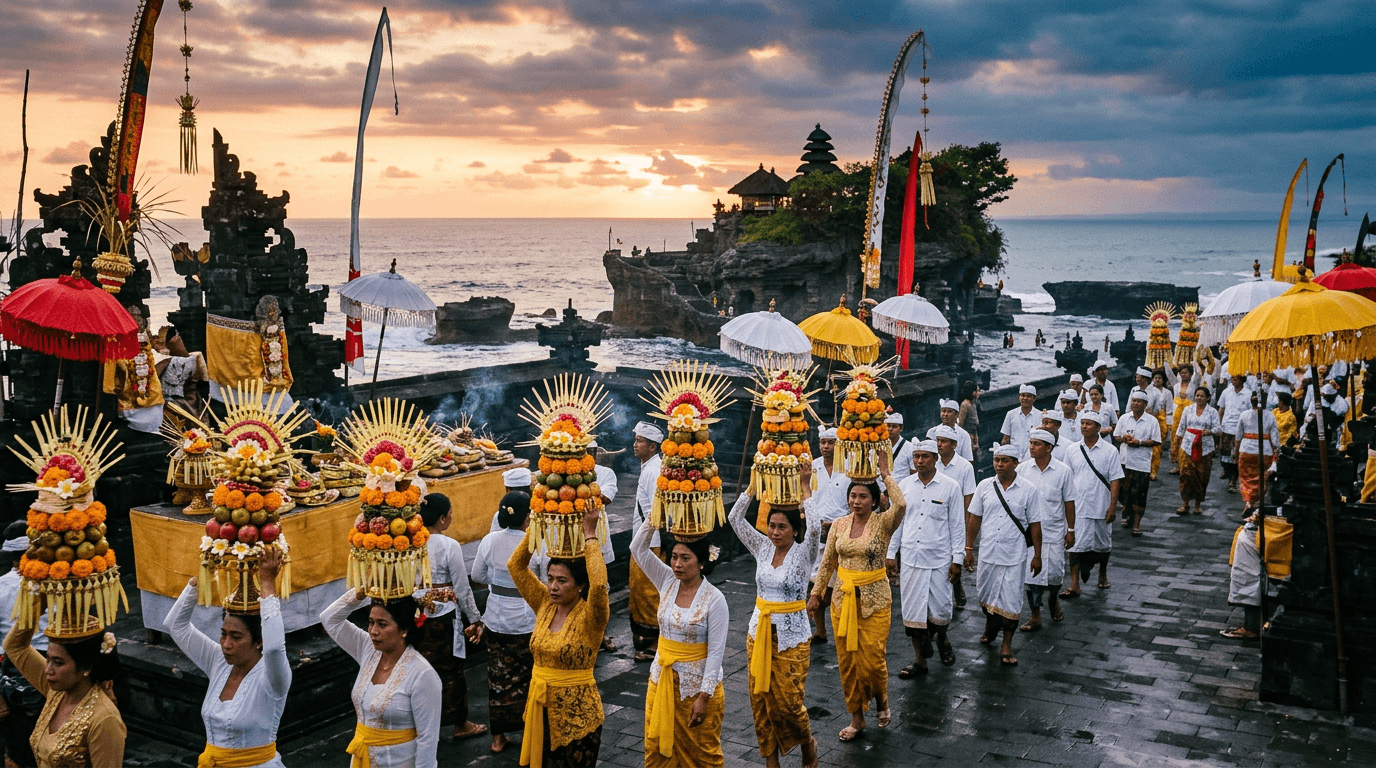
It is easy to come to Bali for the beaches and leave changed by something less tangible. The island runs on a current of ritual that never switches off. Tiny palm-leaf offerings appear on doorsteps at dawn, gamelan music drifts from temple courtyards at night, and entire villages pause for ceremonies that have been performed for centuries. Bali is the rare place where culture is not staged for tourists but lived in front of them. Understanding even a little of it transforms a holiday into something deeper.
A Hindu island in a Muslim nation
Bali is the spiritual outlier of Indonesia, the only province where the majority practises Balinese Hinduism, a distinctive blend of Hindu beliefs, Buddhist influence and older animist traditions. This faith shapes everything, from the layout of homes to the rhythm of the calendar.
The Balinese worldview centres on balance, captured in the philosophy of Tri Hita Karana, harmony between people, nature and the divine. You see it in the way temples face the mountains, where the gods reside, and turn their backs to the sea, the realm of darker forces.
The art of the daily offering
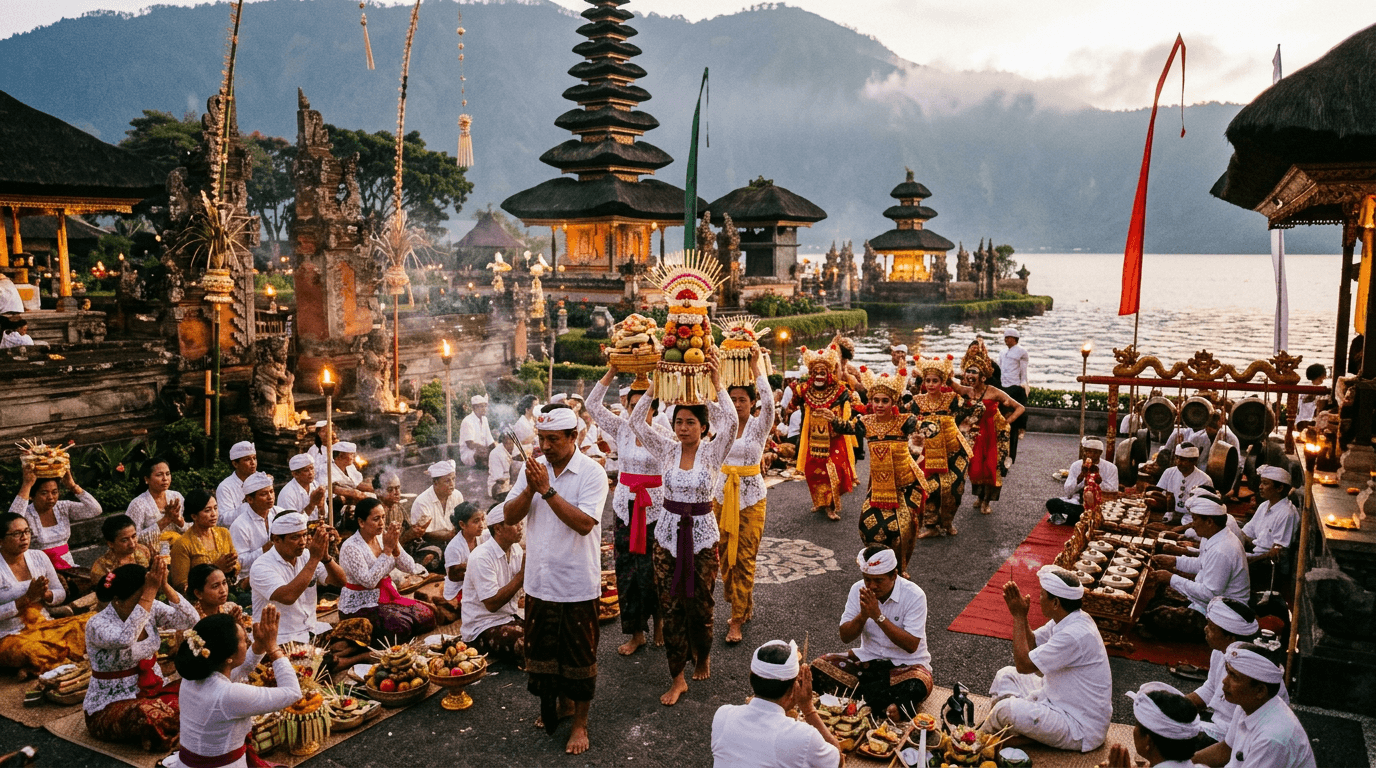
Those little square trays of flowers, rice and incense you will inevitably step around are called canang sari. Made and placed several times a day, they are gifts of gratitude to the gods and a quiet acknowledgement of the spirits believed to share the world.
Watching a woman assemble them with practised speed is to glimpse devotion as routine. If you accidentally tread on one, no one will scold you, but stepping around them is a small courtesy that locals notice and appreciate.
Dance and the gamelan orchestra
Balinese dance is hypnotic, with darting eyes, flexed fingers and precise, angular movements that tell stories from Hindu epics. The Legong is graceful, the Barong dramatises the eternal struggle between good and evil, and the Kecak, performed by a chanting circle of men, is pure theatrical electricity.
Behind the dancers is the gamelan, a bronze percussion orchestra whose shimmering, interlocking rhythms are the soundtrack of the island. Catching a performance at Ubud's palace or at a clifftop temple like Uluwatu is one of Bali's essential experiences.
Ubud, the cultural heart
If Bali has a creative capital, it is Ubud. For nearly a century it has drawn painters, carvers and writers, and today it overflows with galleries, museums and studios. The town's art movements, from traditional Kamasan painting to the modern styles fostered by foreign artists in the twentieth century, are all on display.
Beyond the famous monkey forest and rice terraces, Ubud rewards slow wandering. Drop into a gallery, watch a wood carver at work, or take a class in batik or painting to feel the craft from the inside.
Crafts passed down through villages
Balinese artistry is often village-specific. Mas is known for wood carving, Celuk for silver and goldsmithing, Batuan for intricate painting, and the Sidemen valley for handwoven textiles. Visiting these villages lets you buy directly from makers and watch skills handed down through generations.
Textiles carry special meaning, especially the sacred double-ikat geringsing cloth woven only in the village of Tenganan and believed to offer spiritual protection. Each region's specialty reflects centuries of accumulated knowledge.
Ceremonies that stop the island
The Balinese calendar is dense with festivals. Galungan and Kuningan celebrate the victory of good over evil, with tall, curving penjor poles lining every road. Temple anniversaries, called odalan, bring communities together in their finest dress.
The most extraordinary is Nyepi, the Day of Silence, when the entire island shuts down for 24 hours, no flights, no traffic, no lights, in a collective day of reflection. The night before erupts in parades of giant demonic ogoh-ogoh effigies.
How to be a respectful guest
Engaging with Bali's culture is welcomed, provided you do it with respect. A sarong and sash are required to enter temples, dress modestly at ceremonies, and never stand higher than a priest or point your feet at shrines and offerings.
- Wear a sarong and sash at temples, often available to rent at the entrance.
- Ask before photographing people praying or participating in ceremonies.
- Walk around offerings rather than over them where you can.
- Check ceremony dates and temple rules locally, as the Balinese calendar shifts each year.