 MyGlob Editorial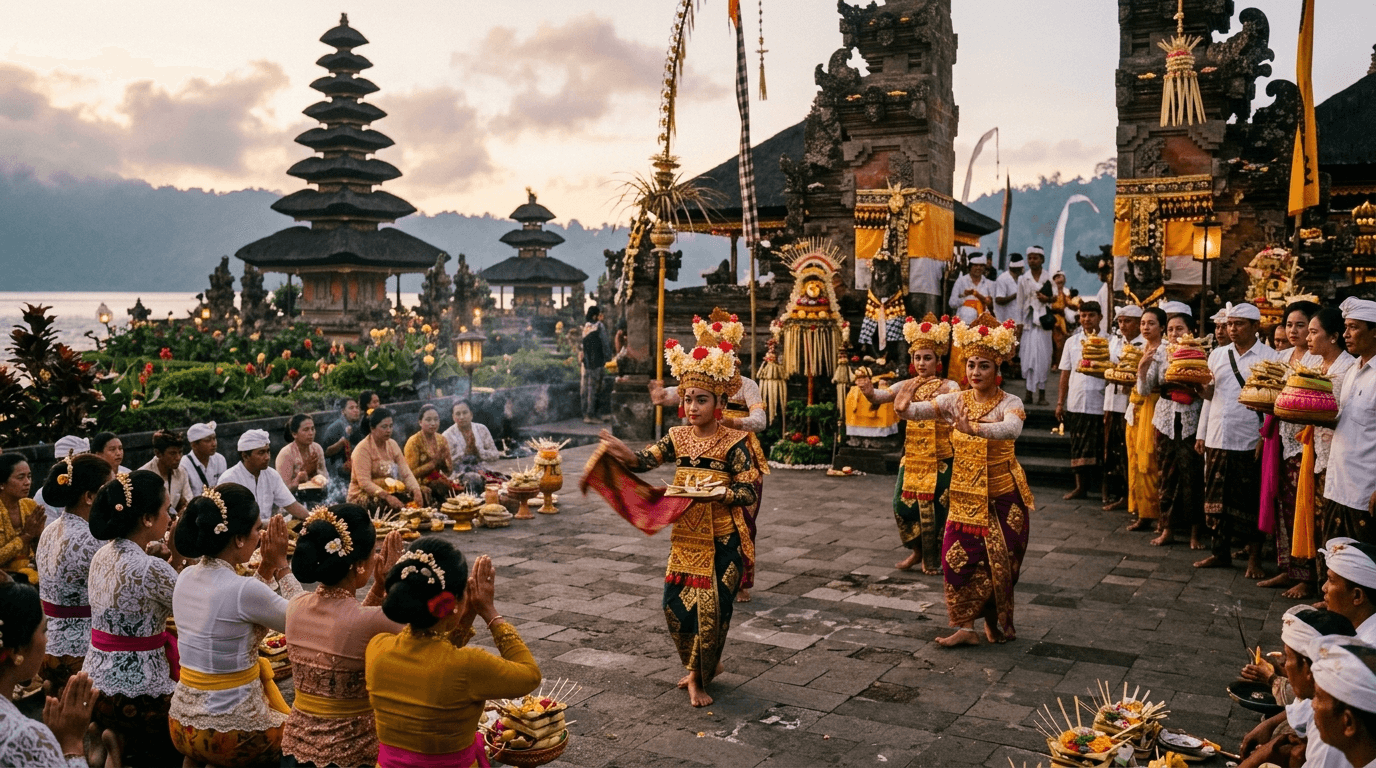
Long before infinity pools and beach clubs, Bali was captured by early photographers whose glass-plate and black-and-white images now feel like windows into another world. These vintage photographs, many from the late nineteenth and early twentieth centuries, show an island of rice terraces, royal courts, sacred dances and daily ritual. Looking at them is a powerful reminder of how much has changed, and how much of the island's deep culture has endured.
When the Camera Came to Bali
Photography reached Bali during the era of Dutch colonial expansion, when officials, scientists and travellers began documenting the island. Early images were technically demanding to produce, requiring bulky equipment and long exposures, which is why so many old photographs show people posed solemnly and still. As the twentieth century unfolded and Bali gained fame as an artists' paradise, a wave of photographers, painters and writers arrived, leaving behind an extraordinary visual record of island life.
Royal Courts and the Old Kingdoms
Among the most striking historic images are those of Bali's royal courts. Before the island was fully brought under colonial control, it was divided into competing kingdoms, each with its own palace, or puri, and its own rajah. Old photographs show princes in ceremonial dress, retinues of attendants, and the grandeur of court life. They also bear witness to a dark chapter: the puputan, the ritual fights to the death in which members of the royal courts faced overwhelming colonial forces rather than surrender, events that left a lasting mark on Balinese identity.
Rice Terraces and Rural Life
Many vintage images celebrate the timeless landscape of the Balinese countryside. The sculpted rice terraces, fed by the cooperative subak irrigation system that dates back over a thousand years, look remarkably similar in old photographs to how they appear today. Farmers with water buffalo, women carrying loads on their heads, and villages nestled among palms convey a rhythm of agricultural life that has shaped Balinese society for centuries and still underpins it in many areas.
Temples, Dance and Ceremony
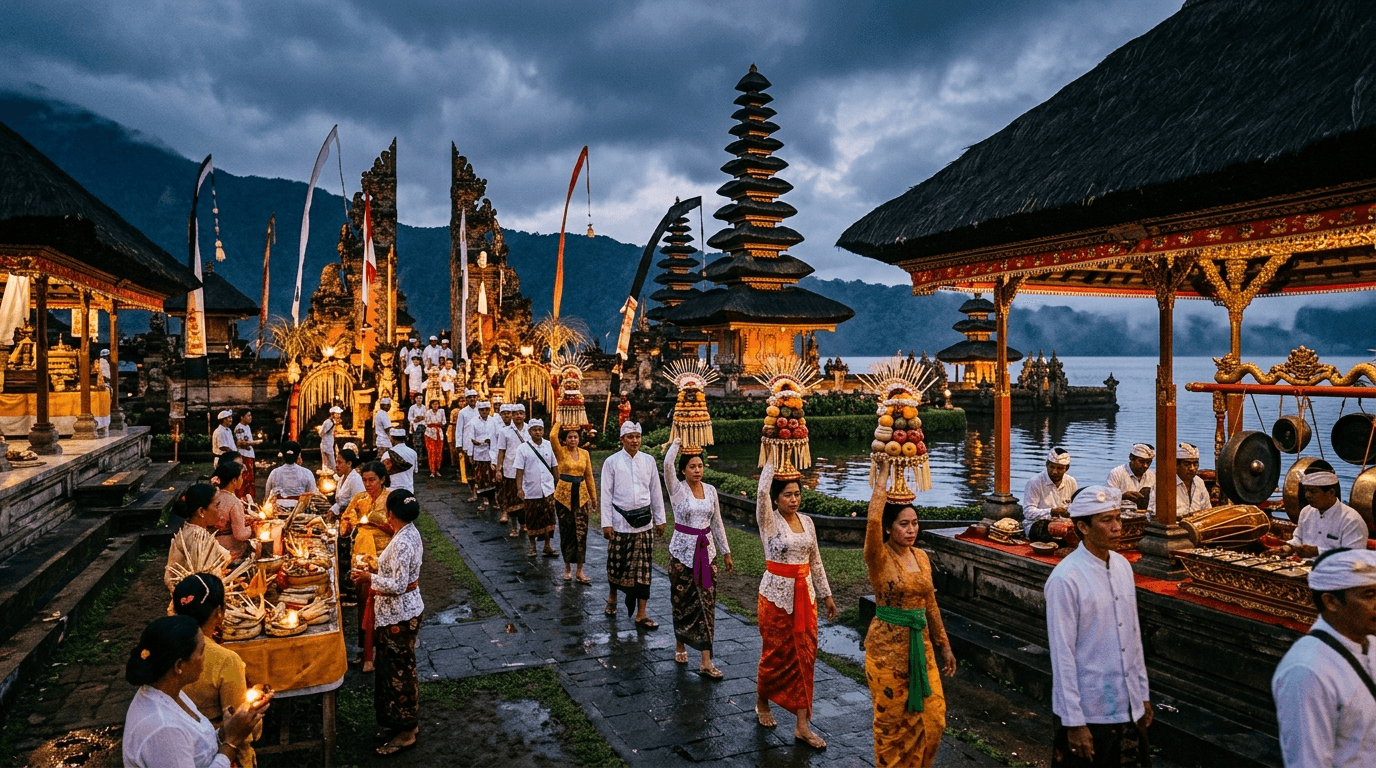
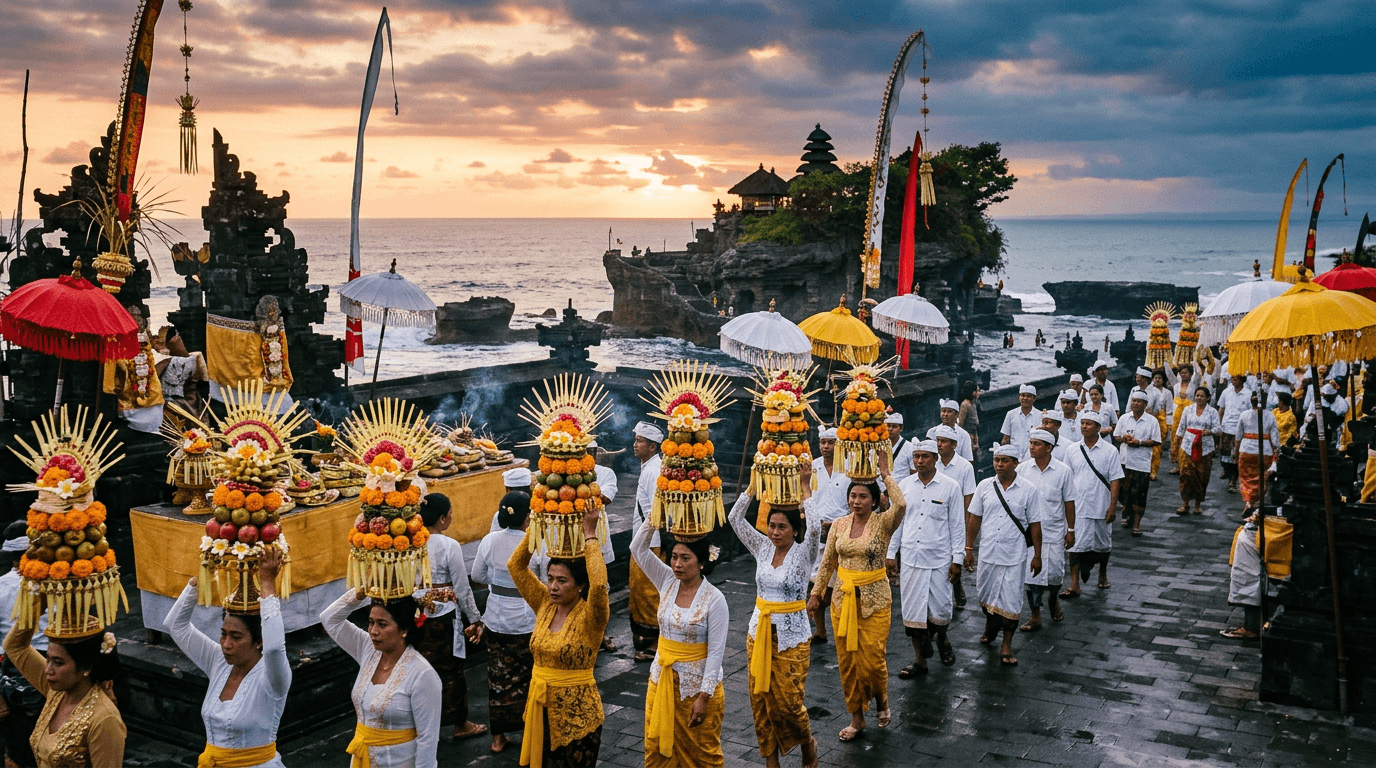
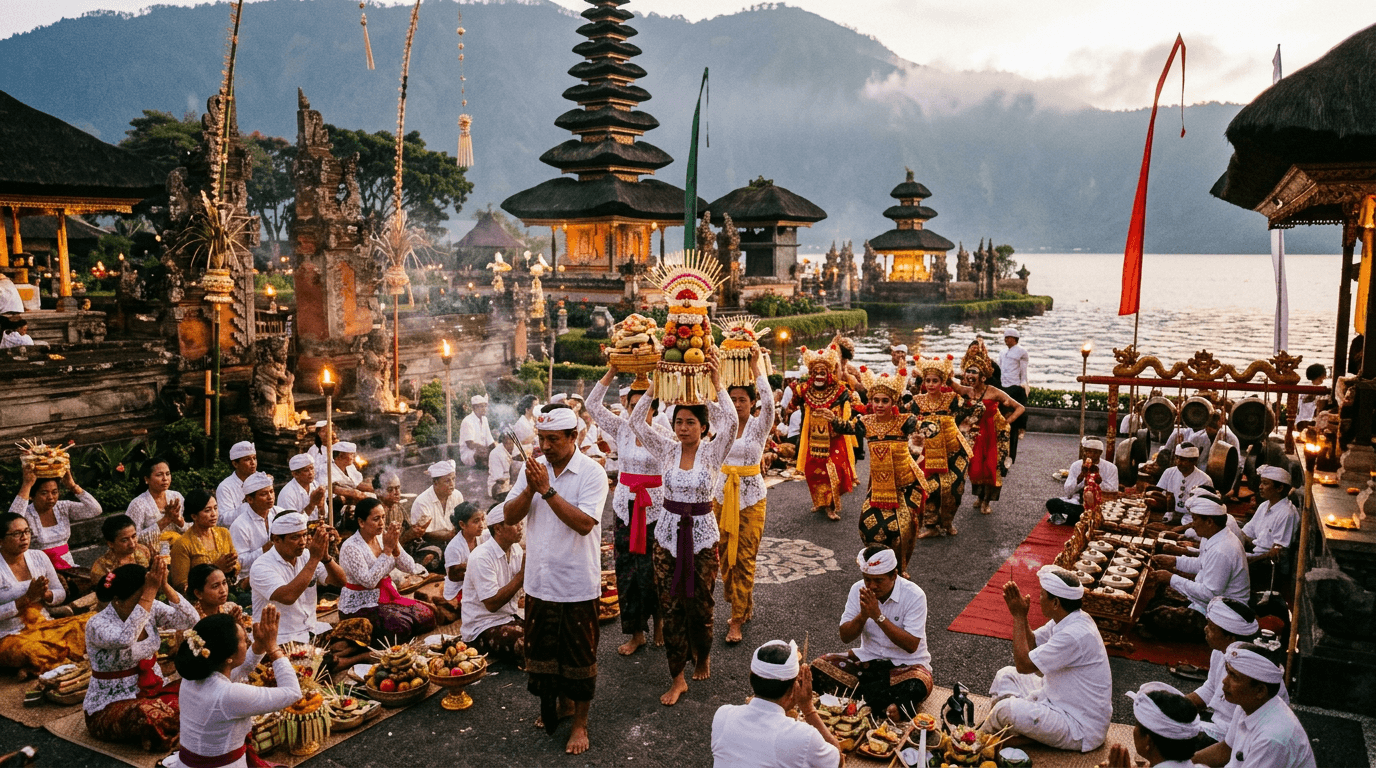
Early photographers were captivated by Bali's religious life, and rightly so. Their images preserve temple festivals, towering offerings, masked dancers and graceful legong performers, sometimes very young, frozen mid-gesture. These photographs document an artistic and spiritual culture that was already ancient when the camera arrived. Comparing them with ceremonies you can still witness today reveals a living tradition that has carried its forms, costumes and devotion across the generations with remarkable continuity.
The Artists Who Shaped Bali's Image
In the early twentieth century a circle of foreign artists settled in Bali, especially around Ubud, and helped craft the romantic image of the island that endures to this day. Their photographs, paintings and writings introduced Bali to the wider world as a place of beauty and harmony. While their gaze was sometimes idealised, their work also genuinely supported and recorded Balinese arts, and the visual archive they left behind is invaluable for understanding how the island once looked and lived.
Reading Old Photographs Thoughtfully
Vintage images of Bali are beautiful, but they deserve a thoughtful eye. Many were made through a colonial or romanticising lens, posing subjects to fit outsiders' expectations of an exotic paradise. The people in them were rarely able to control how they were depicted. Appreciating these photographs fully means admiring their artistry and historical value while remembering the unequal power behind the camera and honouring the dignity of the Balinese who appear in them.
Where the Past Meets the Present
What makes these century-old photographs so moving is the dialogue they open with the Bali of today. The beach clubs and traffic of the modern south would be unrecognisable to their subjects, yet a procession to a temple, a penjor arching over a village lane, or a terraced hillside catching the morning light would be instantly familiar. The images take you back in time, but they also reveal the deep cultural thread that still runs unbroken through the island, connecting the Bali of a hundred years ago to the one travellers fall in love with now.