Saur (Balinese Fried Shredded Coconut): The Crunchy Topping That Defines a Bali Plate
Saur is the toasted, spiced coconut crumble that crowns nasi campur and ceremonial feasts across Bali. Learn how to make this fragrant, savoury-sweet topping at home with a simple, authentic method.
 MyGlob Editorial June 17, 2026 1 min read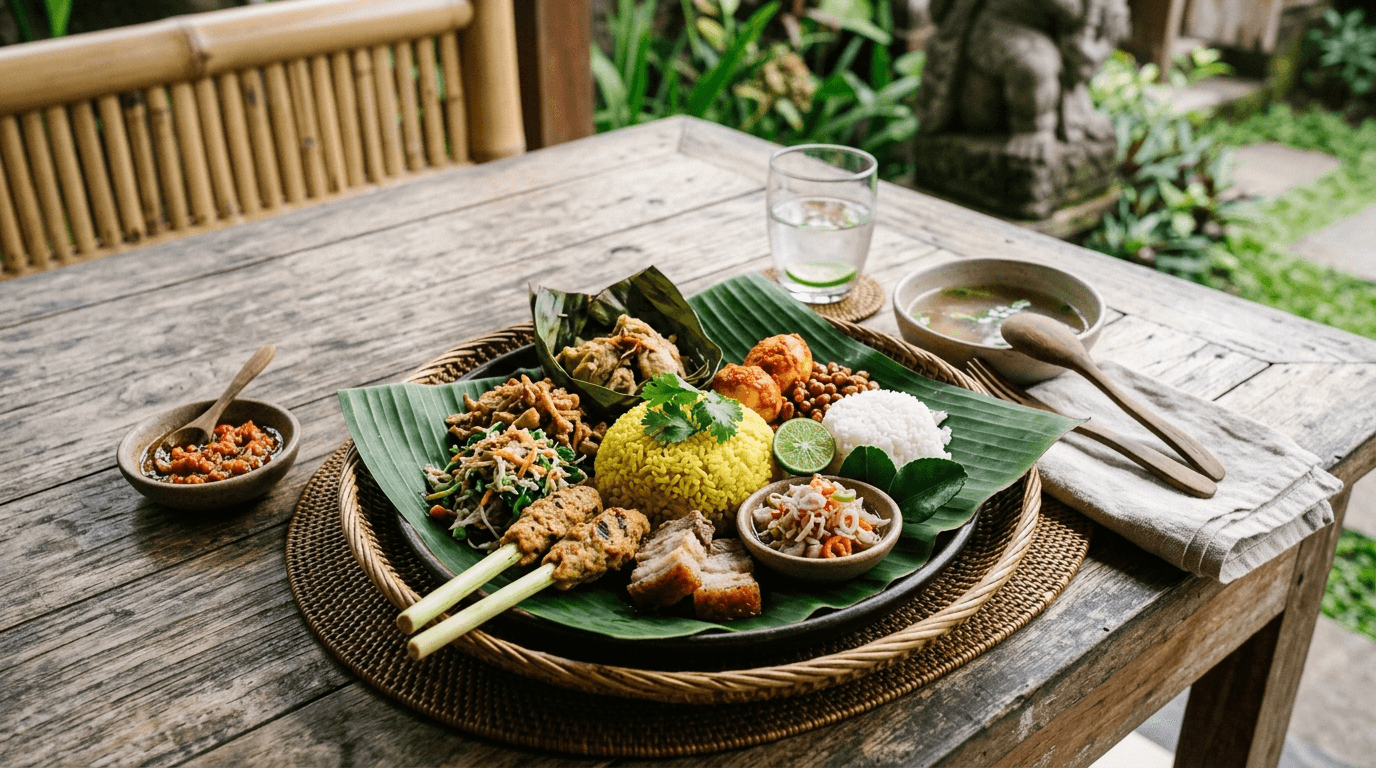
If you have eaten nasi campur from a warung in Ubud or shared a ceremonial feast in a Balinese family compound, you have almost certainly tasted saur. It is the golden, crumbly heap of fried shredded coconut tucked among the rice, sambal and grilled meats, and it does quiet but essential work: adding crunch, toasted aroma and a faint sweetness that ties the whole plate together. On the island, saur is humble everyday cooking, yet it appears at the most important occasions too, from temple offerings to wedding banquets.
Ingredients
- 300 g (about 4 cups) freshly grated mature coconut, white flesh only
- 5 shallots, peeled
- 3 cloves garlic, peeled
- 3 candlenuts (kemiri), lightly toasted (substitute macadamia nuts)
- 2 cm fresh turmeric, peeled (or 1 tsp ground turmeric)
- 2 cm galangal (laos), peeled
- 1 lemongrass stalk, white part bruised
- 2 kaffir lime leaves, finely shredded
- 1 tsp coriander seeds, toasted and ground
- 1 to 2 tsp palm sugar (gula Bali), grated
- 1 tsp salt, or to taste
- 1 to 2 tbsp coconut oil
- Make the spice paste: pound or blend the shallots, garlic, candlenuts, turmeric and galangal into a smooth paste. A little salt helps it break down in a mortar; a splash of water helps a blender.
- Warm the coconut oil in a wide pan or wok over medium heat. Add the spice paste, bruised lemongrass and shredded lime leaves, and fry gently until the paste no longer smells raw and the aroma turns fragrant, about 3 to 4 minutes.
- Add the grated coconut and the ground coriander. Stir to coat every strand evenly with the golden paste.
- Lower the heat slightly and toast, stirring almost constantly, so the coconut dries out evenly and never catches at the edges. This is the key step and it takes patience, typically 15 to 25 minutes.
- When the coconut is turning gold and smells deeply nutty, stir in the palm sugar and salt. Keep toasting until the mixture is dry, crisp and a rich amber colour.
- Remove the lemongrass stalk, then spread the saur on a tray to cool. It will crisp further as it cools. Taste and adjust salt.
Method
- 1What makes Balinese saur distinct from the sweeter serundeng of Java is its balance. The Balinese version leans savoury and aromatic, built on the island's beloved base genep aromatics rather than a heavy hand of palm sugar. Done well, saur is dry, light and shatteringly crisp, never oily or clumped. The good news is that it is one of the easiest Balinese preparations to master, and once you have a jar of it you will find yourself sprinkling it over rice, vegetables and even fried eggs.
- 2Saur is freshly grated coconut that is seasoned with aromatic spices and slowly toasted in a dry or lightly oiled pan until it turns deep gold and crisp. The slow heat coaxes out the coconut's natural oils and sugars, concentrating the flavour into something nutty and almost caramelised. Because it is dry-cooked and well seasoned, saur keeps for days, which is why Balinese cooks often prepare a big batch before a ceremony and dip into it through the week.
- 3Authenticity here lives in the coconut. Mature, freshly grated coconut gives the best texture and flavour, and most Balinese kitchens use the white flesh without the brown skin for a paler, cleaner result. If you can find frozen grated coconut at an Asian grocer, it is a close second; desiccated coconut can work in a pinch but needs rehydrating and watching closely so it does not scorch.
- 4Patience over heat is the golden rule. High heat seems faster but it burns the spice paste and the outer coconut before the inside dries, leaving you with a bitter, uneven crumble. Keep the flame moderate and your spatula moving.
- 5Dry it fully. Saur should rattle slightly when you stir it at the end. Any residual moisture means it will turn chewy and spoil faster. Cool it completely before storing in an airtight jar, where it will keep at room temperature for several days or up to a couple of weeks.
- 6Adjust to taste. Some families add a pinch of toasted shrimp paste (terasi) for a deeper savoury hum, while others keep it vegetarian for offerings. Start mild and build the seasoning, since the flavour intensifies as the coconut concentrates.
- 7The classic home is a plate of nasi campur, scattered over warm rice alongside sambal matah, lawar, sate lilit and a piece of fried chicken. But saur is endlessly useful: spoon it over steamed or blanched vegetables, fold it through urap salads, or use it as a crunchy garnish for soups and fried eggs. Travellers who fall for it in Bali often pack a jar home, because a single spoonful brings the island's kitchens straight back to the table.

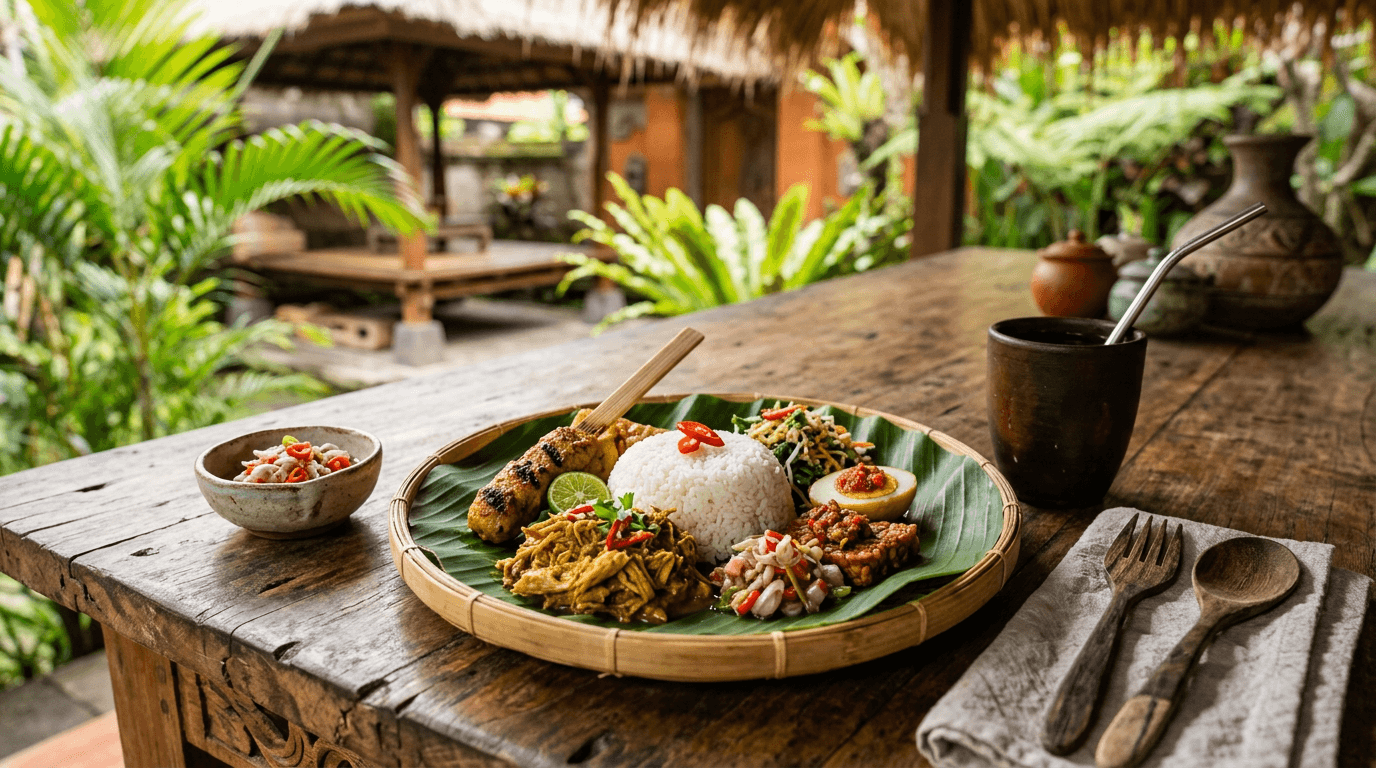
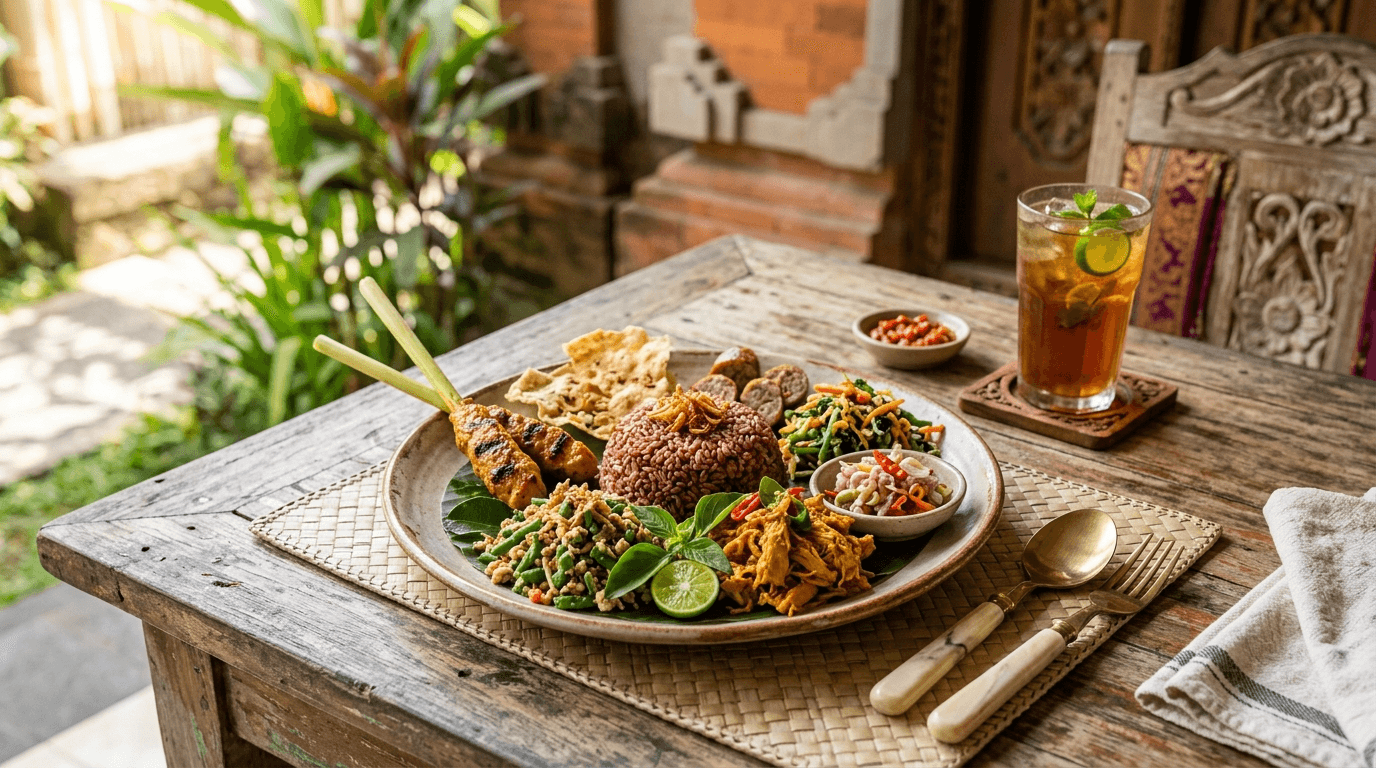
Saur is fried shredded coconut seasoned with Balinese spices and toasted until crisp and golden. It is sprinkled over nasi campur, lawar and other rice dishes to add crunch, nuttiness and fragrance, making it one of the signature finishing touches of Balinese cuisine.
- Cuisine
- Balinese / Indonesian
- Type
- Condiment / topping
- Main Ingredient
- Shredded coconut
- Texture
- Crunchy, golden, dry
- Best For
- Rice plates and lawar
- Region
- Bali, Indonesia
- A crispy condiment of shredded coconut fried with Balinese spices
- Adds crunch, nutty flavour and aroma to rice plates
- A key component of lawar and a common nasi campur topping
- Made by toasting grated coconut with base genep until golden and dry
- Best stored airtight to keep it crisp