Basa Gede: The Master Spice Paste at the Heart of Balinese Cooking
Basa gede is the mother paste of the Balinese kitchen — the savoury, aromatic foundation behind curries, satay, and braises. Here's how to make it from scratch.
 MyGlob Editorial May 23, 2026 1 min read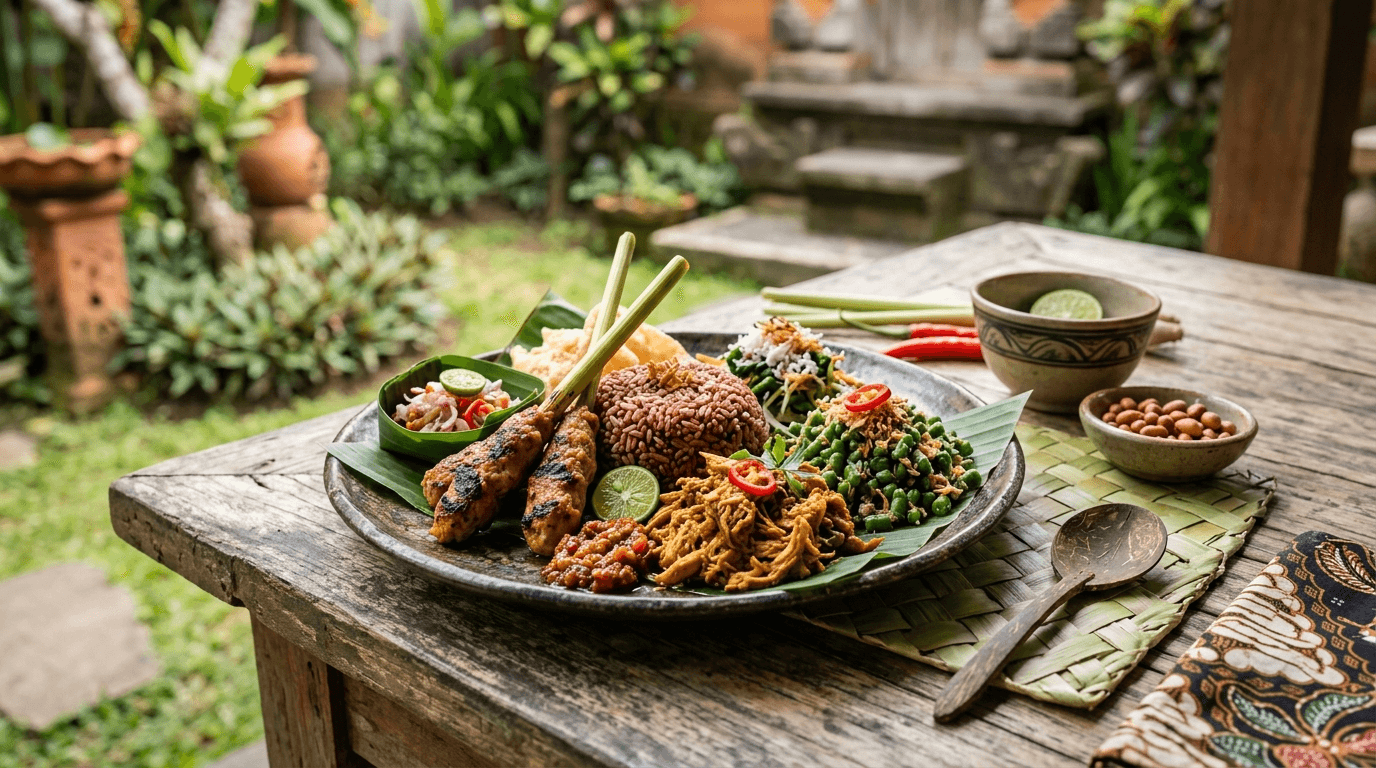
If you learn one thing about Balinese cooking, learn basa gede. The name simply means 'big spice paste', and it earns it: a single batch contains a dozen or more aromatics pounded together into a deep, savoury, faintly sweet paste that forms the base of an astonishing range of dishes. Lawar, betutu, sate lilit, fish curries, braised pork, vegetable stir-fries — they all begin with a spoonful of basa gede sizzling in hot oil.
Ingredients
- 15 shallots, peeled
- 10 cloves garlic
- 10–15 large red chillies, deseeded for less heat
- A 6 cm piece of fresh turmeric (or 1 heaped tsp ground)
- A 6 cm piece of fresh galangal (laos)
- A 4 cm piece of fresh ginger
- A 4 cm piece of fresh kencur (aromatic ginger), if available
- 3 stalks lemongrass, white parts, bruised and sliced
- 6 candlenuts (kemiri), toasted
- 2 tsp coriander seeds, toasted and ground
- 1 tsp black peppercorns
- 1 tsp shrimp paste (terasi), toasted
- 2 kaffir lime leaves and a small bay leaf (salam) for cooking
- 1 tsp salt, 2 tsp palm sugar (gula merah)
- 6 tbsp coconut oil for frying
- Don't rush the frying stage. The difference between mediocre and excellent basa gede is entirely in how long and gently you cook the paste.
- Use fresh rhizomes wherever possible. Fresh turmeric and galangal give a vivid colour and fragrance that dried versions can't match.
- Make a big batch. It freezes perfectly in small portions, so a single afternoon of pounding sets you up for weeks of cooking.
- Wear gloves when handling fresh turmeric and chillies — both leave their mark on skin.
- If you can't find kencur or candlenut, the paste still works; just keep the balance of galangal, turmeric, shallot and chilli intact, as those define its character.
Method
- 1Where Indian curries lean on dried spice powders, Bali builds flavour from fresh rhizomes and aromatics: galangal, turmeric, ginger, lemongrass, shallots and chillies, bound with candlenut and shrimp paste. Made well, it is endlessly useful. Many Balinese households keep a jar going at all times, the way an Italian kitchen keeps a soffritto in mind.
- 2This yields a generous jar. The list looks long, but most items are aromatics you prep once and grind together. Treat the quantities as a guide and adjust the chilli to taste.
- 3Step 1 — Prep and toast. Roughly chop all the fresh aromatics so they grind more easily. Toast the candlenuts, coriander and peppercorns in a dry pan until fragrant. Toast the shrimp paste wrapped in foil for a minute each side.
- 4Step 2 — Grind. In a mortar and pestle, start with the toughest fibrous items — galangal, turmeric, ginger, kencur and lemongrass — and pound until broken down. Add chillies, shallots and garlic and work to a paste, then the candlenuts, ground spices, shrimp paste, salt and sugar. A blender works if you add a splash of oil to keep it moving, but pound it if you can — the texture is better and the aromatics release more fragrance.
- 5Step 3 — Slow-cook the paste. Heat the coconut oil in a heavy pan over medium-low. Add the paste along with the kaffir lime leaves and salam leaf. Cook gently, stirring constantly, for 15–20 minutes. The paste will darken, lose its sharp raw smell, and the oil will visibly separate and pool around the edges. This long, patient frying is what transforms a harsh raw mixture into the rich, mellow base Balinese food depends on.
- 6Step 4 — Cool and store. Discard the leaves, let the paste cool completely, and pack it into a clean jar topped with a little oil.
- 7Think of it as flavour concentrate. Fry a tablespoon or two as the first step of almost any savoury dish: add chicken and coconut milk for a curry, fold it into minced fish and grated coconut for sate lilit, or stir it through blanched long beans and shredded coconut for a quick urap. A heaped spoonful stirred into rice or noodles instantly tastes like the island.
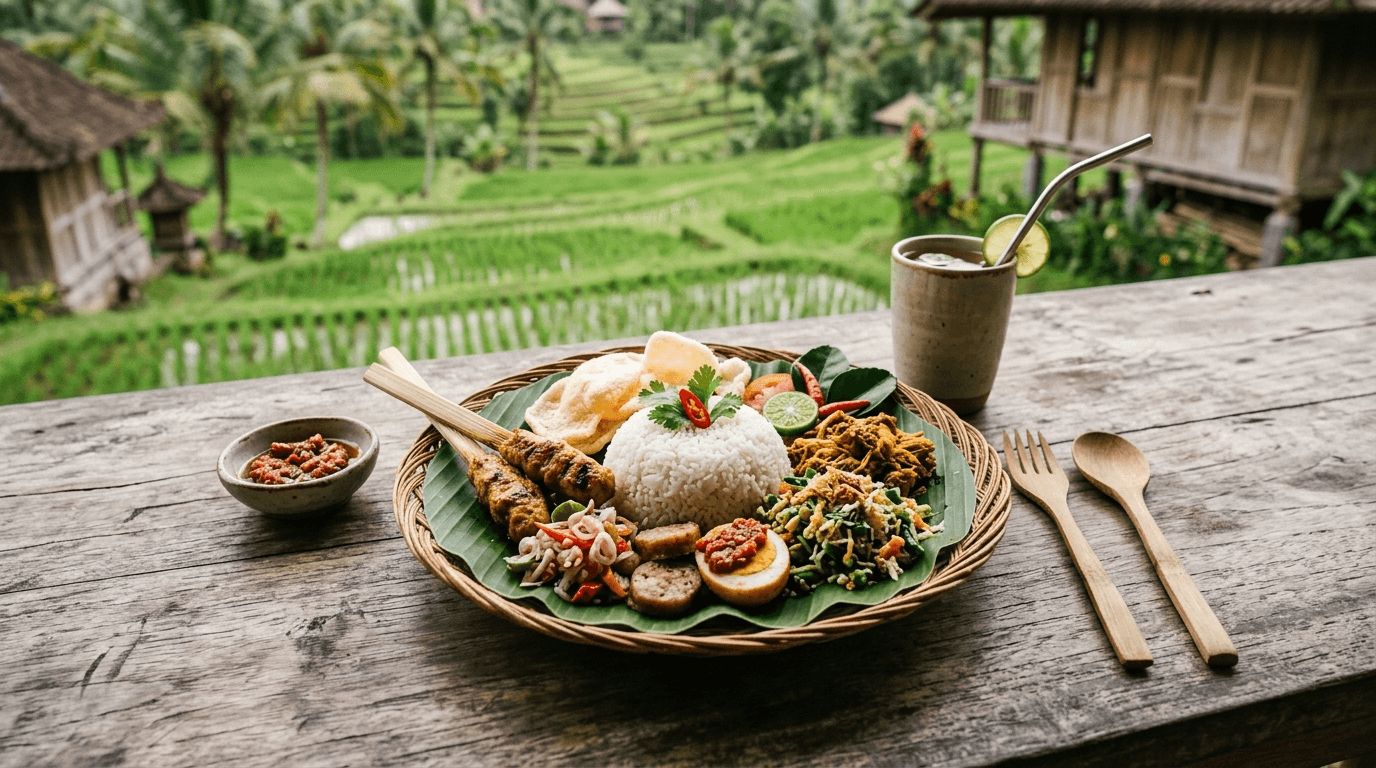
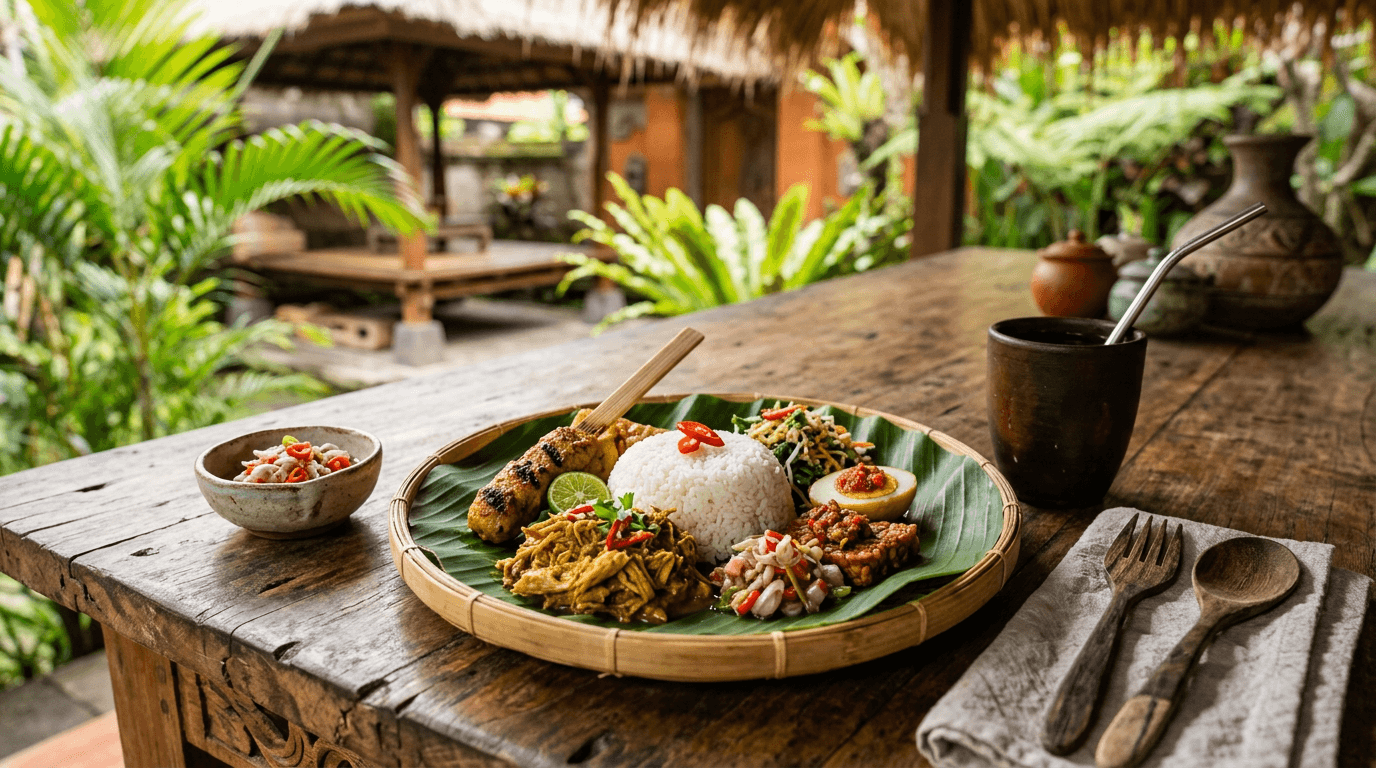
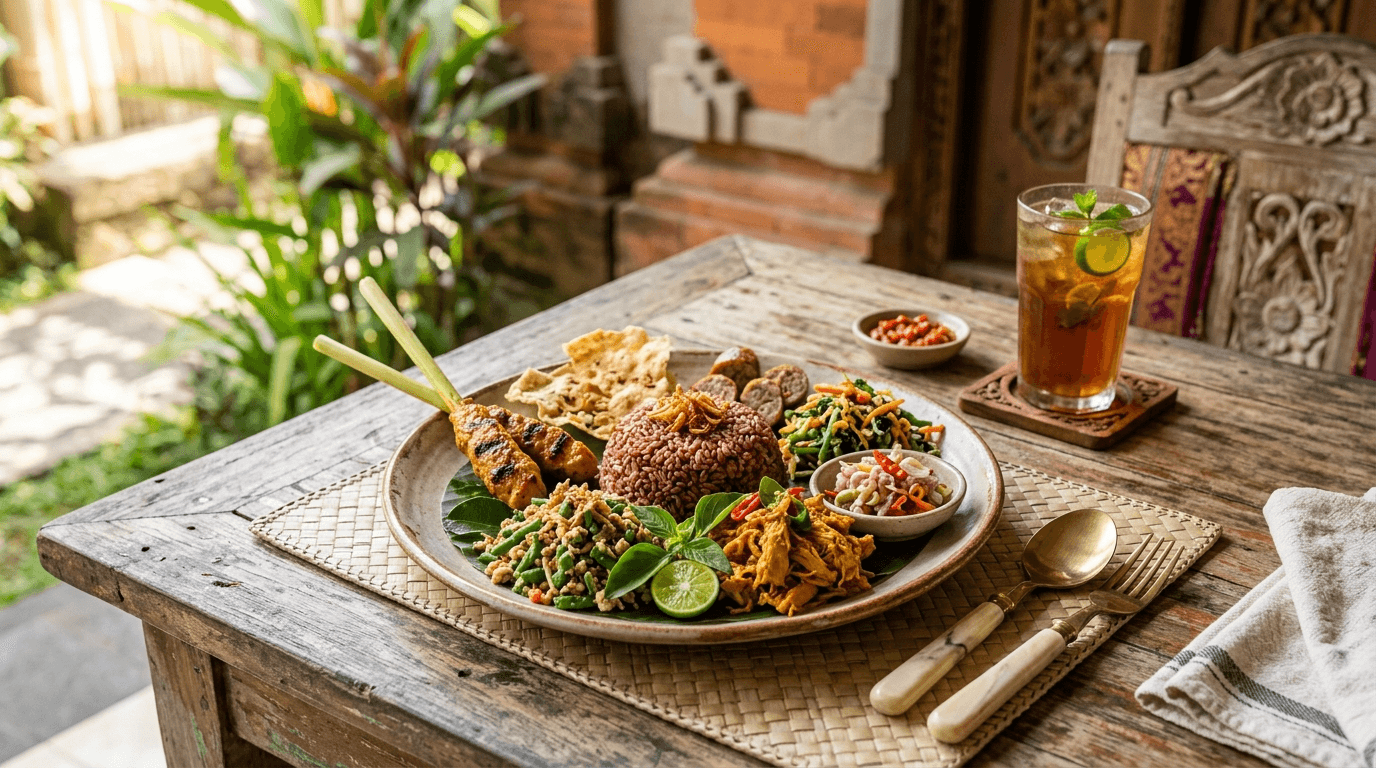
Basa Gede, also called the complete or master spice paste, is the aromatic base of Balinese cuisine. It blends ingredients like shallots, garlic, chili, galangal, turmeric, ginger and lemongrass into a fragrant paste used in curries, satays and braises. Making it fresh is key to authentic Balinese flavour.
- Dish type
- Balinese spice paste (bumbu)
- Also known as
- Master / complete spice paste
- Key ingredients
- Shallots, garlic, chili, galangal, turmeric, lemongrass
- Used in
- Curries, satays, braises, sambals
- Origin
- Bali, Indonesia
- Basa Gede is the foundational, all-purpose spice paste of Balinese cuisine.
- Core ingredients include shallots, garlic, chili, galangal, turmeric, ginger and lemongrass.
- The paste is typically slow-cooked to deepen its aroma before being used in dishes.
- It forms the flavour base for curries, satays, braises and sambals.
- Making it fresh, often in a mortar and pestle, gives the most authentic result.