Cook Bali at Home: Nasi Goreng & a Balinese Cuisine Primer (2026)
Understand the flavours that define Balinese and Indonesian cooking, then make a properly fragrant nasi goreng from scratch with a homemade spice base.
 MyGlob Editorial May 14, 2026 7 min read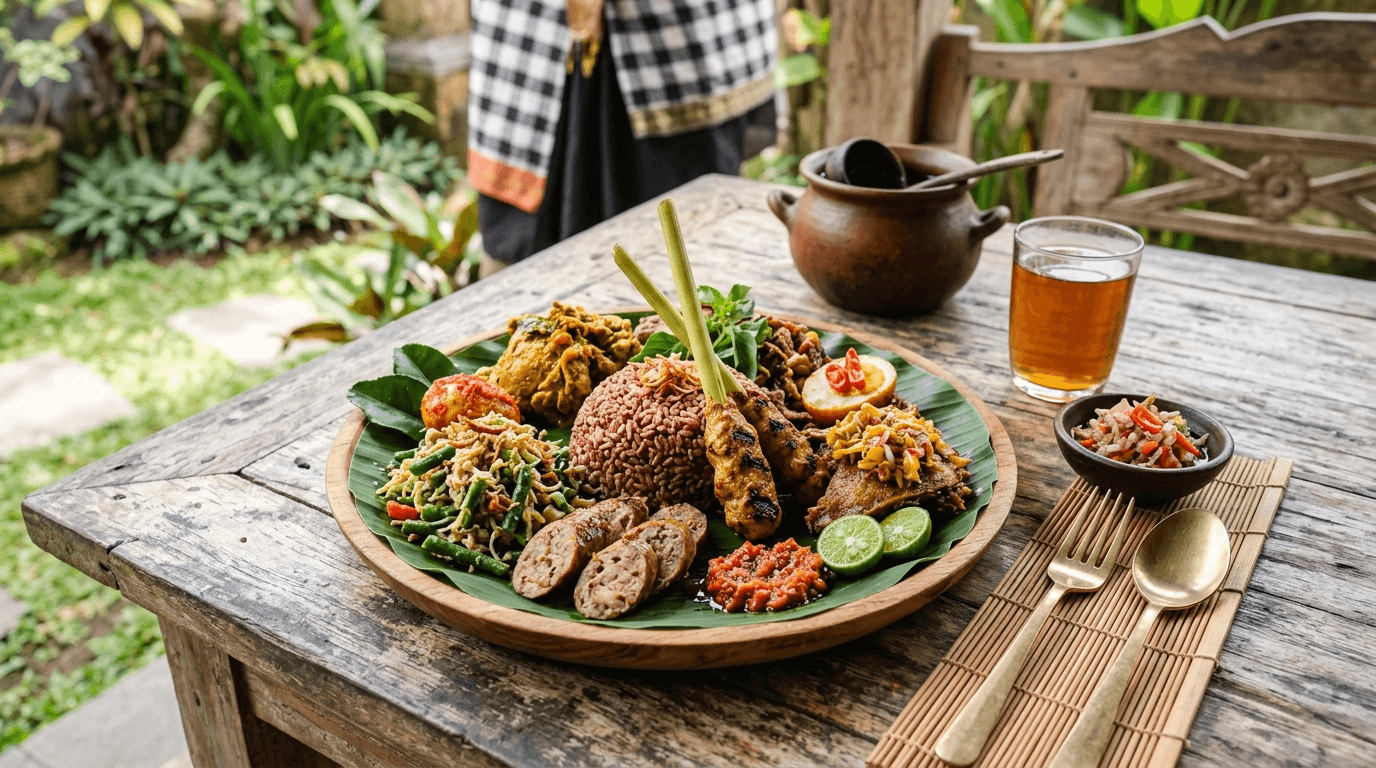
Balinese food is built on layers of aromatics rather than chilli heat alone. At its heart sits the spice paste known as base genep, a pounded blend of shallots, garlic, ginger, galangal, turmeric, candlenut and chilli that perfumes almost everything from grilled fish to vegetable urap. Indonesian cooking more broadly leans on sweet kecap manis, fresh herbs and the smoky char of the grill. The most famous dish a traveller meets, though, is nasi goreng, Indonesia's beloved fried rice, eaten any time of day and endlessly adaptable. This recipe gives you a genuinely fragrant version with a quick spice base, plus the techniques that separate a great plate from a greasy one.
Ingredients
- 4 cups cold cooked rice, ideally cooked the day before
- 3 tablespoons neutral oil, such as sunflower or rice bran
- 4 shallots and 4 garlic cloves, finely chopped or blended into a paste
- 2 to 4 red chillies, deseeded for a milder result, finely chopped
- 1 teaspoon shrimp paste (terasi), optional but authentic, toasted briefly
- 2 chicken thighs or 200g prawns, diced (or tempeh for a vegetarian version)
- 2 tablespoons kecap manis (sweet soy sauce), plus more to taste
- 1 tablespoon regular soy sauce
- 2 eggs, for frying sunny-side up to serve on top
- To garnish: sliced cucumber and tomato, fried shallots, prawn crackers and lime
- Get the wok genuinely hot before the rice goes in; the slight char known as wok hei is what makes street versions taste so good.
- Work in batches if your pan is small, rather than overcrowding and steaming the rice.
- Brands of kecap manis vary in sweetness, so add it gradually and taste as you go.
- For a true Balinese twist, stir a spoon of base genep through the oil at the start and finish with a scatter of fresh kaffir lime leaf.
Method
- 1The single biggest secret is using cold, day-old rice. Freshly cooked rice is too moist and clumps into a stodgy mass, while chilled rice has dried out and the grains separate, frying up loose and slightly chewy. If you must cook rice the same day, spread it thinly on a tray and refrigerate it uncovered for at least an hour before you start.
- 2Step 1. Make the flavour base. Blend or pound the shallots, garlic, chilli and shrimp paste into a rough paste. This is the shortcut backbone that gives the dish its Indonesian character.
- 3Step 2. Build the aromatics. Heat the oil in a wok over medium-high heat until it shimmers, then fry the paste for two to three minutes until it turns fragrant and the raw smell disappears. Do not let it burn.
- 4Step 3. Cook the protein. Push the paste aside, add the chicken, prawns or tempeh and stir-fry until cooked through and lightly coloured.
- 5Step 4. Add the rice. Tip in the cold rice and toss constantly, breaking up clumps with the back of your spatula so every grain meets the heat and the paste.
- 6Step 5. Season. Pour in the kecap manis and soy sauce around the edges of the wok so they sizzle, then toss to coat evenly. Taste and adjust; it should be savoury, gently sweet and faintly smoky.
- 7Step 6. Finish. Plate the rice, fry the eggs until the whites are crisp at the edges and the yolks still runny, and lay one on each serving. Garnish with cucumber, tomato, fried shallots, crackers and a wedge of lime.
- 8Once you are comfortable with the spice base, the same foundation opens the door to mie goreng (fried noodles), sate lilit (minced fish satay moulded onto lemongrass), and sayur urab (steamed vegetables tossed with grated coconut and spice). These dishes share a flavour grammar, and learning one makes the rest feel familiar. When you visit Bali, a half-day cooking class in Ubud or near the rice fields is the most delicious way to deepen what you have started in your own kitchen.
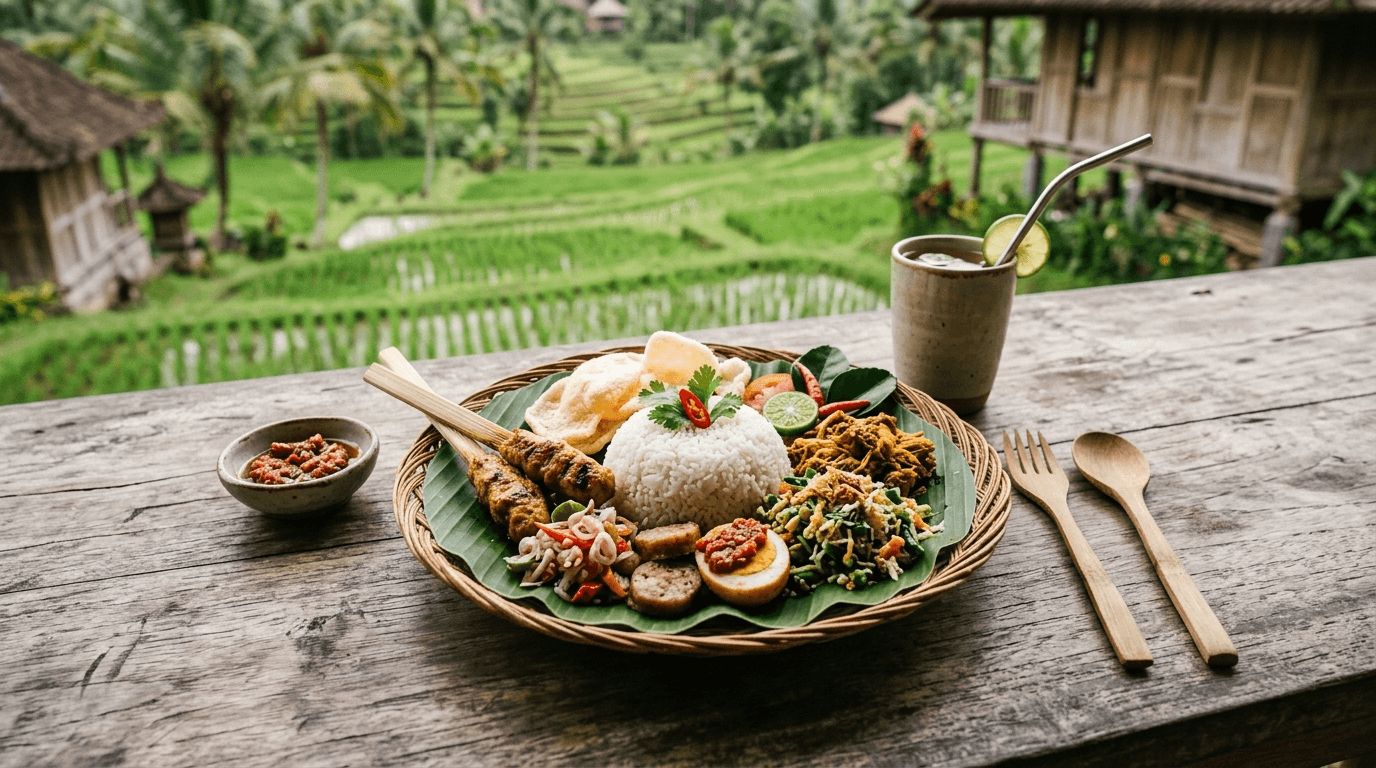
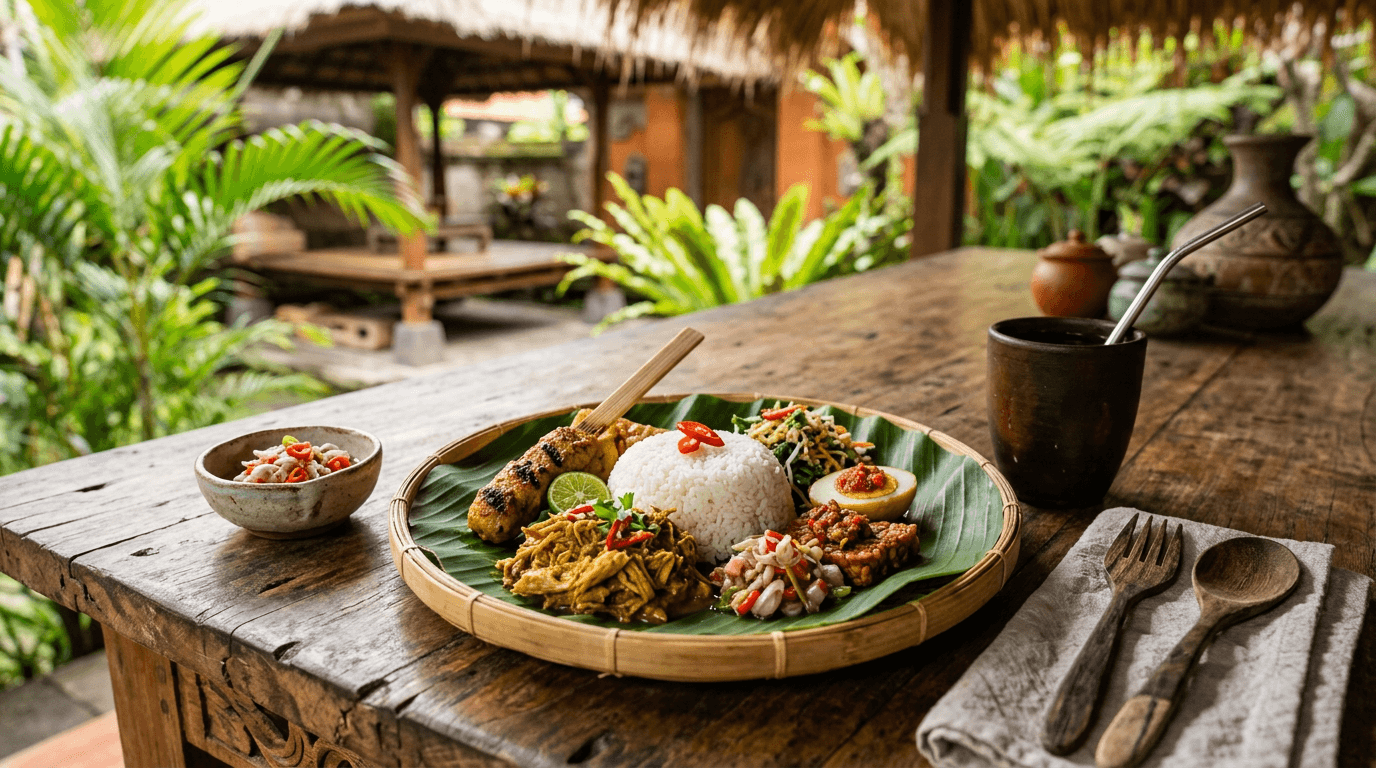
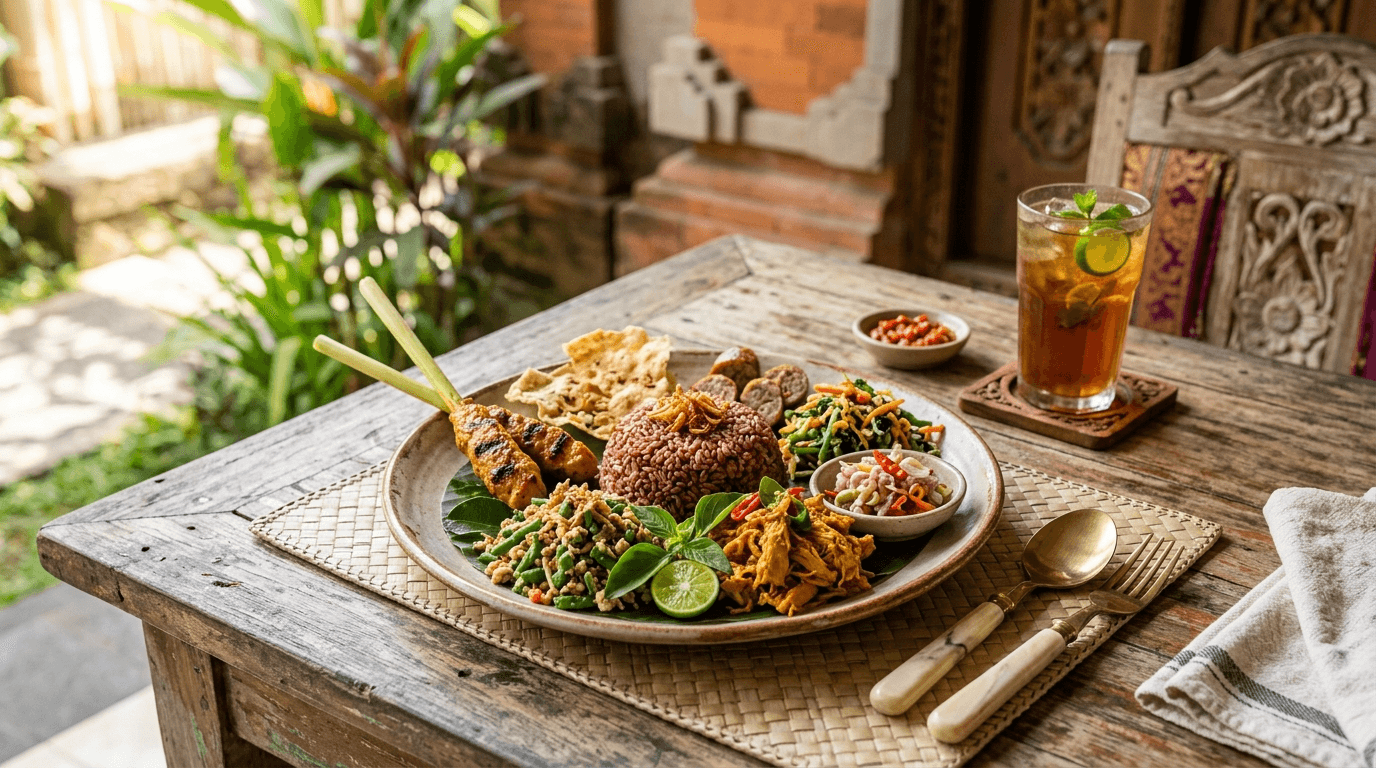
You can cook Bali at home by starting with nasi goreng, Indonesia's beloved fried rice made with day-old rice, garlic, shallots, chili, kecap manis (sweet soy) and a fried egg on top. Build from there by learning Balinese staples like base genep spice paste, sambal and fresh aromatics to recreate the island's bold, fragrant flavours.
- Cuisine
- Balinese / Indonesian
- Starter Dish
- Nasi goreng (fried rice)
- Key Sauce
- Kecap manis (sweet soy)
- Core Paste
- Base genep
- Key Spices
- Lemongrass, galangal, turmeric, chili
- Region
- Bali, Indonesia
- Nasi goreng (fried rice) is an easy first Balinese-Indonesian dish
- Use day-old rice for the best texture in fried rice
- Kecap manis (sweet soy sauce) gives nasi goreng its signature flavour
- Base genep is the all-purpose Balinese spice paste to learn next
- Stock aromatics like lemongrass, galangal, turmeric, garlic and chili