Bali Nature Guide: 10 Wonders of the Island's Wildlife, Plants and Land
A field guide to Bali's natural side, from volcanic peaks and rice terraces to monkeys, sea turtles and the trees that scent the air.
 MyGlob Editorial June 1, 2026 2 min read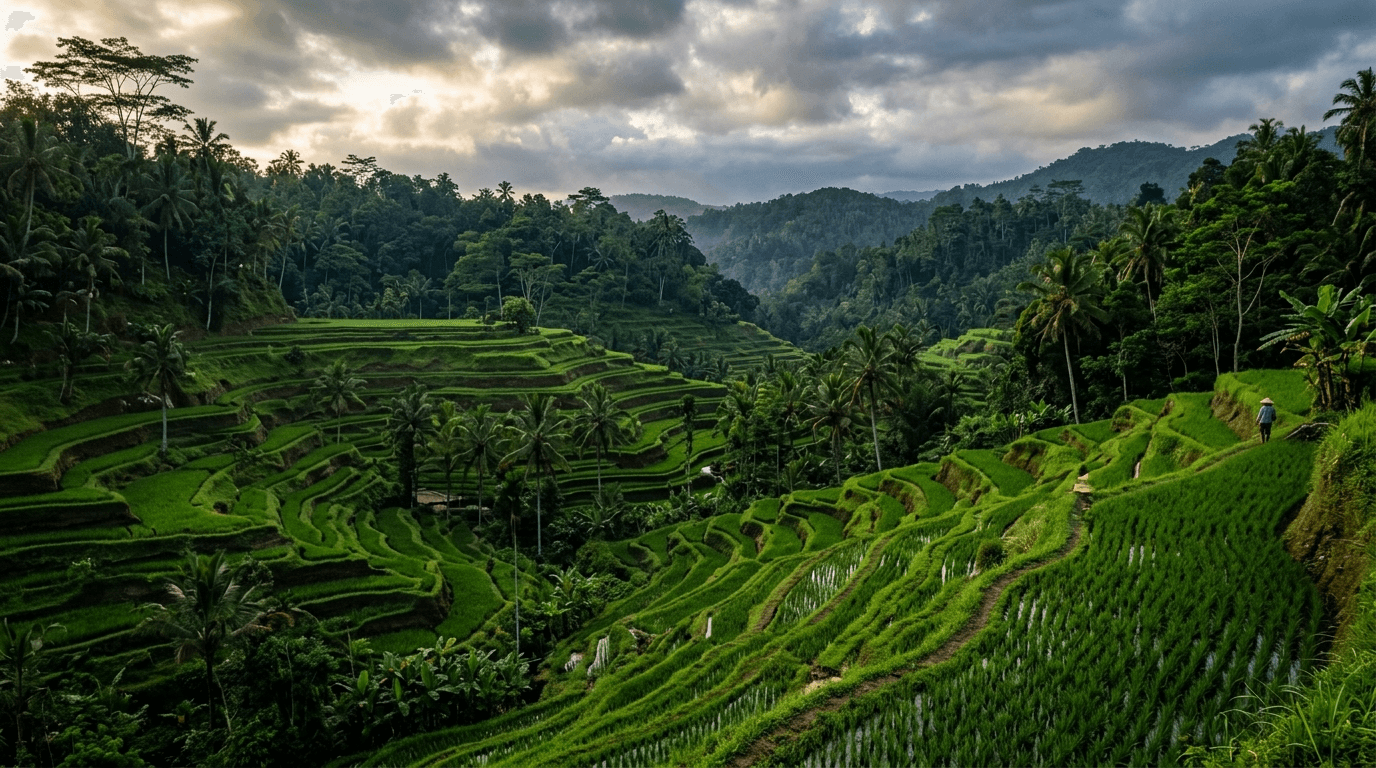
Beyond the beach clubs and temples, Bali is a living laboratory of tropical nature shaped by volcanoes, monsoon rains and centuries of careful farming. The island sits on the boundary of two great biological worlds, which gives its plants and animals a character all their own. Here are ten of the natural features that define the island, from its dramatic geology to the creatures and greenery you will meet along the way.
 01Pick #1
Volcanic Backbone — the island's fiery foundation
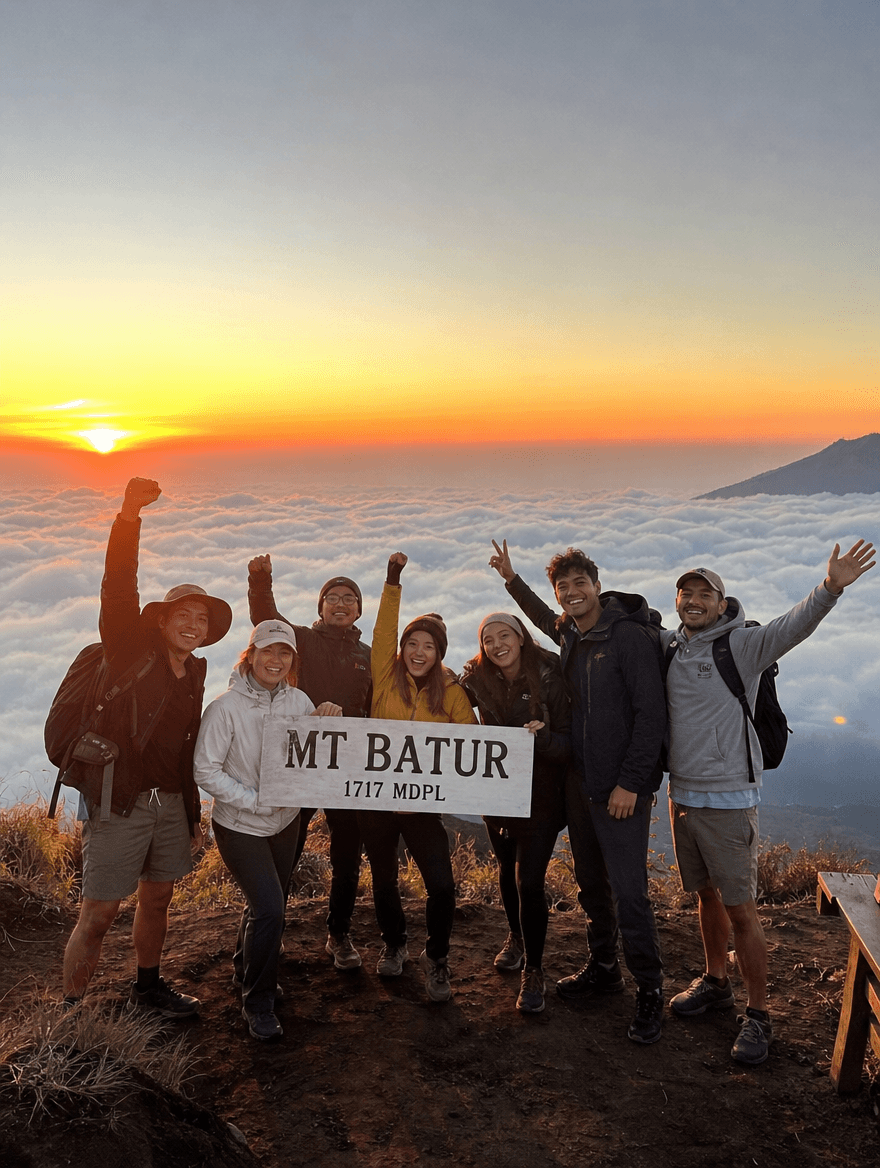
Bali was built by volcanoes, and a chain of peaks runs along its spine. Mount Agung, the highest and most sacred, dominates the east, while Mount Batur rises beside its caldera lake in the central highlands. This volcanic origin explains the island's extraordinarily fertile black soils, which feed everything from rice to coffee.
The volcanoes are still active and closely monitored, so anyone planning a sunrise trek should check current conditions and climb only with a licensed local guide.
 02Pick #2
Rice Terraces — engineered landscapes
The emerald staircases of Tegalalang and Jatiluwih are not wild nature but a centuries-old partnership between people and land. They are irrigated by the subak, a cooperative water system recognized for its cultural significance, which distributes mountain water through a network of canals and temples.
These terraces are also rich habitats, sheltering frogs, dragonflies, egrets and countless insects that thrive in the flooded paddies.
 03Pick #3
Long-Tailed Macaques — the clever opportunists
Bali's most famous animal is the grey long-tailed macaque, seen in forest sanctuaries such as the Ubud Monkey Forest and around the Uluwatu temple. They are intelligent, social and bold, and have learned that tourists carry food and shiny objects.
Keep sunglasses, phones and snacks out of sight, avoid direct eye contact, and never try to feed or touch them. A bitten finger is a real risk, so admire them from a respectful distance.
 04Pick #4
Sea Turtles — ancient ocean travelers
Several species of sea turtle nest and feed in Balinese waters. Conservation centers around the island work to protect eggs and rehabilitate injured turtles, and some run ethical visitor programs.
Choose operators focused on genuine conservation rather than handling for photos, and never buy products made from turtle shell.
- 05Pick #5
Coral Reefs — underwater cities
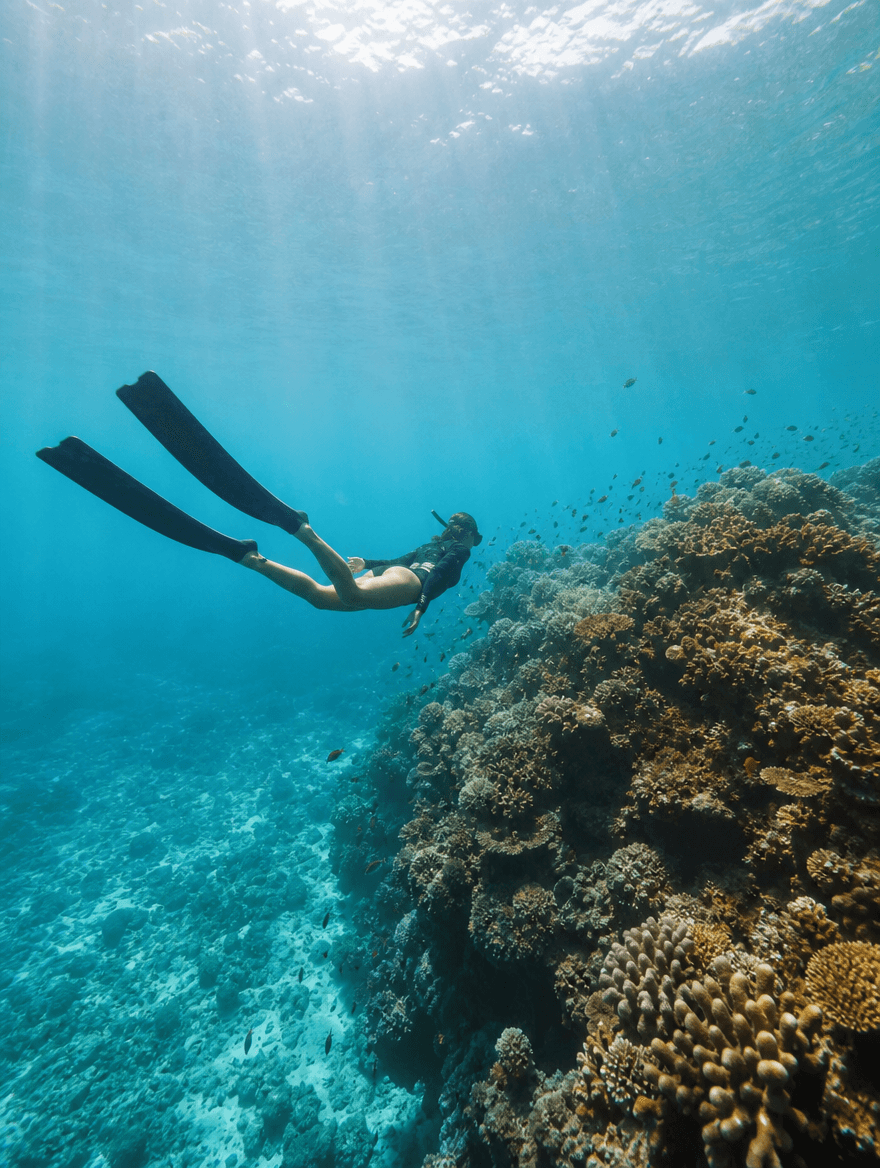
The waters off the east coast, around Amed, Tulamben and the offshore islands, hold vibrant reefs alive with reef fish, octopus and the occasional sunfish. The famous shipwreck at Tulamben has become an artificial reef teeming with life.
Protect these fragile ecosystems by using reef-safe sunscreen, keeping your fins clear of the coral, and never touching marine life.
- 06Pick #6
The Frangipani — Bali's signature scent
The white-and-yellow frangipani, known locally as jepun, perfumes temples, gardens and ceremonies across the island. Its blossoms are tucked behind ears and floated in offerings.
Alongside it grow hibiscus, bougainvillea and countless orchids, giving Bali its endlessly flowering, garden-like feel.
- 07Pick #7
Banyan Trees — sacred giants
Massive banyan trees, with their curtains of aerial roots, are considered sacred and are often wrapped in checkered cloth at their base. They serve as spiritual landmarks in village life and provide shade and shelter for entire communities.
Some of the oldest specimens are believed to be home to spirits, and they are treated with corresponding reverence.
- 08Pick #8
Tropical Birds — voices of the forest
Bali's forests and wetlands host kingfishers, sunbirds, herons and hornbills. The island's rarest treasure is the critically endangered Bali starling, a striking white bird that survives largely thanks to dedicated breeding and protection programs in the west.
Birdwatchers do best in the early morning in West Bali National Park and the quieter highland forests.
- 09Pick #9
Waterfalls and Rivers — the highland flow
Rain-fed rivers tumble through the interior, creating dramatic waterfalls like those around Munduk and Gitgit. The cool, fern-draped gorges they carve are pockets of biodiversity and a refreshing escape from the coastal heat.
Paths can be steep and slippery, so wear proper footwear and check conditions after heavy rain.
- 10Pick #10
Mangroves and Wetlands — the coastal nursery
Along parts of the southern coast, mangrove forests buffer the shoreline, filter water and shelter young fish, crabs and birds. Boardwalk trails let visitors explore these often-overlooked ecosystems quietly.
Protecting them matters: mangroves guard the island against erosion and storms while storing large amounts of carbon.
- 11Pick #11
Travel Lightly
Bali's nature is generous but under pressure from development and visitor numbers. Choose responsible operators, refuse single-use plastic where you can, keep your distance from wildlife, and follow guidance from park authorities. Treat the island's living world with care and it will keep rewarding visitors for generations to come.
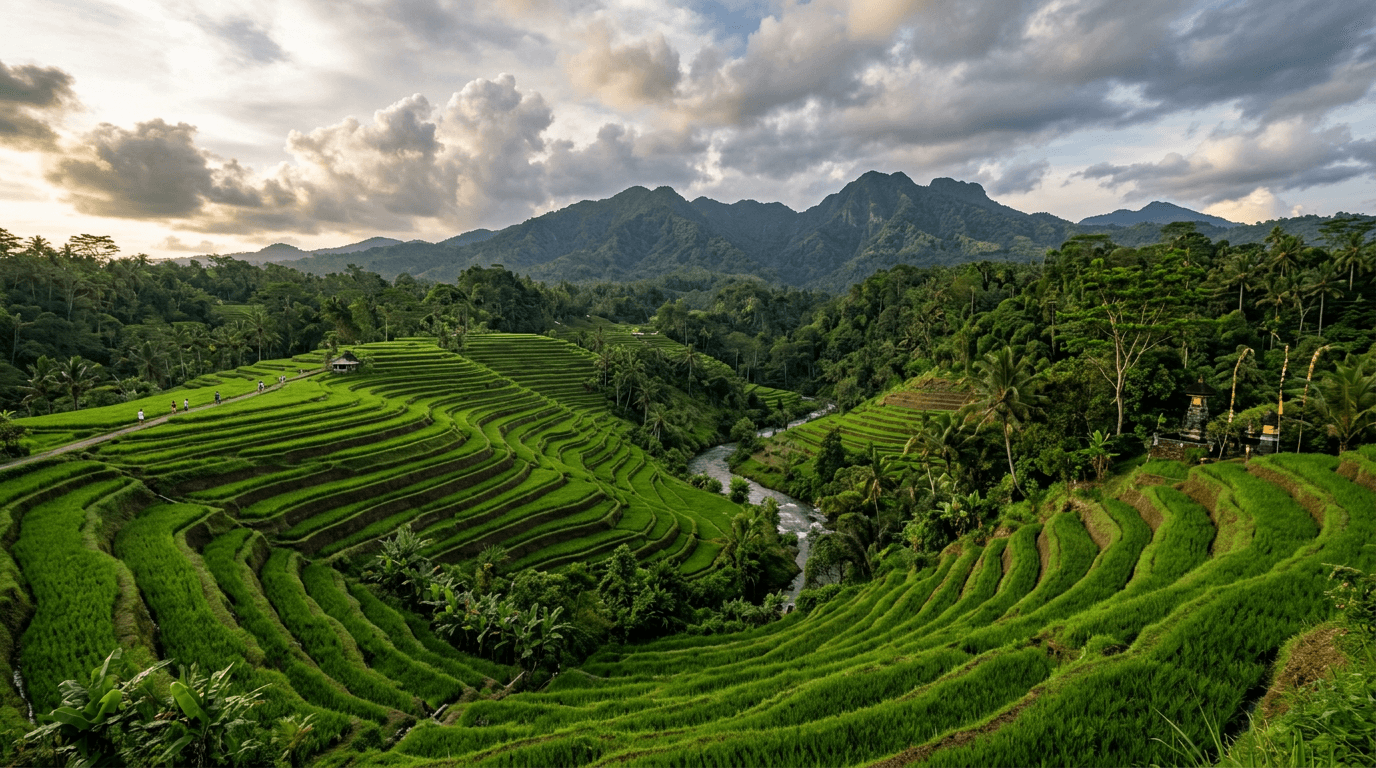
Bali's natural wonders include volcanic peaks like Mount Batur and Agung, the UNESCO rice terraces of Jatiluwih, lush jungles, waterfalls and rich coral reefs. Wildlife ranges from macaques and exotic birds to marine life around the Nusa Islands and Menjangan. Many sites are protected, so visit responsibly and verify access and conditions before you go.
- Volcanoes
- Mount Batur, Mount Agung
- Rice terraces
- Jatiluwih (UNESCO), Tegallalang
- Marine life
- Nusa Islands, Amed, Menjangan
- Wildlife
- Macaques, birds, manta rays
- Tip
- Visit responsibly and verify access
- Bali's landscape is shaped by volcanoes like Mount Batur and Mount Agung.
- The Jatiluwih rice terraces are a UNESCO World Heritage cultural landscape.
- Jungles and waterfalls thrive in the island's wetter, mountainous interior.
- Marine life and coral reefs are rich around the Nusa Islands and Menjangan.
- Many natural sites are protected, so travel responsibly and check conditions.