FAQ
Galungan & Kuningan in Bali 2026: Your Questions Answered
Bali's most important holiday explained: what Galungan and Kuningan celebrate, what to expect as a visitor, and how to experience it respectfully.
Galungan celebrates the victory of dharma (good) over adharma (evil). Balinese Hindus believe that during this time the spirits of ancestors return to visit the earthly home, and families honour them with prayers and offerings. It's a deeply meaningful, joyful occasion centred on family and gratitude.
Related Questions
Bali is a hands-on classroom for travellers. From batik and silver-smithing to cooking, ceramics and surf, here are the island's best workshop experiences.
Helpful Guides
Quick Answer
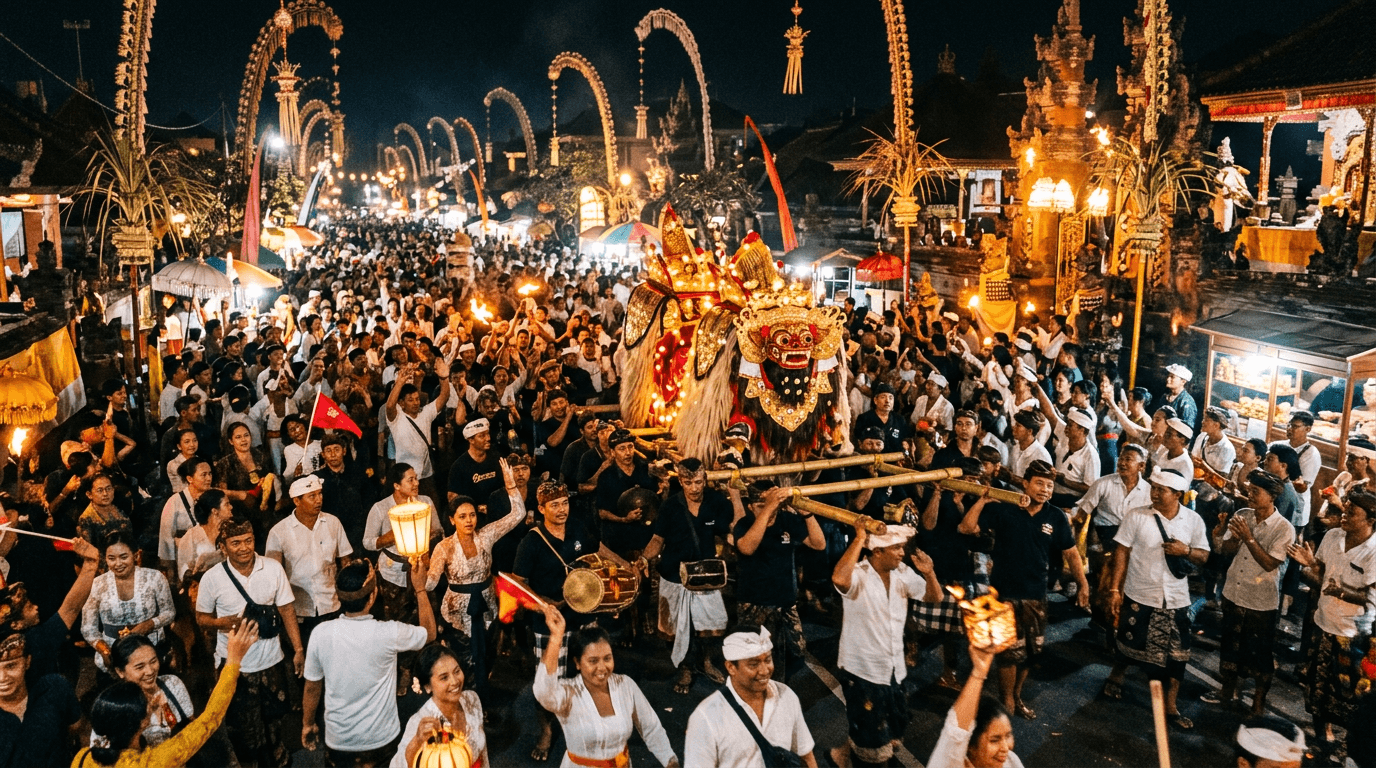
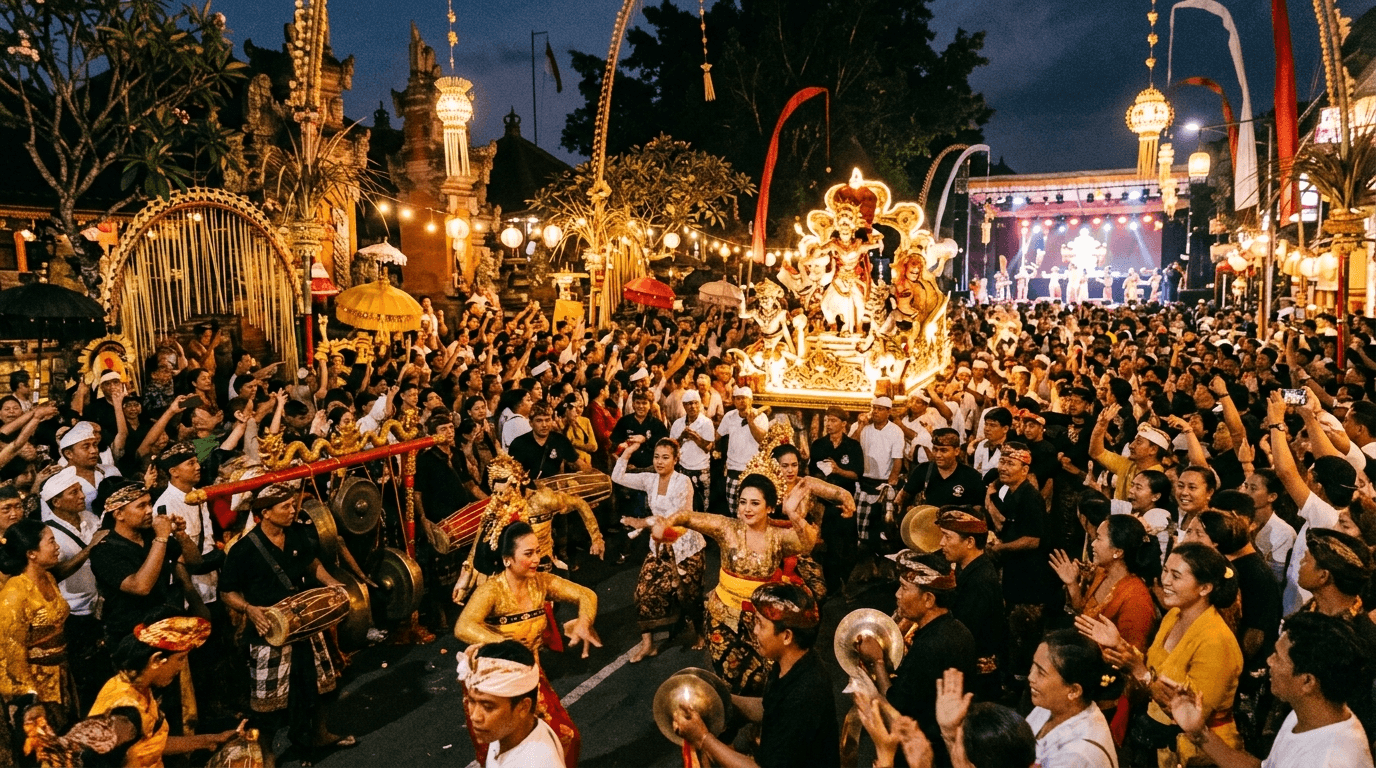
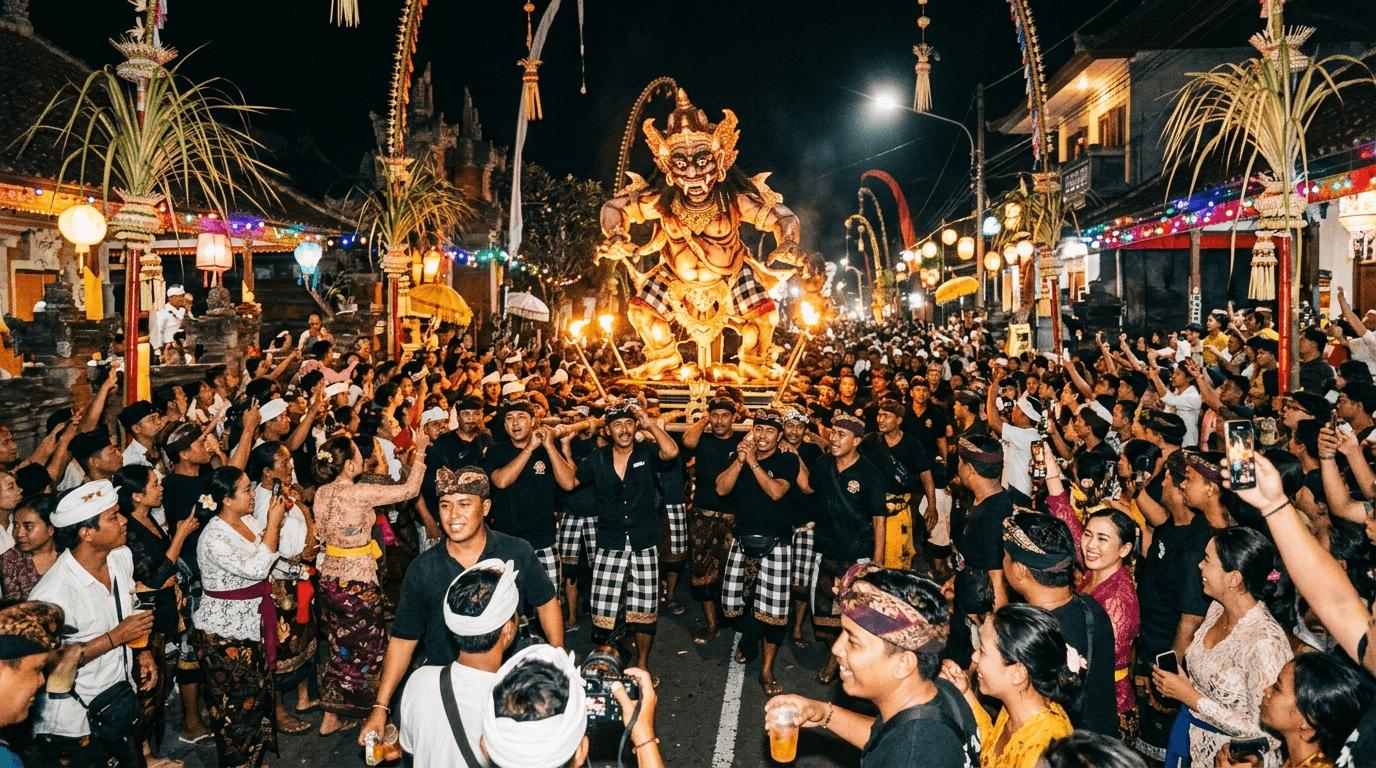
Galungan celebrates the triumph of dharma (good) over adharma (evil), and Kuningan, ten days later, marks the farewell of ancestral spirits. During the festival you will see tall curved penjor poles lining the streets and families dressing in temple attire. Galungan falls twice a year on the 210-day Pawukon calendar, so confirm the exact 2026 dates locally.
Key Facts
- Festival
- Galungan and Kuningan
- Meaning
- Victory of good over evil; ancestral visit
- Calendar
- 210-day Pawukon cycle (twice yearly)
- Key symbol
- Penjor bamboo poles
- Kuningan
- Ten days after Galungan
Key Takeaways
- Galungan marks the victory of good (dharma) over evil (adharma)
- Kuningan falls ten days later and bids farewell to ancestral spirits
- Tall, curved penjor poles decorate streets and homes during the period
- It follows the 210-day Pawukon calendar, so it occurs twice a year
- Many shops and offices close or reduce hours, especially on the main days